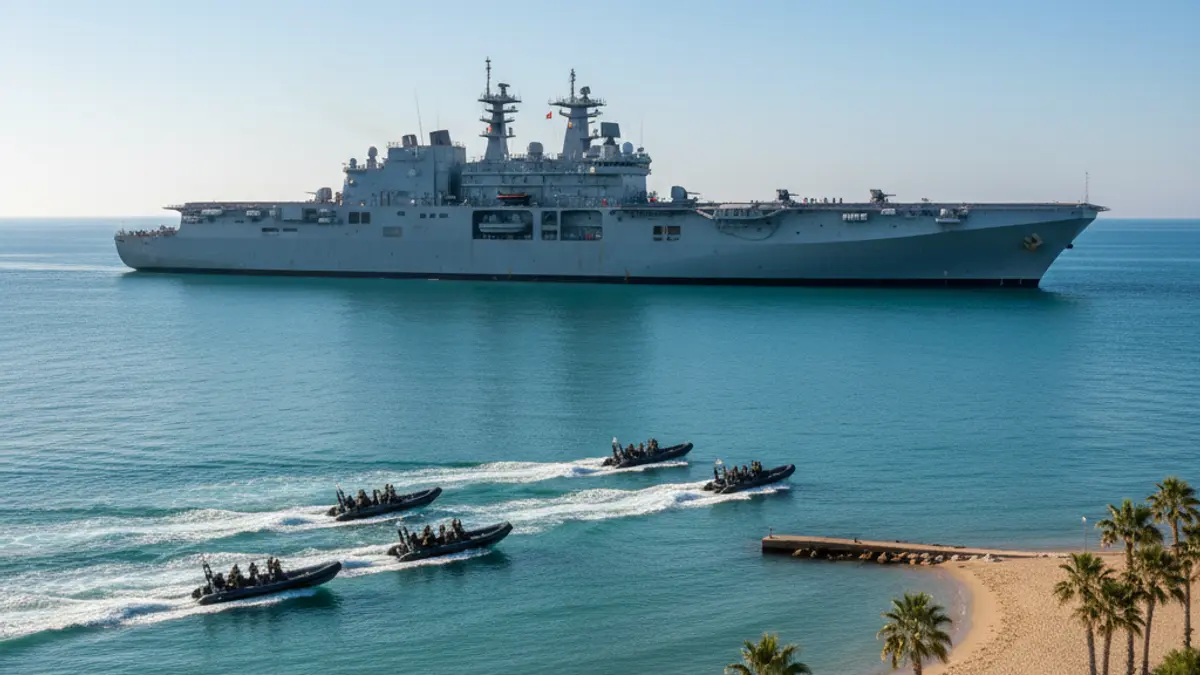
From May 11 to May 22, approximately 2,000 military personnel are participating in the FLOTEX-26 exercise, considered fundamental for the continuous training of the Navy. Operations are taking place between the Gulf of Cadiz and the Alboran Sea, with a deployment that includes the vessel Juan Carlos I and other combat ships.
During the simulation on Retín beach, Marine Infantry units conducted a coordinated landing using fast rigid-hulled inflatable boats. Subsequently, VAMTAC vehicles descended from LCM landing craft in a complex maneuver, demonstrating the precision and training of the forces.
“"This is very complicated. It seems simple when we see it here on the beach, but it requires a lot of training. Just seeing those vehicles at that incline on the beach, I say: 'My goodness, this must be difficult!' But they seem to make it easy due to the results of the continuous training of these forces we are so proud of."
The exercise also served to test the latest technological innovations acquired by the Navy. Advanced communication systems with greater resilience against electronic warfare, reconnaissance drones such as VTOL and Skydio x10, and the Hispano weapon system, designed for moving targets, were presented.
These maneuvers not only measure the Navy's response capability but also act as a deterrent and stability tool. The naval force aims to be prepared to project itself anywhere in the world where necessary, highlighting its expeditionary capability.