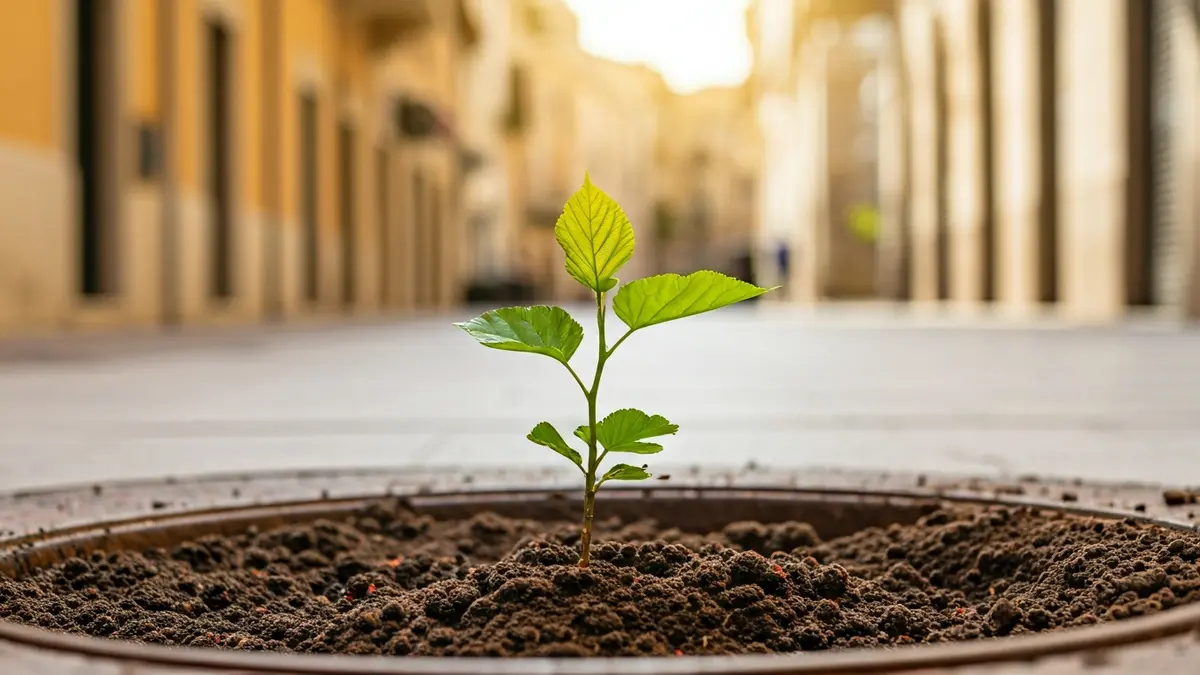
This municipal initiative, part of a broader replanting campaign that will add over 400 trees of various species, responds to a longing for the historical presence of mulberry trees in Almería's urban landscape. These specific mulberry trees, of the 'morus alba fruitless' variety, do not produce fruit, thus eliminating the problem of fallen mulberries that characterized traditional specimens.
For many residents of Almería, especially those who grew up in the 70s and 80s, mulberry trees were a defining feature of the city. Their leaves were used to feed silkworms, a common childhood activity. Areas like the old rambla or Ciudad Jardín were popular spots for collecting leaves and, occasionally, mulberries.
The new trees will be distributed in several key locations. Altamira Street will receive 35 trees, while Andalucía Street will get 14, and La Marina Street a dozen. Additionally, 22 mulberry trees are designated for the Carretera de los Minerales area and its surroundings, a region that has become an important connection between Los Molinos and La Vega de Acá following the undergrounding project.
Other city spots slated to receive these mulberry trees include Colegio San Vicente, Plaza de España, Parque de las Familias, the parking lot of the Estadio de los Juegos Mediterráneos, Doctora Milagros Rivera Street, Antonio Muñoz Zamora, Árbol de la Seda, and the dog park on Jorge Guillén Street. The plan also includes planting other species like delonix or flamboyant trees and paulownia tormentosa, to replace dried trees and removed ficus.