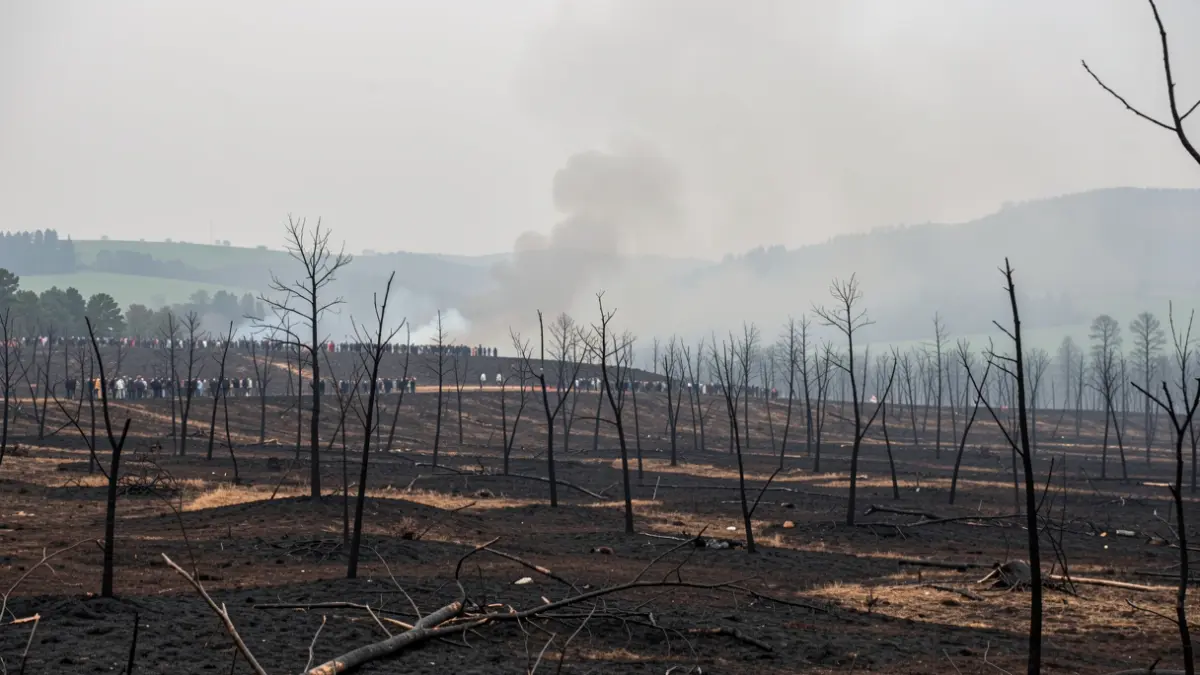
The Regional Government of Andalusia (Junta de Andalucía) will promote this request, which will be presented at the next Governing Council meeting. The mayor of Aznalcóllar, Juan José Fernández, specified that the burnt area in his municipality has already been quantified, exceeding 6,000 hectares. Concurrently, the regional Department of Agriculture is coordinating with the local agricultural sector to extend this recognition to neighboring towns.
Fernández emphasized the importance of a unified response, given that the economy of these towns relies on activities such as agriculture, livestock farming, and beekeeping, meaning that issues in one municipality directly affect its neighbors. The mayor expressed hope for a swift resolution, describing the event as an evident tragedy that requires no complex analysis to comprehend.
In Aznalcóllar, the emergency necessitated the relocation of nearly a hundred beekeepers and approximately 700 head of livestock. The mayor highlighted that the dismantling of hunting fences facilitated the escape of wild fauna, a task in which environmental groups and local hunters participated, some of whom have proposed pausing their activities to aid wildlife recovery.
The local council is also evaluating measures for the regeneration of the affected soils, aiming to preserve their productive capacity, and to attempt to salvage any remaining arboreal specimens.
This regional initiative follows the announcement by the departments of Agriculture, Fisheries, Water and Rural Development, and Sustainability and Environment, to request state declaration of the area as a natural disaster zone. The mayor described the incident as a severe blow to the primary sector of the region and to residents who lost their homes, stressing that no single town council possesses the necessary resources to confront such a catastrophe alone.
Fernández acknowledged that the local councils in the area lack sufficient human and economic resources for reconstruction. Therefore, he considered the Junta's action as a necessary and long-awaited request from the affected towns, while emphasizing the importance of clearly defining the future management of the process.
The mayor advocated for collaboration among administrations to expedite the response and avoid administrative hurdles. He requested that financial aid be processed quickly and transparently for those affected. He described the post-fire landscape as a scene difficult to forget, reflecting on how the natural environment reacts to mistreatment or inadequate action.
The official procedure began on Thursday, August 20, when the regional body for disasters and adverse weather phenomena forwarded the formal request to the Governing Council for the state to recognize the area as severely affected by a civil protection emergency, a crucial preliminary step to unlock financial aid. Concurrently, the affected localities have established a registry for companies, self-employed individuals, and residents, particularly from the agricultural and beekeeping sectors, to report their damages. This list is managed with the Regional Agrarian Office and other institutions to channel future assistance.