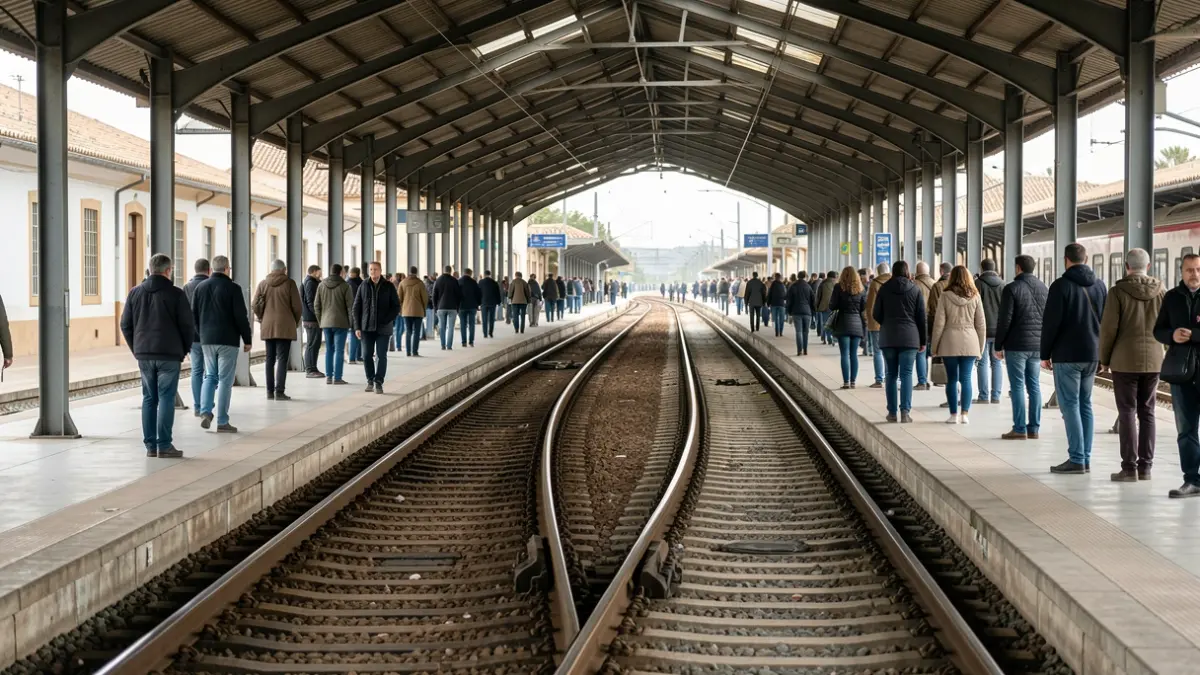
The National Statistics Institute (INE) has released data showing a 10% decrease in the use of high-speed trains in Andalusia during the first half of the year, compared to the same period last year. This decline, the most significant since the pandemic, adds to a trend of diminishing prominence for advanced rail transport.
Under normal circumstances, Andalusian high-speed rail serves nearly a million passengers monthly, split between the Madrid-Seville line and the route connecting the capital with Málaga and Granada. The loss of users in June approached one hundred thousand. This situation extends to other rail services, which generally saw an 8.2% drop in demand. Medium-distance services are the most affected, with a 23.5% fall, followed by commuter trains (-7%) and long-distance services (-9.5%).
Persistent delays and cancellations, exacerbated by previous incidents like the Adamuz accident and disruptions on key lines such as Madrid-Málaga, have eroded traveler confidence. Cases like the medium-distance service between Jerez de la Frontera and Seville, frequently subject to delays and cancellations, cause significant inconvenience for regular users, including university students.
In response to disruptions, the bus alternative offered by the company leads to further delays. Experiences such as that of a young man who resorted to BlaBlaCar after a cancellation in Córdoba to reach Jaén highlight the difficulties. The road transport alternative, including BlaBlaCar, is gaining traction due to its perceived greater reliability and affordability, particularly among young people and workers.
Travel agencies report that some users are opting to stay overnight in cities near airports or rent vehicles to ensure their flight connections, thus increasing overall travel costs. Collective road transport, such as buses, is also experiencing a resurgence in provinces like Cádiz, offering alternative routes and improved reliability.
Adif Alta Velocidad recorded losses of 133 million euros in the first quarter of 2026, an 81.7% increase from the previous year, attributed to a drop in traffic and a 20.3% decrease in revenue. This situation is linked to service disruptions following the January accidents, which necessitated speed restrictions and service reprogrammations, impacting the fees paid by Renfe, Iryo, and Ouigo.