
At the Sagrado Corazón - Fundación Spínola school in Málaga, a Spanish Language and Literature teacher for the third and fourth years of ESO (Compulsory Secondary Education) is transforming the way subjects are taught. With nearly twenty-five years of experience, this educator applies dynamic and playful methodologies, adapted to modern society, to bring literary and grammatical content closer to his students. His goal is to make classes enjoyable and meaningful, combating the difficulty of maintaining attention in a digital world.
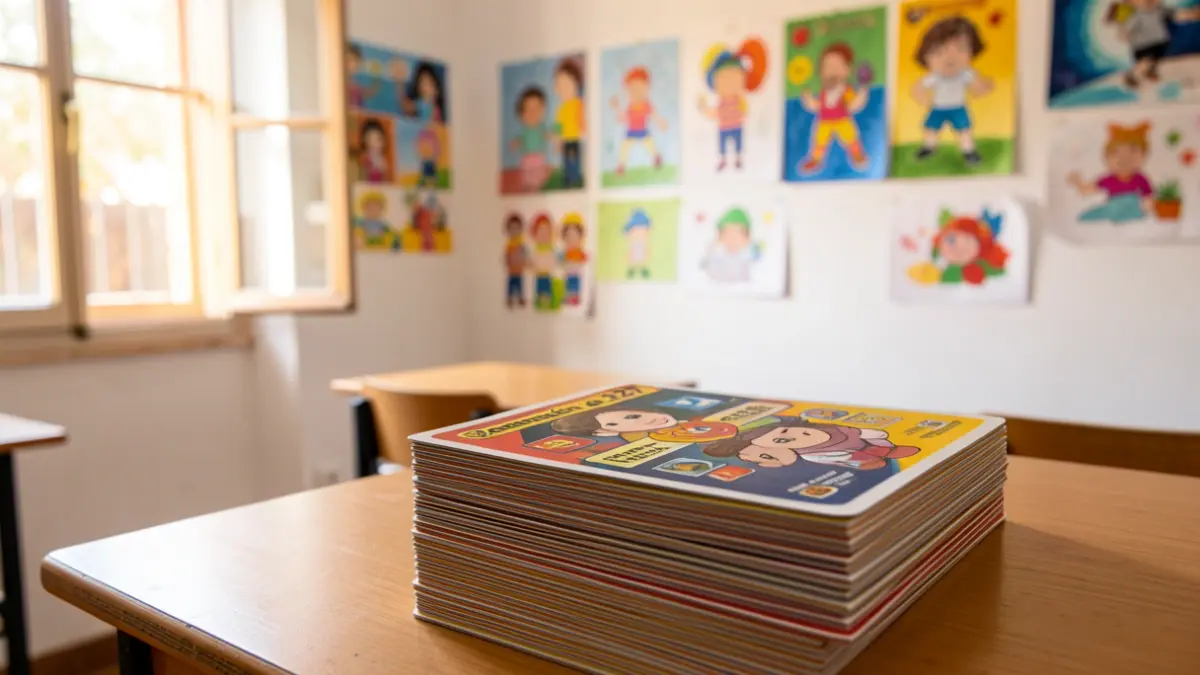
One of his most viral creations involves designing cards inspired by the famous Japanese saga Pokémon, but dedicated to the protagonists of the Generation of '27. Students actively participate in the process, creating their own cards that include photographs of the authors, their birthplaces, significant works, characteristics, and dates of death. Later, in groups, they respond to the teacher's instructions to earn points, thus reinforcing the content in a "memorable" way.
“"One of the challenges we face is finding ways to capture that attention and make that moment significant. They can't maintain attention for long because on social media they are constantly scrolling. I try to make classes enjoyable, fun, and bring students closer to what they need to learn."
The teacher explains that the collectible card format remains relevant and attractive to young people, citing examples like World Cup or Football League cards. "The format is still current," he clarifies.
In addition to this initiative, the teacher integrates other cultural concepts into his classes. He recently used the Bad Bunny concerts in Madrid to work on the analysis of coordinated and subordinate clauses, making the practice more engaging. Another dynamic involves creating Holy Week itineraries, linking procession imagery with authors and works studied, or designing magazines about the Renaissance.
The teacher emphasizes that all his proposals aim for students to be the protagonists, creating materials they value and keep. "My experience is that when students reach high school and return, they remember what they learned here," he assures, highlighting that learning should be assimilated, not just memorized.
He views education as "continuous learning" that combines traditional and new tools, adapted to the digital age. "We need to know how to shape the applications they use. Artificial intelligence is not something to be eliminated, but rather given meaning so they can use it correctly," he exemplifies. He stresses the importance of teaching "vocation" and listening to students so they feel the teacher's interest in their learning.


