AlmeríaCádizCórdobaGranadaHuelvaJaénMálagaSevillaAlpujarra AlmerienseLos VélezComarca Metropolitana de AlmeríaFilabres-TabernasLevante AlmeriensePoniente AlmerienseValle del AlmanzoraBahía de CádizCampiña de JerezCampo de GibraltarCosta NoroesteLa JandaSierra de CádizAlto GuadalquivirCampiña de BaenaCampiña Sur CordobesaLos PedrochesCórdoba (comarca)SubbéticaValle del GuadiatoValle Medio del GuadalquivirAlpujarra GranadinaComarca de AlhamaComarca de BazaComarca de GuadixComarca de HuéscarComarca de LojaCosta GranadinaLos MontesValle de LecrínVega de GranadaEl AndévaloEl Condado de HuelvaCosta OccidentalCuenca MineraComarca Metropolitana de HuelvaSierra de HuelvaÁrea Metropolitana de JaénCampiña de JaénEl Condado (Jaén)La LomaSierra de CazorlaSierra MáginaSierra MorenaSierra de SeguraSierra Sur de JaénLas VillasComarca de AntequeraLa AxarquíaGuadaltebaCosta del Sol OccidentalMálaga Costa del SolNorormaValle del GuadalhorceSerranía de RondaSierra de las NievesAljarafeBajo GuadalquivirCampiña de CarmonaCampiña de Morón y MarchenaComarca de ÉcijaComarca Metropolitana de SevillaSierra Norte de SevillaSierra Sur de SevillaVega del GuadalquivirAlmeríaCádizCórdobaGranadaHuelvaJaénMálagaSevillaAlpujarra AlmerienseLos VélezComarca Metropolitana de AlmeríaFilabres-TabernasLevante AlmeriensePoniente AlmerienseValle del AlmanzoraBahía de CádizCampiña de JerezCampo de GibraltarCosta NoroesteLa JandaSierra de CádizAlto GuadalquivirCampiña de BaenaCampiña Sur CordobesaLos PedrochesCórdoba (comarca)SubbéticaValle del GuadiatoValle Medio del GuadalquivirAlpujarra GranadinaComarca de AlhamaComarca de BazaComarca de GuadixComarca de HuéscarComarca de LojaCosta GranadinaLos MontesValle de LecrínVega de GranadaEl AndévaloEl Condado de HuelvaCosta OccidentalCuenca MineraComarca Metropolitana de HuelvaSierra de HuelvaÁrea Metropolitana de JaénCampiña de JaénEl Condado (Jaén)La LomaSierra de CazorlaSierra MáginaSierra MorenaSierra de SeguraSierra Sur de JaénLas VillasComarca de AntequeraLa AxarquíaGuadaltebaCosta del Sol OccidentalMálaga Costa del SolNorormaValle del GuadalhorceSerranía de RondaSierra de las NievesAljarafeBajo GuadalquivirCampiña de CarmonaCampiña de Morón y MarchenaComarca de ÉcijaComarca Metropolitana de SevillaSierra Norte de SevillaSierra Sur de SevillaVega del Guadalquivir

Scientists Unravel Keys to Uncontrollable Los Gallardos Fire

A European report reconstructs the fire using satellite imagery and meteorological data, highlighting extreme conditions that fueled its rapid spread.

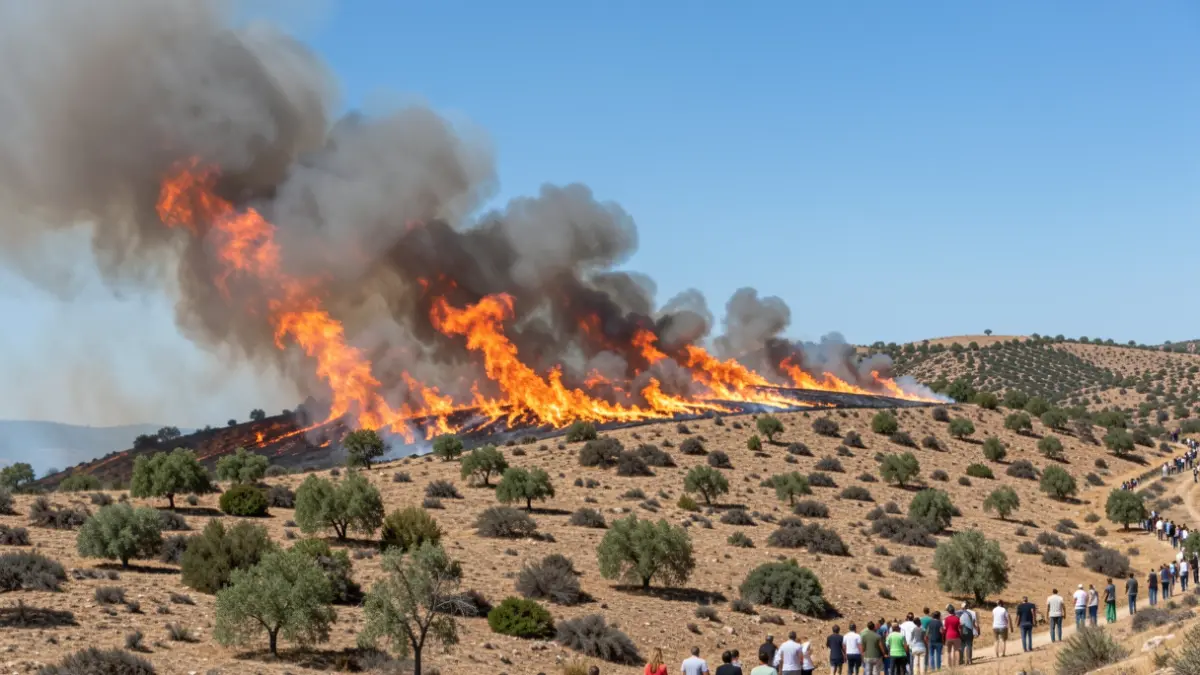
Image of a large forest fire on a dry hillside in Andalusia with intense flames and thick smoke.
IA

Image of a large forest fire on a dry hillside in Andalusia with intense flames and thick smoke.

A report by the European Network for the Study of Extreme Fire Behaviour (NERO) has reconstructed the evolution of the fire that broke out on July 9th in Los Gallardos (Almería), identifying a confluence of factors that made it extraordinarily rapid and uncontrollable.

The analysis, involving the Polytechnic University of Catalonia, utilized satellite images and data from four nearby weather stations. Researchers concluded that a combination of an exceptionally rainy winter promoting vegetation growth, followed by particularly warm and dry May and June, and two heatwaves prior to the fire, left the fuel in optimal conditions.
On July 9th, the flames began near the N-340A, in the Almocáizar area, around 4:40 PM. The first afternoon was critical, with dry southwesterly winds of 20 to 30 km/h and relative humidity around 15%. The maximum temperature that day reached 41.3 degrees Celsius, the highest recorded in the area in the preceding ten days.
The fire's radiative power peaked at approximately 9,000 megawatts by the end of the first day, reflecting the rapid spread and accelerated fuel consumption. Activity decreased overnight, but on July 10th, a shift in wind direction to the east-southeast facilitated its advance towards a mountainous area, driven by terrain and wind.
The total energy released is estimated at around 160 terajoules, with most of it concentrated in the first 24 hours. The NERO report emphasizes that this case exemplifies how chained climatic extremes can foster fires of exceptional intensity, from vegetation growth in wet conditions to its drying and subsequent rapid combustion.
The research team, including Mario Miguel Valero Pérez (UPC), Kadir Alperen Coskuner (Karadeniz Technical University, Turkey), and Theodore M. Giannaros (National Observatory of Athens, Greece), is continuing the analysis with field data for a more detailed reconstruction.