The iconic monumental complex of the Alhambra of Granada continues to captivate visitors, not only for its imposing structure but also for the profound symbolic complexity of its ornamentation. Each room transforms into a true visual cosmos, where spaces like the Hall of Ambassadors or the Throne Room retain much of their original decoration, allowing appreciation of an art that, at first glance, seems limitless but is founded on just three essential components.
The first pillar of this decorative richness is geometric motifs. These characteristic mosaics, crafted from glazed ceramics, cover walls and surfaces with repetitive compositions that evoke infinite continuity. Their color and brilliance have been remarkably preserved to this day thanks to the enamel technique. Beyond their aesthetic function, these forms embody a symbolic conception of art in the Islamic context, where the representation of divine or human figures is restricted. Thus, mathematics and geometry stand as a visual language expressing the idea of the infinite and the divine.
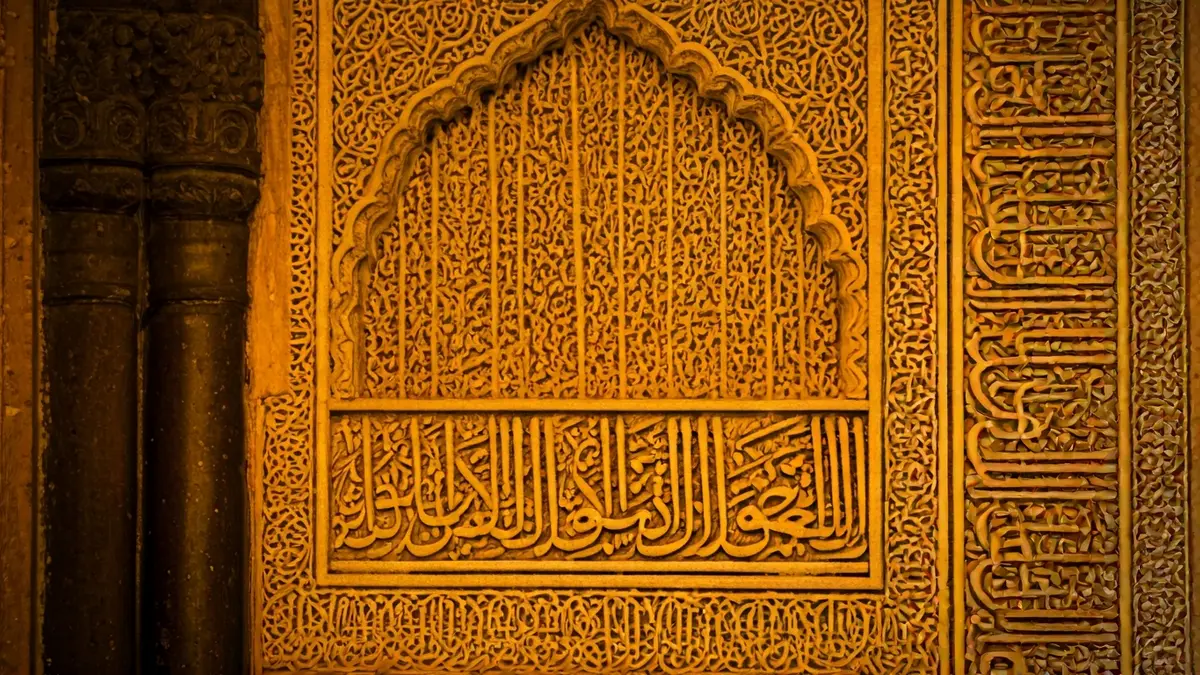
Calligraphy constitutes the second fundamental element and one of the most distinctive features of Nasrid art. The walls of the Alhambra are profusely adorned with Arabic inscriptions that intertwine poetry, Quranic verses, and praises to the sultans who promoted the construction of the palaces. This integration of text has led to the complex being described as “the world's largest book of poems,” where architecture becomes both a literary and spiritual medium.
Finally, natural motifs complete this artistic triptych. Present in forms such as cypresses, pinecones, shells, stars, or stalactites, these representations evoke the natural world without resorting to human or animal figures, in line with the Islamic tradition that avoids idolatry. Nevertheless, their vast symbolic richness and diversity bring dynamism and balance to the ornamentation, consolidating an unparalleled visual language.
The synergy of these three resources—geometry, calligraphy, and nature—explains the sense of harmony and complexity that defines the Alhambra, a monument where every surface transforms into a space of intrinsically intertwined meaning and beauty.