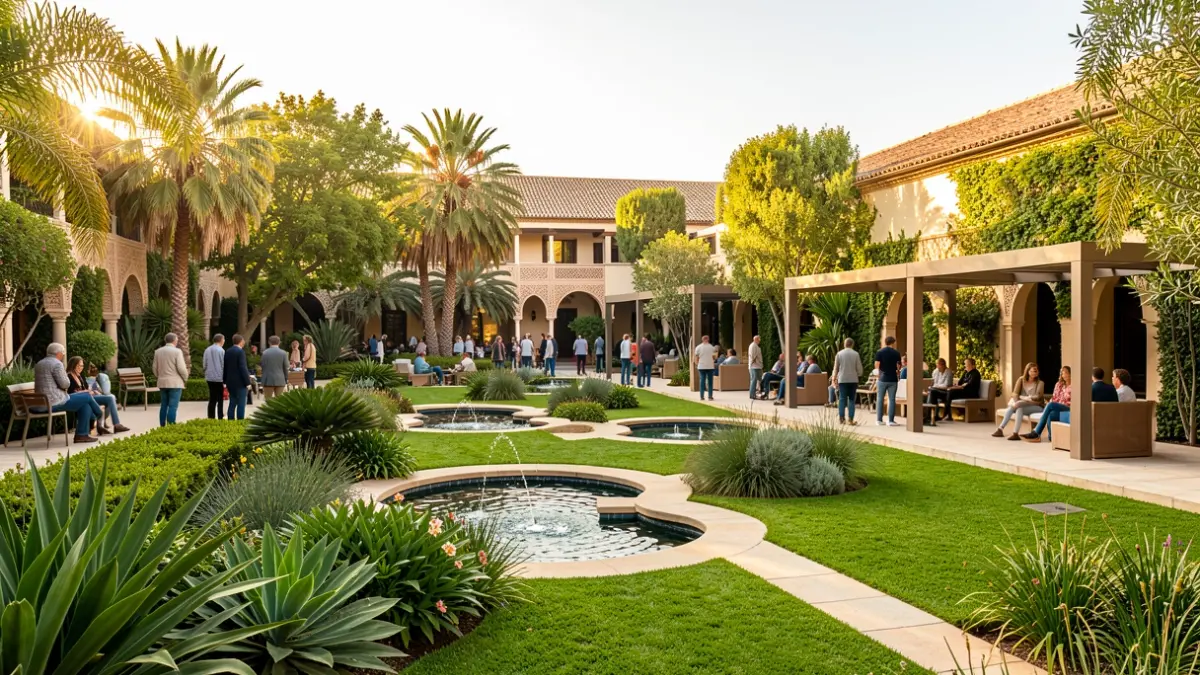
The intervention, with an investment of 5.1 million euros and an estimated duration of nine months, aims to transform the area into a green lung and a residential leisure space. The design is inspired by the old historical orchard layout, reinterpreted in a contemporary key with an emphasis on vegetation, water, and landscape.
Linked to the Granada 2031 candidacy, the park seeks to reconnect the city with its natural environment and offer new spaces for cultural life and citizen encounters. Sustainability and universal accessibility criteria will be prioritized, incorporating over 300 new trees and extensive areas of native vegetation.
The project includes large innovative and inclusive children's play areas, organized by age and adapted to different functional abilities, reinforcing the city's commitment as a 'Child-Friendly City'. Active play areas will be combined with rest spaces, pergolas, and natural shade zones.
Furthermore, multipurpose spaces for sports and outdoor activities will be provided, such as a 'Pump Track' area for teenagers and young people, sports paths, and areas for yoga, meditation, and community activities. Leisure areas with tiered seating and benches for relaxation and community interaction will also be created.
Water will play a central role with a perimeter irrigation channel, water features, and a walk-on fountain, reinterpreting the Nasrid hydraulic tradition. The park's toponymy will be inspired by Granada's heritage, with names like 'Poetry Viewpoint' or 'Garden of Music and Cinema'.
“"We are also bringing culture to the neighborhoods, creating spaces to coexist, play, read, listen to music, hold activities, and enjoy the family environment within a park with a profoundly Granadian identity."
The mayor highlighted that the Parque de las Familias will be a cultural legacy of Granada 2031, an outdoor meeting space linked to music, flamenco, literature, poetry, and dance.