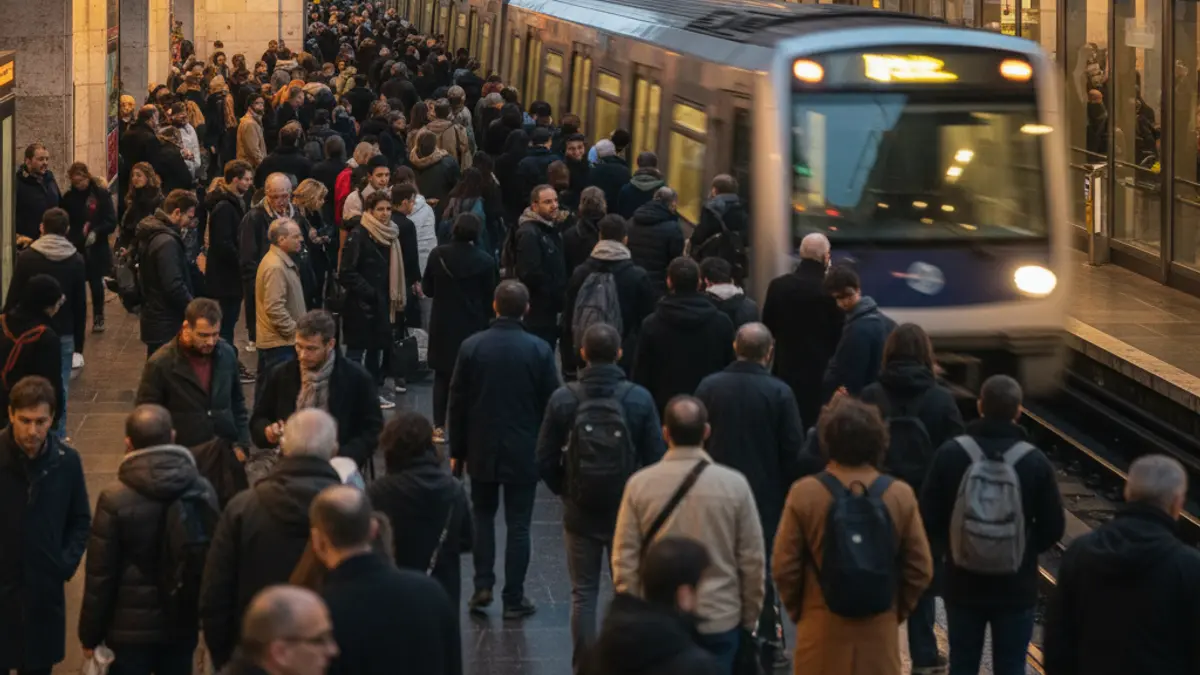
The initial day of the strike on the Granada Metro saw full compliance from staff, leading to 50% minimum services and considerable delays. While no major incidents were reported, long waiting times were a common experience.
These partial stoppages are scheduled to continue until Thursday, culminating in a complete service halt on Friday. Since early Monday morning, passengers have been forced to rearrange their usual travel plans.
“"We arrive a bit earlier, we have nothing to do before classes start, and it's quite uncomfortable."
The situation has particularly affected students who rely on the metro to reach faculties in Fuentenueva, as observed at the busy Universidad stop. Other users, such as a young woman commuting to her university internships, will have to seek alternative transport, like buses, adding further complications to their journeys.
The city's workers are also experiencing the consequences. An employee from the Andalusian Institute of Earth Sciences stated that the strike would cause him to be late for work. Similarly, a mother explained that her daughter, a regular metro user for her job, had to be driven, which will also impact her departure time.
The mobilization was called by workers who deemed the salary proposal in the collective agreement insufficient. Unions have also highlighted that crucial aspects related to the safety and health of Granada Metro staff are not being addressed. This week of stoppages marks the first phase of a progressive mobilization process.