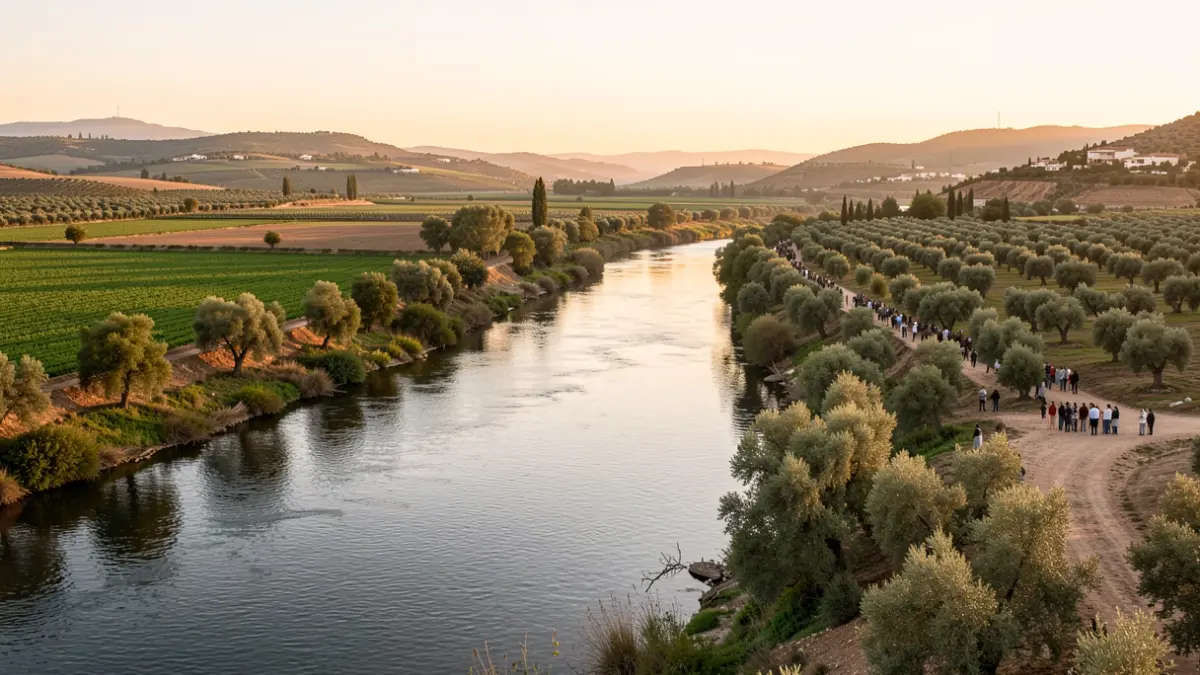
The Guadalquivir River, the most important in Andalusia, has been the subject of an exhaustive study to assess its water quality throughout its course, from its source in the Sierra de Cazorla to its mouth in Sanlúcar de Barrameda. Despite being known for its strategic importance to the economy, agriculture, and tourism, few studies had comprehensively addressed its quality.
Research groups from the University of Córdoba, such as Molecular Biology of Stress Response Mechanisms and Waste Bioengineering: Green Engineering, along with the Ecotoxicology, Ecophysiology, and Biodiversity of Aquatic Systems group from ICMAN-CSIC, have applied a holistic and multidisciplinary analysis. This approach considers not only physicochemical variables but also microbial ones to examine water quality and identify critical sections.
Researcher José Ángel Siles explains that the Water Quality Index, an international standard including variables like pH, dissolved oxygen, and turbidity, was used. Twenty-five physicochemical variables were analyzed, with the nine most important selected for this index. Overall results indicate good river quality, although localized sections with slight decreases were detected, a common occurrence in other river basins.
For the first time, a biological study of the microbial community has been added to this physicochemical analysis. Marina Barbudo, lead researcher of the study published in Journal of Contaminant Hydrology, notes that the microbiome was characterized along the river and biological indices were calculated. José Alhama adds that the integration of physicochemical and biological parameters revealed a progressive decline in quality, although it remained at adequate levels.
The novelty of this work lies in combining both perspectives. Pollutants in low concentrations, which might go unnoticed in physicochemical analyses, can generate toxicity through complex interactions, an effect reflected in the biological component. Carmen Michán, another participating researcher, highlights that biological characterization helps detect alterations that physicochemical analysis might miss.
Water samples were taken from 20 different points along the river at the end of a drought period, a critical time for water quality. According to Mª Ángeles Martín, the results showed a gradual, though not concerning, deterioration along the Guadalquivir, with poorer water quality in the middle-lower section, a pattern common in freshwater courses.
A striking finding was the detection of microbial parameter alterations in the upper-middle course of the river, despite a good physicochemical index. A considerable decrease in bacterial diversity and a high prevalence of tolerant opportunistic microorganisms, particularly the Comamonadaceae family, were observed. The team is investigating the causes of this discrepancy, which could be related to the analysis of tributaries or surrounding agricultural activity, such as olive monoculture.
Arturo Chica concludes that the study demonstrates the suitability of this multidisciplinary and integrative method for analyzing water quality in freshwater courses and recommends its use. This model could be employed to design risk maps and identify environmental threats not detected by more conventional methods.