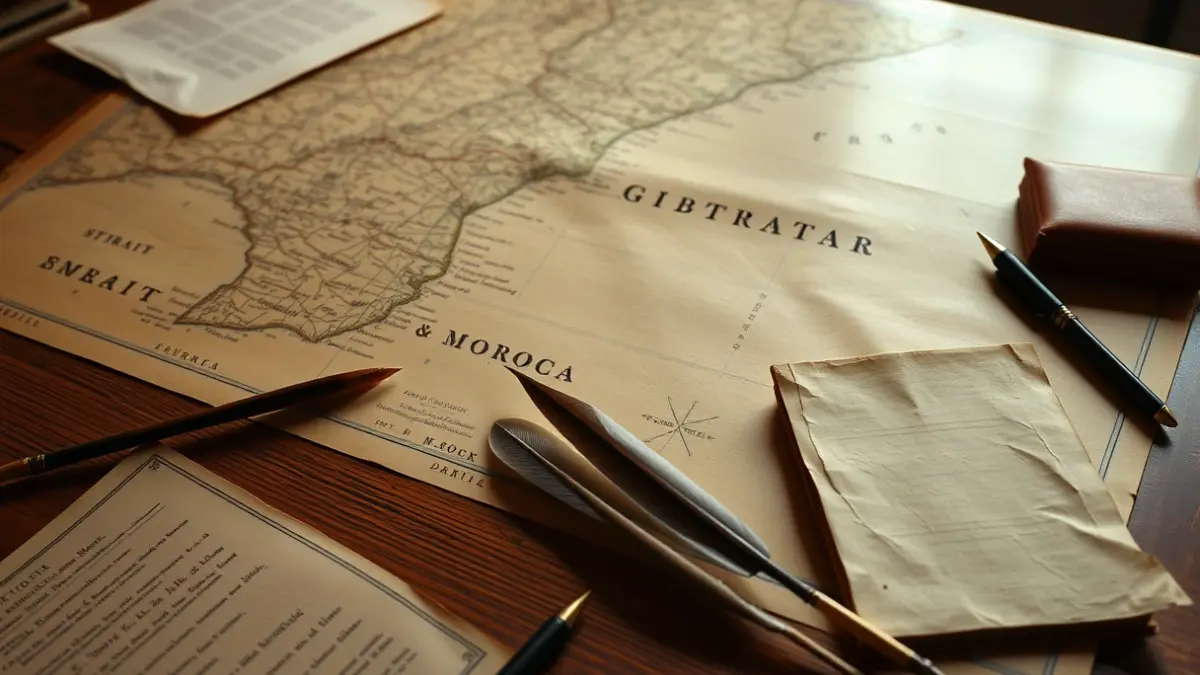
Between January 16 and April 7, 1906, Algeciras, a strategically located city in the Strait of Gibraltar, transformed into the hub of international diplomacy. The Algeciras Conference addressed the so-called “Moroccan question,” a euphemism for the colonial partition of Morocco within the context of European imperialism.
Although presented as an effort to preserve the sultanate's independence, the conference effectively legitimized colonial intervention and the progressive dismantling of Moroccan sovereignty. Decisions were made in Algeciras's halls, far from Moroccan cities and without the real participation of its population.
This event was the culmination of a diplomatic crisis that began in 1905, known as the Tangier crisis, when Germany openly challenged growing French influence in Morocco. France, backed by the United Kingdom, sought effective control, while Germany demanded equal economic and commercial opportunities. Spain, weakened after the 1898 disaster, defended its historical and geographical interests in northern Morocco.
During the three months of the conference, Algeciras experienced unprecedented activity. Delegations from thirteen European countries, the United States, and Morocco stayed in the city, with the Hotel Reina Cristina serving as a central point for informal meetings. The constant presence of diplomats, military personnel, and international journalists altered daily life, filling the streets with conversations in multiple languages.
The Algeciras Conference highlighted the profound gap between diplomatic discourse and political reality.
The conference's Final Act, while proclaiming respect for Moroccan sovereignty, established European control over the country. The State Bank of Morocco was created under European capital, the police were reorganized under Franco-Spanish supervision, and customs were controlled, severely limiting the sultanate's self-governance. France emerged as the main beneficiary, gaining support for establishing a protectorate, while Spain secured recognition of its zones of influence in the northern and southern territories.
This unequal distribution drew Spain into a high-cost colonial involvement, leading to conflicts such as the Rif War (1921-1926). The Algeciras Conference did not resolve the Moroccan question but channeled it towards a colonial solution, consolidated in 1912 with the signing of the Treaty of Fez, which officially divided Morocco into French and Spanish protectorates. Although Morocco regained its independence in 1956, the vestiges of colonialism persist in its institutions and territorial configuration.