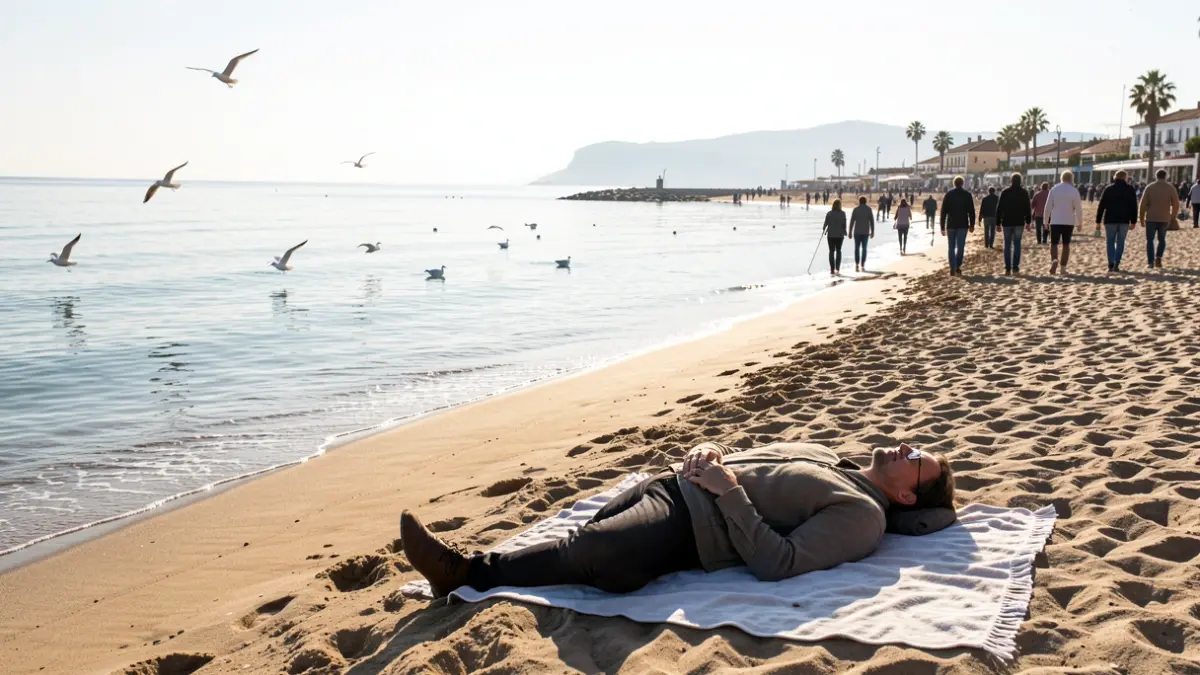
The accumulated fatigue from hours of physical exertion dissipated when a hiker found the perfect spot on the beach to rest. The damp sand under his boots, the warm afternoon sun, and the relative tranquility of the surroundings invited relaxation. He joined other vacationers, seeking his own space between the shore and the crowd.
As he lay down on his towel, feeling the exhaustion fade, the man surrendered to the sensations of the moment. The sea, like a smooth mirror, reflected thousands of glints under the May sun. Seagulls fluttered around, searching for food in the sand. The ambient sound consisted of the sea breeze and soft music from a nearby beach bar, a mix of pop and chill that encouraged a carefree mood.
“"What a big booger, Sergio. Come on, suck it up!"
The phrase, uttered by a woman a few meters away, jolted the hiker out of his daze. The unexpected and direct statement put him on alert. Casually turning his head, he observed a middle-aged family with two teenage children, who seemed to be the protagonists of the scene. The son, Sergio, and his mother were preparing to play paddleball, with no apparent trace of the earlier comment.
The hiker's reflection focused on his mother's peculiar lesson. He pondered the advisability of such advice, weighing the young boy's health and well-being. However, a deeper interpretation suggested that the mother might be imparting a valuable lesson in domestic economy: the prudence of 'saving for when there is none,' a value that, in his opinion, has been lost in current education.
The hiker concluded that the mother, with her wisdom, seized the opportunity to teach a lesson in microeconomics, a principle of foresight applicable to life, reminding him that 'you never know what tomorrow may bring'.