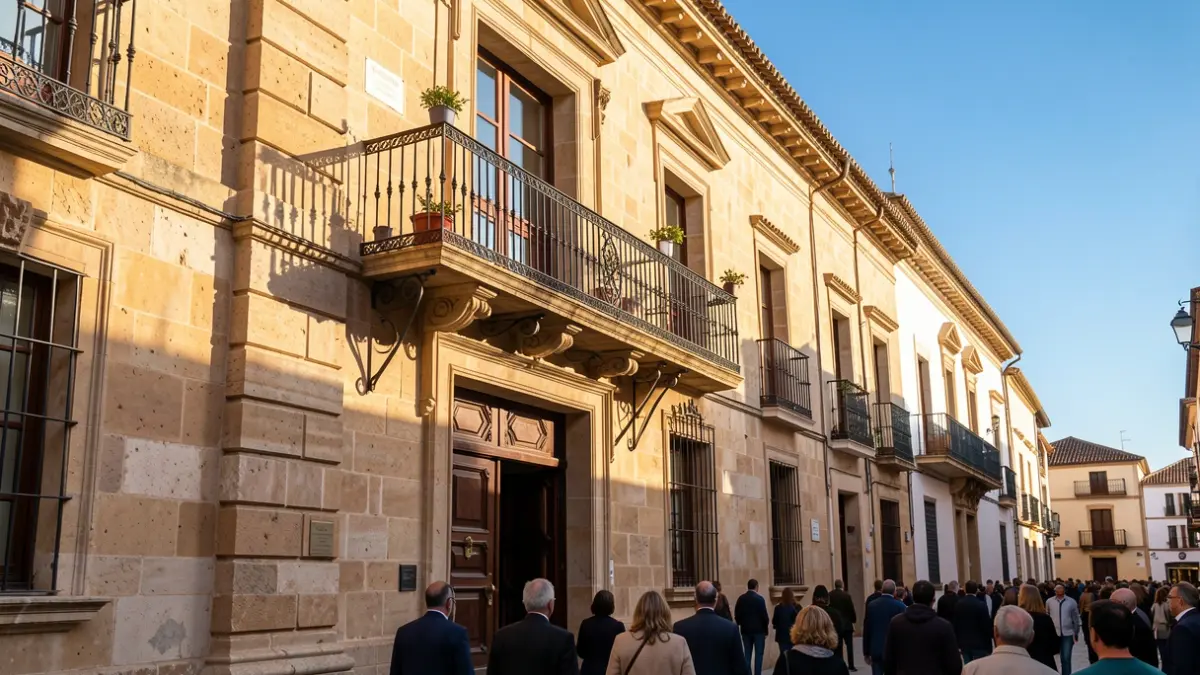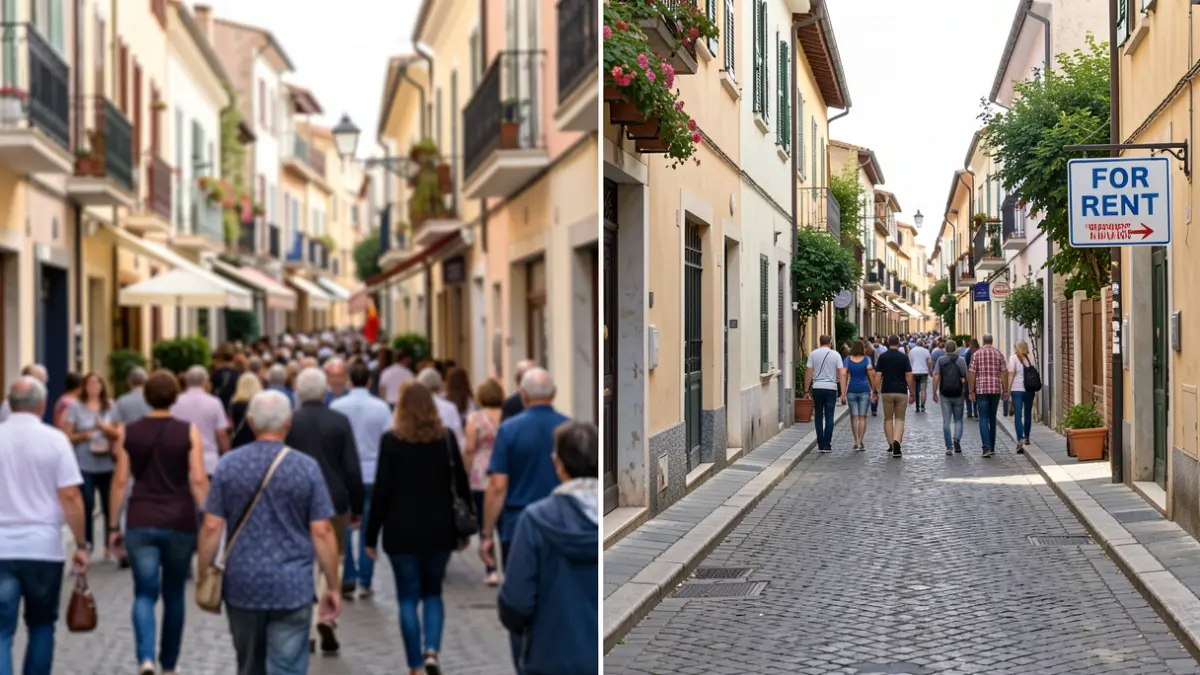
The proposal aims to address the housing emergency caused by the proliferation of tourist accommodations, which promoters consider an economic activity that needs regulation. The consultation question is: "Do you agree that the City Council should modify urban planning regulations and subject tourist use dwellings to a municipal urban planning license, and therefore, remove from activity those that do not comply with the current PGOU?". This measure has already been implemented in Santiago de Compostela and Catalonia, but the referendum format is a first in Spain for this issue.
The promoting group, comprising Izquierda Unida (IU), Podemos, Verdes Equo, Justicia Social, Alternativa Republicana, and Recortes Cero, presented the initiative at a press conference. Pedro Jiménez, coordinator of IU Cádiz, and Marina Liberato, spokesperson for Podemos in the city, explained the roadmap.
Jiménez emphasized the city's "housing emergency" situation and the need for measures to reverse touristification, alongside promoting public housing and limiting rental prices. "It is necessary to reverse this process so that people can continue living here," he stated.
Liberato pointed out that INE's tourist pressure indices support this need, particularly in the Old Town. She detailed that in areas like Calle Nueva, Cristóbal Colón, San Francisco, and Canalejas, tourist pressure reaches 11.35% of the housing stock, doubling the municipal limit in areas such as Candelaria, Feduchy, and Vargas Ponce (8.38%).
It was recalled that in September 2022, the Cádiz City Council approved a modification to the PGOU to limit the establishment of new tourist accommodations in the old town and restrict the construction of tourist hotels and apartments. However, during the approval process, numerous tourist accommodations were registered to circumvent the limitation, creating an "anomaly".
A new modification of the PGOU in May 2025 introduced a three-year moratorium and expanded the limitations, eliminating the possibility of authorizing tourist accommodations on certain floors and in specific zones. The current proposal seeks to incorporate the creation of a municipal urban planning license to "correct" this anomaly and ensure compliance with planning regulations.
The promoters explained that the popular consultation is a legitimate citizen participation tool protected by law. To activate it, a promoter group and signature collection are required. The Cádiz Municipal Regulation on Citizen Participation requires 3% of the electoral roll (2,849 signatures), while Andalusian law stipulates 6,448 signatures for municipalities over 100,000 inhabitants.
Although the vote's outcome is not strictly binding, it is of "political obligation." The City Council will have to convene an Extraordinary Plenary Session within one month to formally adopt an agreement, taking into exclusive account the subject of the vote, participation rate, and the consultation's result.
The roadmap includes the formal registration of the promoter group on July 31st, a request for municipal collaboration to validate signatures, and starting September 15th, a mobilization campaign in neighborhoods to collect support signatures. Signature submission and verification are planned for October or November, followed by the proposal to the Plenary by the mayor.