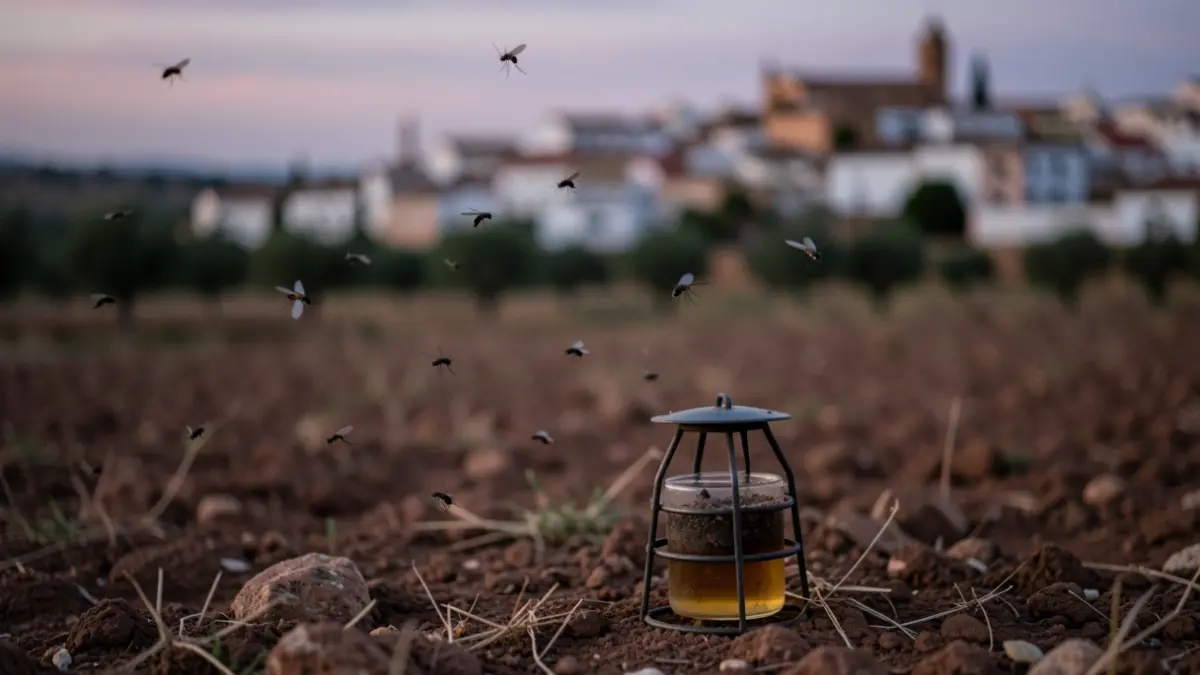
The declaration of Constantina as a health alert area follows the detection of mosquitoes carrying the West Nile Virus (WNV). The trap where the infected insects were found was installed by the Provincial Council of Seville in the town.
This is the fifth Andalusian municipality to be declared a WNV alert area this year. Previously, detections were recorded in Pulpí (Almería), Torredonjimeno (Jaén), and Palomares del Río (Seville), as reported by the Ministry of the Presidency, Health, and Emergencies.
In Benacazón, virus circulation was also detected, but as it was more than 1,500 meters from residential areas, an alert declaration was not necessary.
The Comprehensive Surveillance and Vector Control Program for West Nile Fever establishes that declaring an alert area involves intensifying entomological, animal, and human surveillance in the region. Community promotion actions are also activated, and communication to citizens is reinforced through community pharmacies and nursing services to encourage the adoption of necessary protection measures against WNV.
The local administration must intensify control and treatment measures for disease-transmitting mosquitoes during the alert period, which will extend until August 10. This includes reinforcing actions in population centers and in locations within 1.5 kilometers identified as larval breeding sites or adult refuges, as well as enhancing public information and awareness efforts.
In the context of surveillance, one mild case of West Nile fever has been diagnosed in Andalusia this year, recorded in Palomares del Río.
Furthermore, a progressive increase in the density of female transmitting mosquitoes is being observed. In the last week, abundant densities have been registered in Coria del Río, Isla Mayor, La Puebla del Río, Los Palacios y Villafranca, and Lebrija. Municipalities such as Gerena, La Carlota, and Bailén showed intermediate densities.