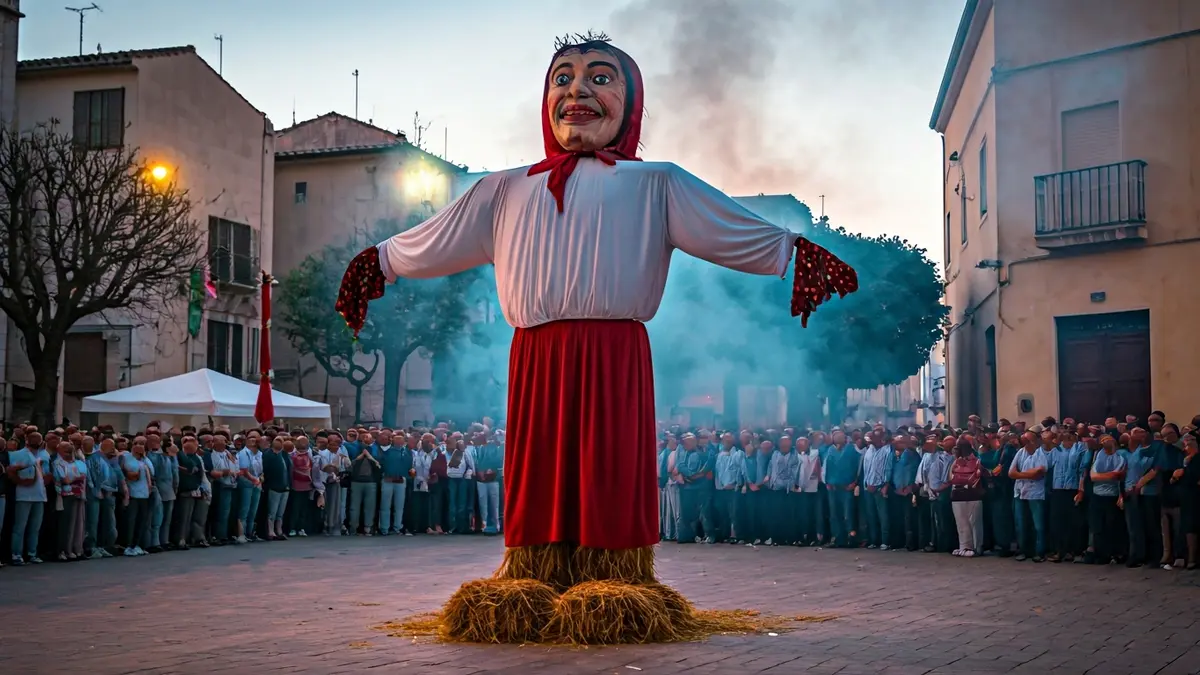
The incident, which took place in El Burgo, a town near Malaga, has drawn a strong reaction from Israel. Israel’s Foreign Ministry summoned Spain’s chargé d’affaires for a formal reprimand, condemning the act as “appalling anti-Semitic hatred.”
The seven-meter-tall figure was packed with 14 kilograms of gunpowder before being obliterated to pieces amidst cheers from the packed crowd. However, local officials have pushed back against accusations of anti-Semitism, insisting that the stunt is a long-standing Easter ritual.
“"We did not, in any way, expect this reaction. This has been going on for a century and we didn’t think it would come to this."
Mayor Narvaez emphasized that the community of El Burgo is not anti-Semitic, describing itself as “an open, welcoming and peace-loving community.” She explained that the effigy represents negative things people wish to leave behind, and the decision to use Netanyahu’s likeness was made to condemn genocide and war.
“"We decided to create a puppet condemning genocide and war. I don’t think there has been anything more relevant this year. Next year, we will continue with our traditions."
This incident marks another escalation in the already strained relationship between Spain and Israel, which has deteriorated amidst ongoing conflicts in the Middle East. Under Pedro Sánchez’s government, Spain has been an outspoken critic of Israel’s military offensive in Gaza, with several leading figures accusing the country of carrying out a genocide.
Tensions further escalated after Spain vetoed the use of two airbases in Andalucía, jointly operated with the United States, for ongoing US-Israeli strikes on Iran. In early March, Spain recalled its ambassador from Tel Aviv, leaving only a chargé d’affaires. Recently, Israel also criticized Spain for reopening its embassy in Tehran, accusing Madrid of aligning itself with what it called the “Iranian terror regime.”