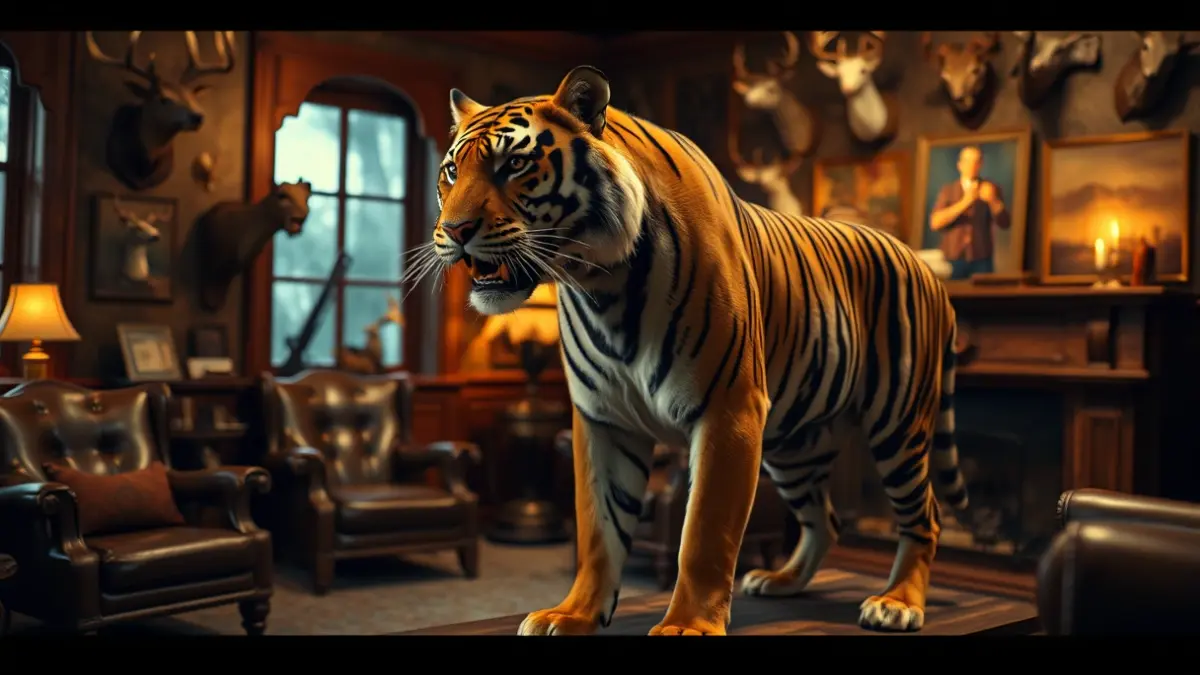
During the 1990s, while a well-known bullfighter captivated public attention, an unusual name resonated strongly: Currupipi. This was not a member of his team, but a Bengal tiger that became the most unique inhabitant of the emblematic Ambiciones estate, located in the Cadiz town of Prado del Rey. The feline was not only the bullfighter's pet but also stood as the ultimate symbol of an era where success was measured by the ability to transform the extraordinary into the everyday.
The origin of its name, as peculiar as its owner, came from an attempt to call it "Curro," which evolved into a diminutive that would even name dance music compilations. Currupipi lived near the house, appearing in television reports and tabloid photographs. At that time, regulations regarding the ownership of wild animals were much more flexible, allowing a large predator to coexist in a domestic environment, under the watchful eye of a nation that followed the bullfighter's steps as if it were a soap opera.
However, the tiger's presence was not without controversy. The image of the animal on the estate, along with the bullfighter's passion for hunting trophies, attracted the attention of animal welfare associations and environmental authorities. Over time, Spanish legislation became stricter, prohibiting the ownership of exotic species that posed a risk to public safety. Currupipi thus became the last vestige of a form of ostentation that would be unthinkable today under current animal welfare standards.
After its death, the feline did not leave the property that made it famous. Following its owner's wish to preserve what he loved, the animal underwent taxidermy. Currently, it remains taxidermied in an imposing posture within the estate's hunting lodge, guarding the memories of the bullfighter's glory years and serving as a silent witness to the visitors who still comment on its legend today.
Currupipi was, in short, much more than an animal; it was a reflection of a Spain that was opening up to modernity with one foot still anchored in the most baroque folklore. It represented the triumph of a humble family that achieved its dreams of opulence, allowing itself extravagant luxuries such as having a tiger in the garden. Today, its figure remains a pop culture icon, reminding us of those days when everything seemed possible at Ambiciones.