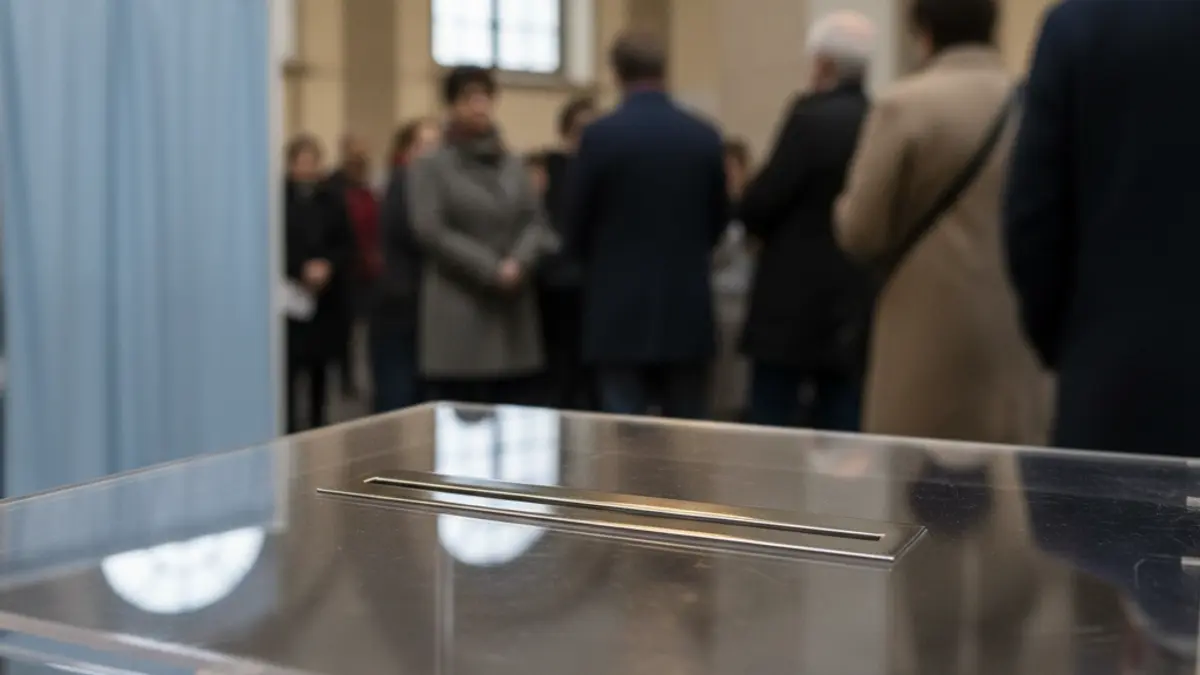
The approaching election date of May 17, 2026, has highlighted a disparity in the value of votes within the autonomous community. Citizens in Seville find themselves in a position of lower representation compared to other Andalusian provinces, due to the structure of the electoral system.
This particularity is explained by Andalusia's Electoral Law, which sets a minimum of eight deputies per province and distributes the rest based on population. Although Seville is the most populous province, the distribution of seats is not strictly proportional, creating a representation gap.
“"In practical terms, a citizen's vote in Huelva is worth more than double that of a Sevillian."
The difference is notable when comparing Seville with Huelva. While in the province of Huelva approximately 37,000 voters are needed to elect a representative, in Seville this figure rises to 88,788. The D'Hondt method, used for seat allocation, aims for stability but tends to penalize vote dispersion in large constituencies.
In Seville, where 18 seats are distributed, vote fragmentation is greater, which increases the 'cost' of each deputy's mandate. A party can accumulate a large number of supporters in the capital and its metropolitan area but fail to gain representation if it does not reach the minimum thresholds established by the system.
For the 2026 elections, it is estimated that securing the first seat in the Sevillian constituency will require significant mobilization, with a threshold that could range between 50,000 and 70,000 votes. Furthermore, the requirement to exceed 3% of votes in each province to enter the seat distribution poses a greater challenge in Seville, given its large population of over 1.5 million voters.