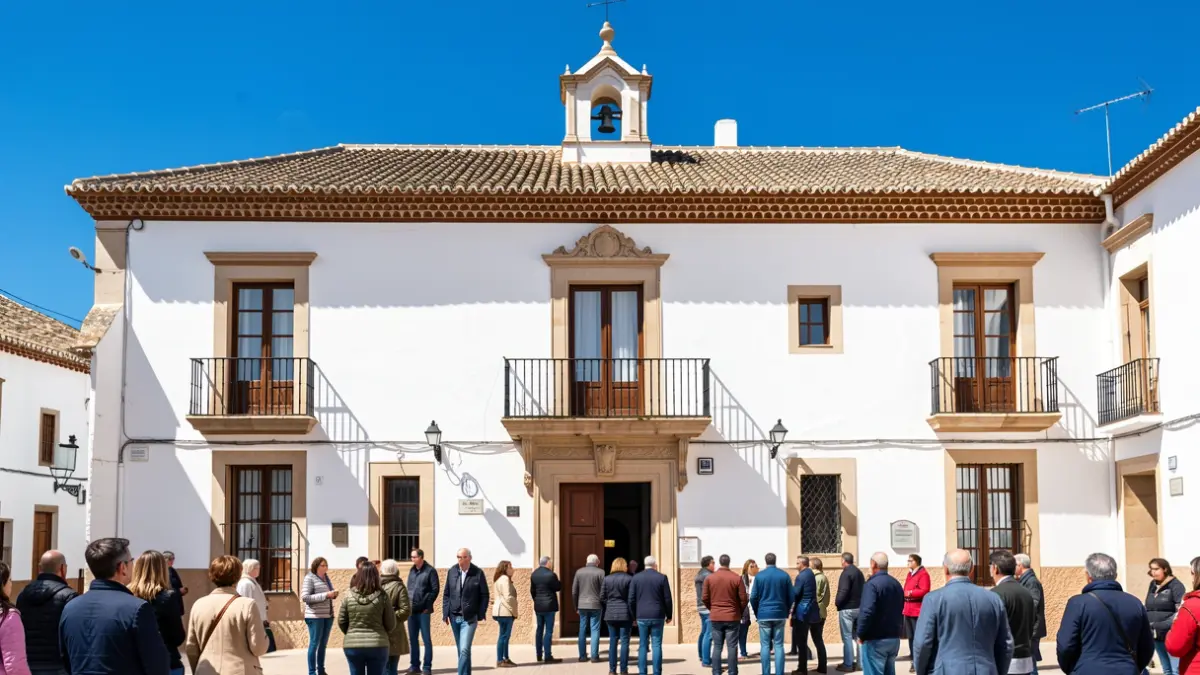
The regional leader is confident that the return will be possible throughout the day, once emergency work to consolidate the safety of the affected homes is completed. He explained that these houses do not have serious structural problems but are being reinforced to ensure residents' peace of mind.
Moreno also detailed that a damage assessment is underway so that, in collaboration with the City Council, the Provincial Council, the State Administration, and the Regional Government of Andalusia, repairs can be carried out as soon as possible.
The president acknowledged the unpredictability of earthquakes and the absence of global mechanisms to foresee them. However, he pledged to improve education and information for the Andalusian population on how to act during an earthquake.
“"The faults are repositioning themselves and, therefore, we will have this sequence of tremors for perhaps a week or 15 days"
Regarding seismic activity, Moreno indicated that, according to experts, after the main 5-magnitude earthquake, the faults continue to reposition, which could generate a sequence of tremors for one to two weeks. He expressed hope that the intensity of these movements would gradually decrease.
He also conveyed his support to the residents affected by fear after experiencing such a shocking event as an earthquake. He emphasized that Granada is the province with the highest seismic activity in Spain and the need to better prepare it for potential larger earthquakes.
Moreno stressed the importance of public education, recalling that running outside during an earthquake is counterproductive, as happened in the Lorca earthquake, where people died from falling debris.
Finally, he announced a review of protocols and highlighted the existence of anti-seismic building regulations since 2003, which equip buildings with resistance. He committed to reinforcing these measures in the coming years to increase safety.