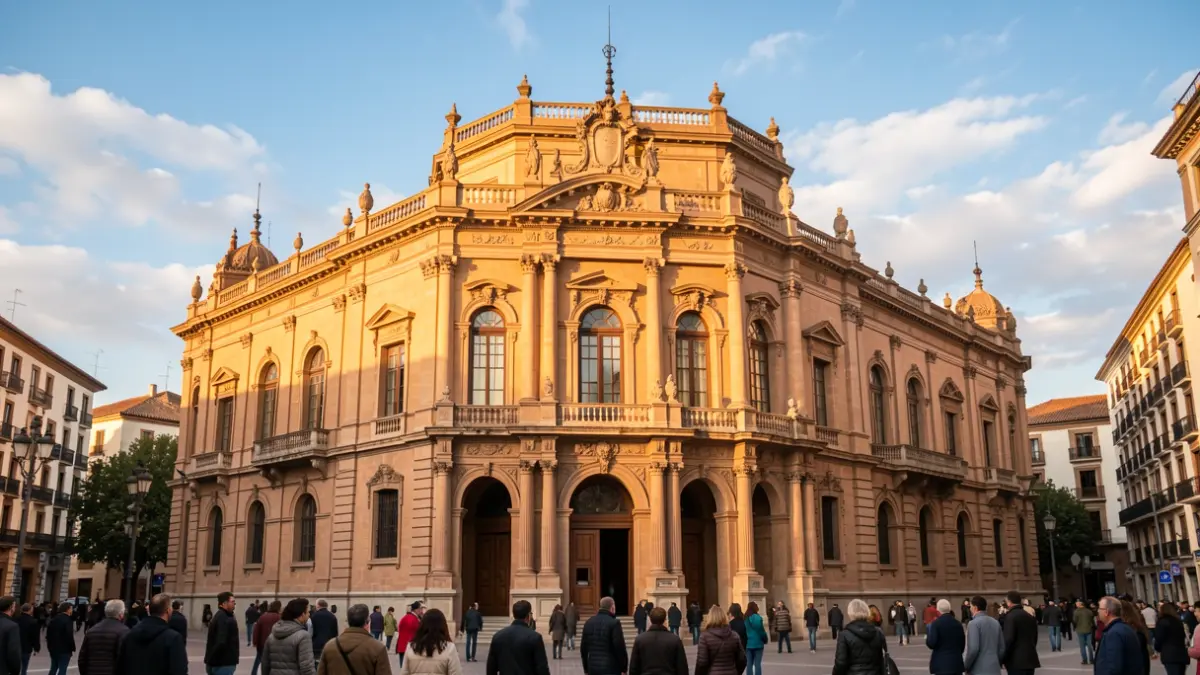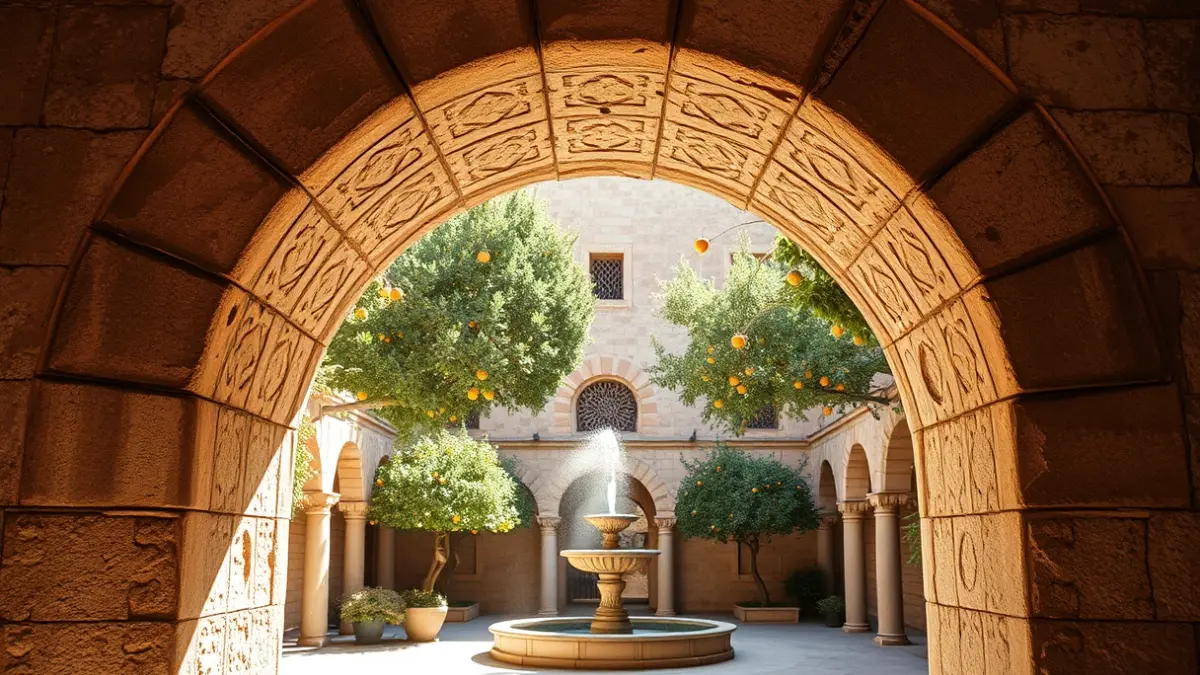
Located in the area of Seville Cathedral facing Calle Alemanes, the Door of Forgiveness is one of the most unique entrances to the architectural complex. It provides direct access to the Patio de los Naranjos (Courtyard of the Orange Trees), a space of great beauty and importance that can be appreciated from the public road without needing to enter the temple.
This entrance is one of the most notable remnants of the greater Almohad mosque, built in the 12th century, upon which the current Seville Cathedral was erected. Its characteristic horseshoe arch is still preserved from its original structure.
Its central position on the northern facade of the building made it the main access not only to the sahn (now the Patio de los Naranjos) but also to the oratory itself, giving it a marked monumental and preeminent character. The sahn, in traditional Islamic architecture, refers to the central, open courtyard, typically surrounded by porticoes or arcades.
“"In the Middle Ages, it was common for many people to approach the doors of temples to pray, pilgrimage, or request the granting of indulgences for sins committed."
As explained by Seville Cathedral, in 1407 this access became known as the "Door of Forgiveness" due to the medieval custom of seeking indulgences in its vicinity. In the 16th century, the relief of the Expulsion of the Merchants, a work by Miguel Perrin, a prominent sculptor of his time, was added to the door.
From the Patio de los Naranjos, above the door, a sundial can be observed, often overlooked. This instrument was used for centuries to mark the hours by the shadow cast by the sun, a historical detail that can still be appreciated today if one looks up.
The courtyard, or former sahn of the mosque, has been restored on several occasions, but it still retains its original structure with pillars supporting pointed horseshoe arches. In its center, a modern fountain occupies the place of the ancient sabil, where Sevillian Muslims performed their ablutions before entering the temple.
Of the three original galleries of the courtyard, only two are currently preserved, as the one on the western side was demolished to build the Sagrario church. These galleries have lost their original roofs, now showing the result of various reforms and modifications.
The open sector of the courtyard features an orderly arrangement of orange trees, connected by a network of channels that form geometric patterns and are still used for water flow. The courtyard has two doors leading outside and two others providing access to the adjacent Cathedral enclosure. From the Door of Forgiveness, it is possible to glimpse this area and enjoy a unique view of the architectural complex.