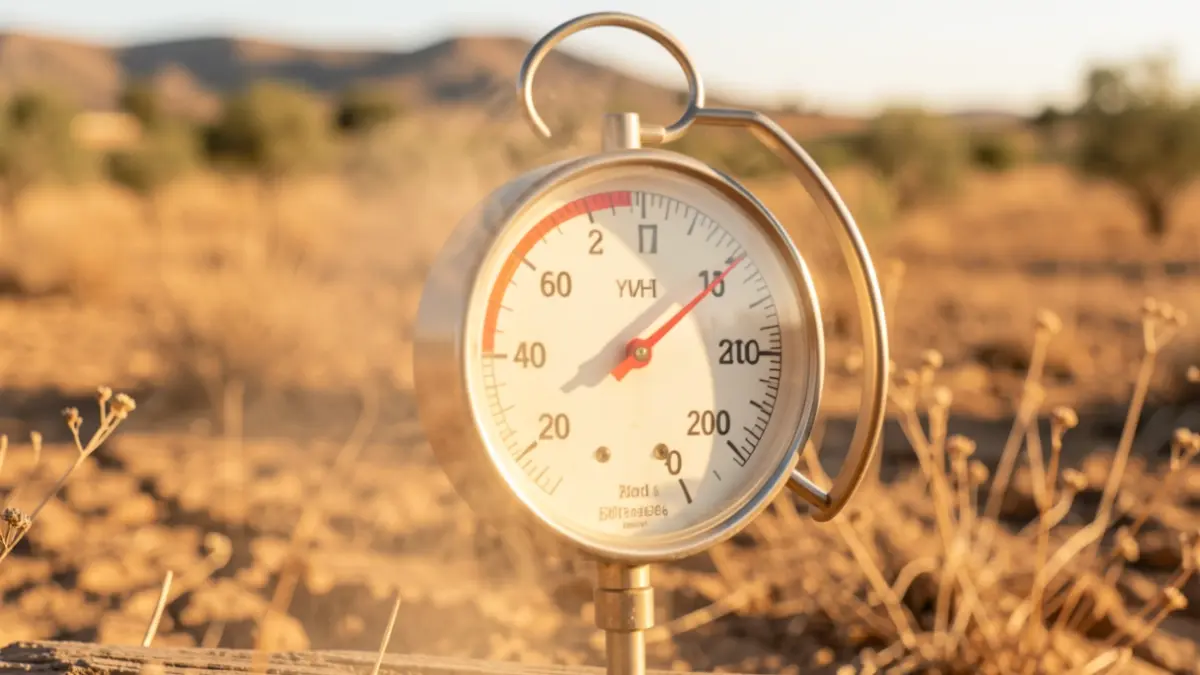
The Spanish spring, traditionally a season of mild temperatures, is undergoing a drastic change. Current readings show values close to 30 degrees in mid-May, temperatures typical of summer, leading experts to point to climate change as the main culprit for the disappearance of the 'in-between' season and the alteration of seasonal patterns.
Since mid-May, Spain has been experiencing an unusual heatwave, with thermometers between 5 and 10 degrees above the seasonal average. These values, more typical of August, have arrived after temperature swings of up to 15 degrees in just a few days, highlighting the intensification of extreme climate events.
“"Previously, a warm spell like this might last 2 or 3 days at most, whereas now we see it extending up to 2 weeks and reaching higher temperatures than expected for this time of year. These kinds of extremes are one of the clearest symptoms of climate change."
Meteorologist Mario Picazo explains that global warming has completely eliminated the transitional season in Spain, strengthening summer and encroaching on spring and autumn. High temperatures arrive up to a month earlier and take longer to recede, altering the very definition of the seasons and making phenomena more extreme and prolonged.
Data from the State Meteorological Agency (Aemet) confirms this trend. According to its spokesperson, Rubén del Campo, since 2018, Spain has predominantly experienced warm or extremely warm years. The average temperature has increased by 1.75 degrees since 1961, reflected in warmer-than-average seasons, such as last June, which exceeded the average by 3.6 degrees.
Extreme heat has significant repercussions across various sectors, from public health to agriculture and tourism. Urban environments, with the 'heat island' effect compounded by pollution, are particularly concerning, being associated with increased mortality rates. Experts are calling for urgent adaptation measures to mitigate these effects, as suffocating heat is becoming a regular occurrence.
While a heatwave in May does not guarantee an extreme summer, climate change increases the probabilities. Aemet's seasonal models predict a 60% chance of a warmer-than-usual summer across Spain, and globally, the formation of El Niño could lead to another year of record temperatures.