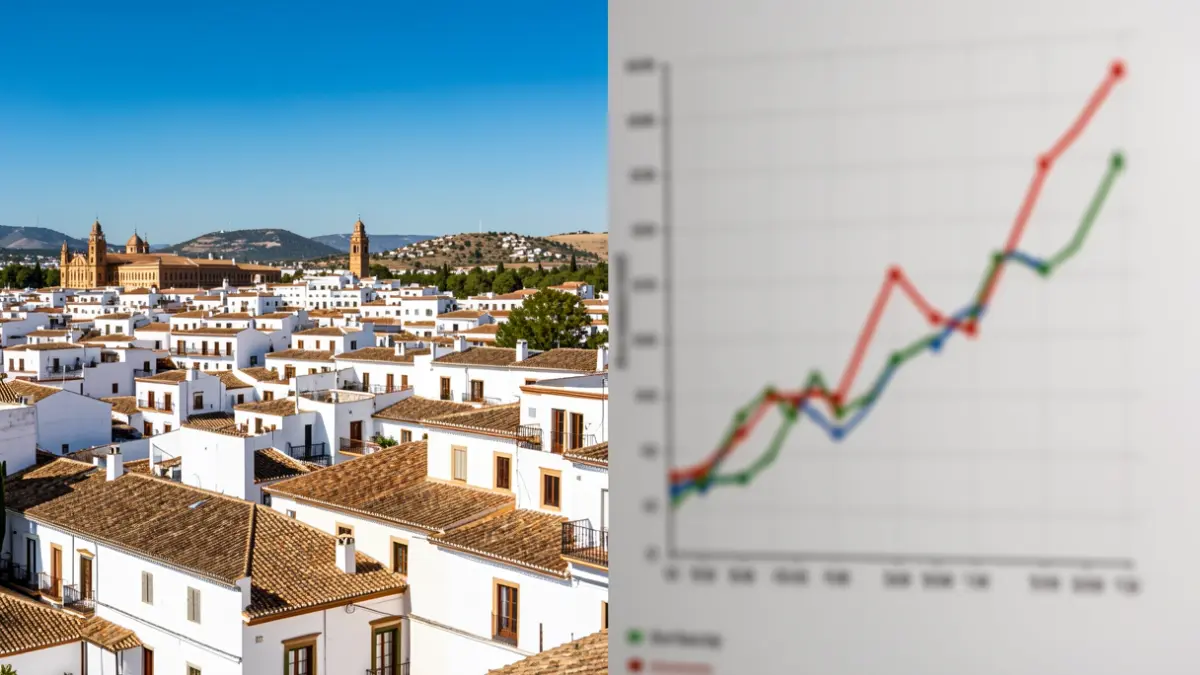
Demographic projections for the next fifteen years place Andalusia in a position of moderate growth, with an estimated increase of 4.5%, which would bring its population to over 9.1 million inhabitants. However, this increase is significantly lower compared to other autonomous communities such as Catalonia (12.2%), Madrid (14.4%), and the Valencian Community (16.4%). Andalusia's growth would thus be four points below the national average.
This unequal growth rate could lead Andalusia to lose its position as the most populous autonomous community in Spain. According to the INE, if the current trend continues, Catalonia could reach 9.2 million inhabitants in fifteen years, surpassing the Andalusian region. Madrid would also close the gap, aiming to exceed 8.2 million.
The strategies of the Regional Government of Andalusia to address the demographic challenge, focusing on rural municipalities and areas at risk of depopulation, consider several scenarios. The most optimistic foresees reaching 10 million inhabitants, while other more moderate or pessimistic scenarios place the population below nine million or even in decline.
The Minister of Justice and Public Function, José Antonio Nieto, highlighted a year ago the importance of effective management to maintain population leadership, emphasizing Andalusia's extensive coastline, territory, active agricultural land, and protected natural spaces. A drop in the population ranking could have direct repercussions on regional financing, transfers, and investment plans.
Andalusia's demographic stagnation is reflected in several indicators. Its natural population change is lower than that of other major communities, and the deficit is more pronounced in its migratory balance, both national and international. INE projections indicate that the community will continue to experience a net outflow of population to other territories.
Nationally, the INE predicts that Spain will gain 4.2 million inhabitants in the next fifteen years, driven mainly by a positive migratory balance, as the natural population change will remain negative. Within Andalusian provinces, internal shifts are expected, with territories like Cádiz facing population loss, while Málaga is projected to experience the highest growth and could surpass Seville in population.