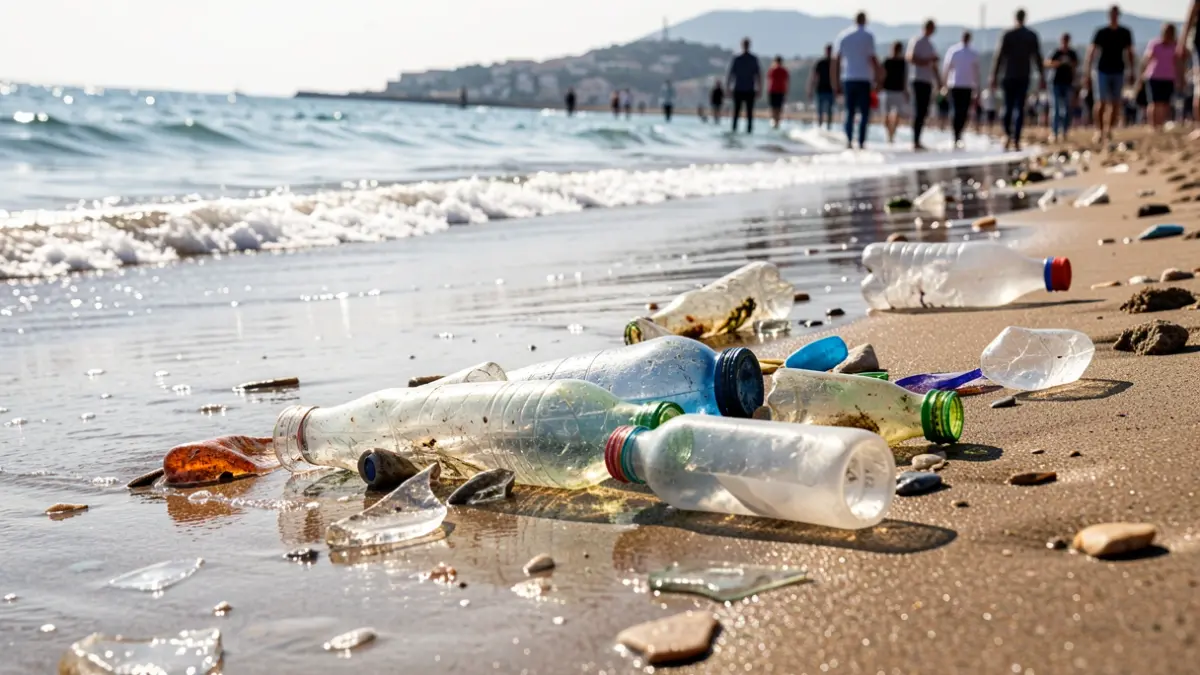
The rise in marine litter coincides with the peak of tourist activity on Malaga's beaches. Cleaning crews have observed an increase in waste linked to recreational use of the sea, boating, and tourism.
Plastics remain the primary pollutant, accounting for 74.28% of the total waste collected. Common items include packaging, bottles, floats, toys, and debris from vessels.
Despite the monthly increase, July's data shows a positive trend when compared to the same month in 2025, when 40.48 cubic meters were collected. This year, the figure dropped to 33.01 cubic meters, indicating a significant reduction in accumulated litter along the coast.
Marbella and Estepona were the municipalities with the most intensive clean-up efforts. Marbella saw 6.91 cubic meters removed, including large wooden pallets and remnants of a semi-destroyed boat. In Estepona, with 7.22 cubic meters collected, the proximity to the port contributed to the appearance of unusual waste, along with a day's collection of a significant quantity of fish in the coastal area.
In other municipalities such as Torremolinos, Benalmádena, Fuengirola, and Mijas, plastic was also the predominant waste, particularly packaging, bottles, beach items, and objects from recreational boats.
The Mancomunidad de Municipios de la Costa del Sol Occidental highlights that while July saw an increase from June, the year-on-year reduction reflects improved waste management and greater environmental awareness, although plastic continues to be a major threat.