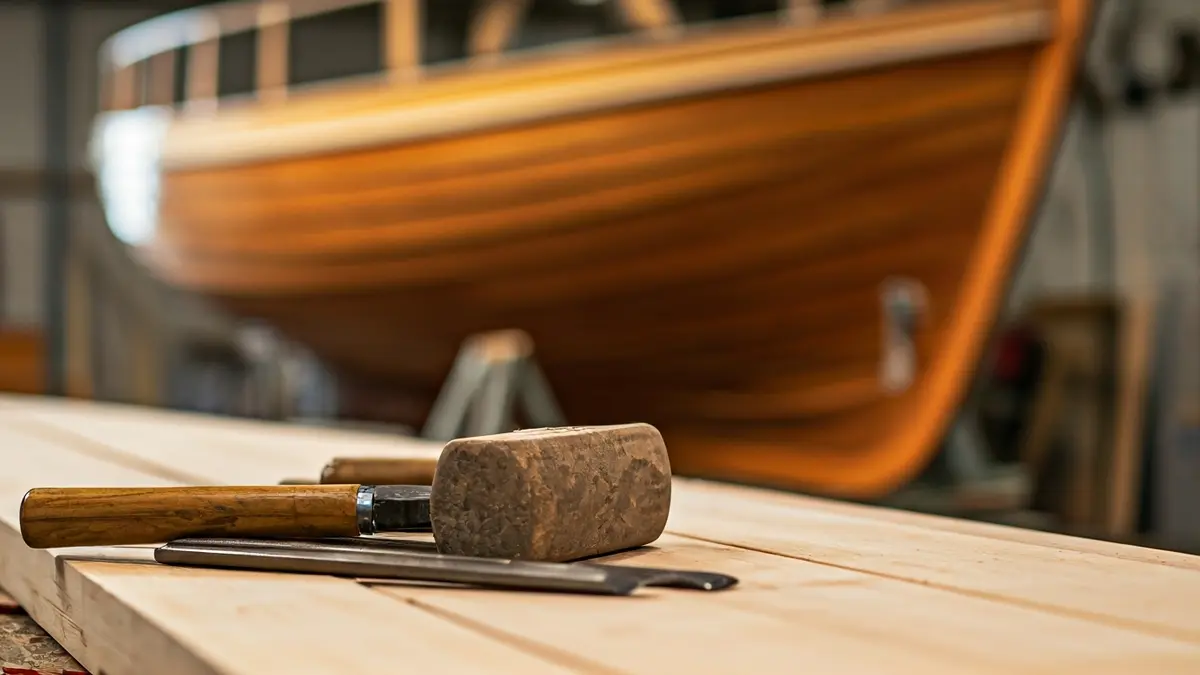
This declaration, under the classification of Activity of Ethnological Interest within the General Catalog of Andalusian Historical Heritage (CGPHA), encompasses the array of techniques and trades dedicated to the artisanal construction, repair, and modification of vessels. Historically linked to inshore fishing along the Málaga coast, these traditional boats, such as the jábega, buceta, sardinal, and chalana, have evolved to include sports and recreational uses.
The activity not only focuses on the main vessels but also on essential accessory elements like oars, props, and winches. A distinction is made between the shipwright, skilled in design and construction, and the caulker, specialized in repairs. Currently, the jábega and chalana are the most prevalent due to their popularity in competitive rowing.
“"Shipwrights have always possessed extensive knowledge of different wood types and their qualities for naval construction, also undertaking minor repairs and, occasionally, modifying boats to alter their length."
The Andalusian Executive emphasizes that, thanks to improvements in communications and transport, this ethnological activity is no longer confined to coastal areas but extends to other localities within the province. This allows construction to take place anywhere geographically, with the final product then transported to its place of use.
The presence of these traditional wooden boats on Málaga's beaches is a deeply ingrained symbol of collective identity. This image is closely tied to local gastronomy, featuring specialties like sardine espetos, and to popular maritime celebrations, such as the processions of the Virgen del Carmen every July 16 along the entire Málaga coast.