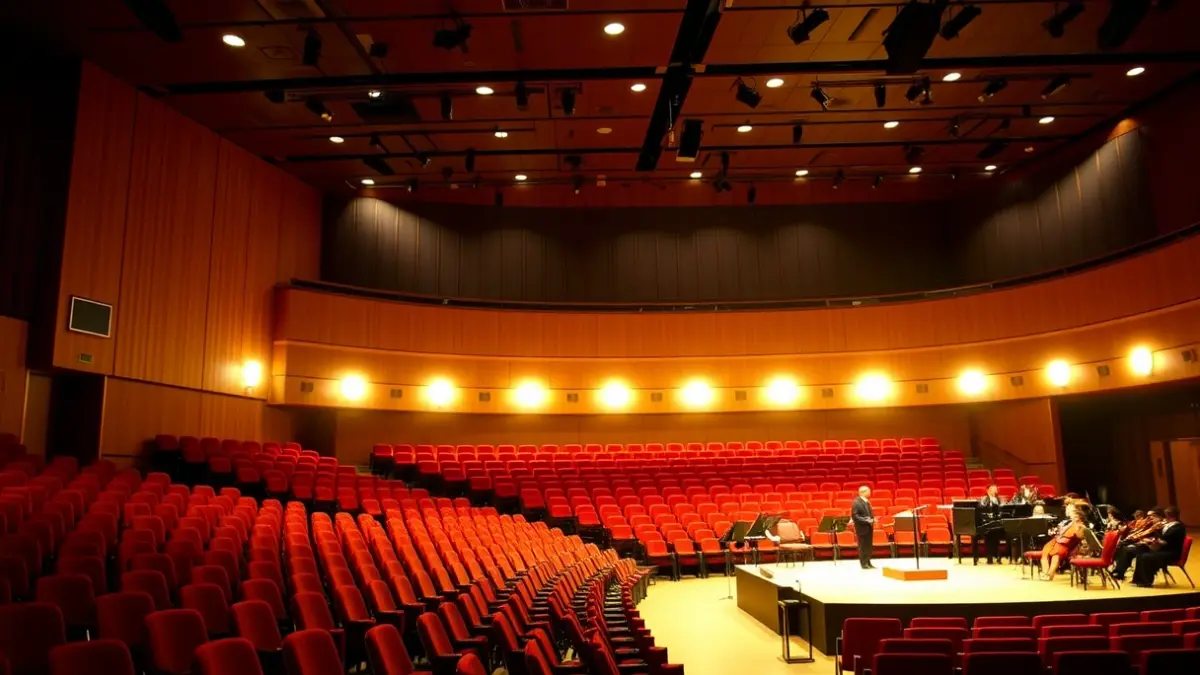
The recent concert by the Málaga Philharmonic Orchestra (OFM) at the Teatro Cervantes stood out for its ability to establish a dialogue between the artistic proposals of guest conductors and the technical-artistic response of the musicians. This event, one of the last of the season, featured soloist violinist Javier Comesaña and conductor Pablo González, who offered a program confronting the early works of Mozart and Mahler.
The first part of the program focused on Mozart's Violin Concerto No. 1. Despite its functional nature, this early work by the Salzburg composer already displayed the sensitivity and dramatic structure that would characterize his maturity. Javier Comesaña's interpretation highlighted the warmth of his instrument, focusing on the elegance and coherence of the phrasing, beyond the superficial virtuosity often associated with the piece's outer movements.
The influence of Italian masters in Mozart's writing was palpable, and Comesaña, alongside the OFM, emphasized an interpretive line centered on expression. This was particularly evident in the central movement, where the melody articulated by the Sevillian musician was characterized by expository clarity and marked intimacy, maintaining a sustained melodic line with great attention to detail, conveying deep emotion beneath an apparent simplicity.
In contrast to the functional Mozart, the second part featured Gustav Mahler's Symphony No. 1, “Titan”, a work that took almost fifteen years to reach its definitive form from its initial sketches in 1884. The OFM, under the direction of Pablo González, delivered a substantial rendition, highlighting the dynamic range of the first movement, the rhythmic sense of the strings, the expressiveness of the woodwinds, and the brilliance of the brass and percussion. The performance successfully captured Mahler's ambition to encompass the world within his music.
The central movements of the symphony were particularly noteworthy, especially the third movement, described as ironic, biting, and grotesque, which set the stage for the final chapter. The latter, symbolizing a journey from darkness to light, presented heroic and triumphant themes. González's version was highly personal, constantly reflective, suggesting an artistic process still maturing, which invites music lovers to closely follow its evolution.