Given the expectation that many citizens will travel to observe the solar eclipse, the DGT has shared advice for road circulation. Although the phenomenon will be partially visible in Málaga, with over 95% solar obscuration, an increase in vehicles is expected. A study by the Ministry of Economy, Commerce and Enterprise estimates traffic increases of between 30% and 100% towards optimal viewing areas, potentially meaning between 400,000 and 1.5 million additional journeys.
The main recommendation is to avoid unnecessary travel. If the eclipse can be observed from one's place of residence or a nearby municipality, long trips are discouraged. If travel is unavoidable, the DGT emphasizes the importance of planning the trip in advance, deciding on the mode of transport and checking road conditions.
It is suggested to choose suitable and authorized locations for observation, with sufficient parking space and appropriate access. The use of secondary roads or limited-capacity areas that could easily become saturated is discouraged. The regulations prohibit stopping vehicles on the hard shoulder or roadway to observe the eclipse; drivers must park in designated or permitted areas, completely leaving the circulation lanes.
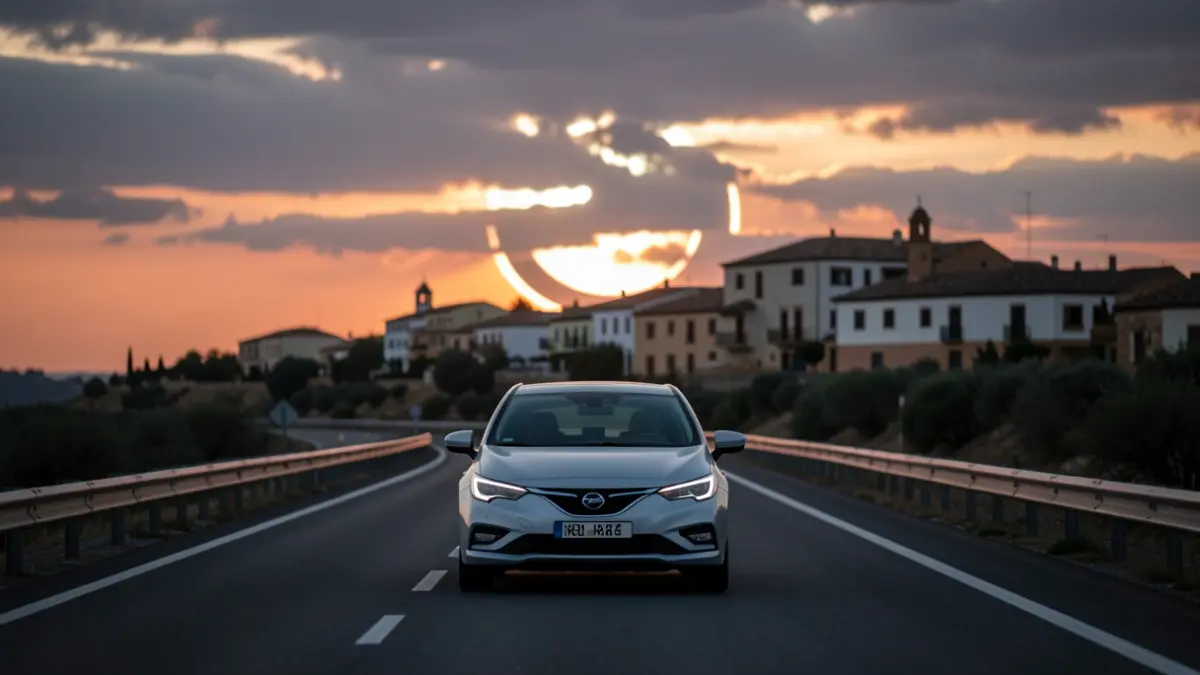
Attention at the wheel must be heightened, as the eclipse can be a source of distraction. It is recommended to increase the safety distance, not use mobile phones or cameras, keep dipped headlights on during the darkening phase, and crucially, do not look directly at the sun or use specific glasses for it while driving.
Special attention is requested for vulnerable users such as pedestrians and cyclists. The DGT also advises planning the return journey, anticipating possible traffic jams and suggesting waiting at the observation site until the phenomenon concludes, if possible. Finally, drivers are asked to respect any special traffic measures that may be implemented punctually to ensure safety and traffic flow in the vicinity of observation points.