
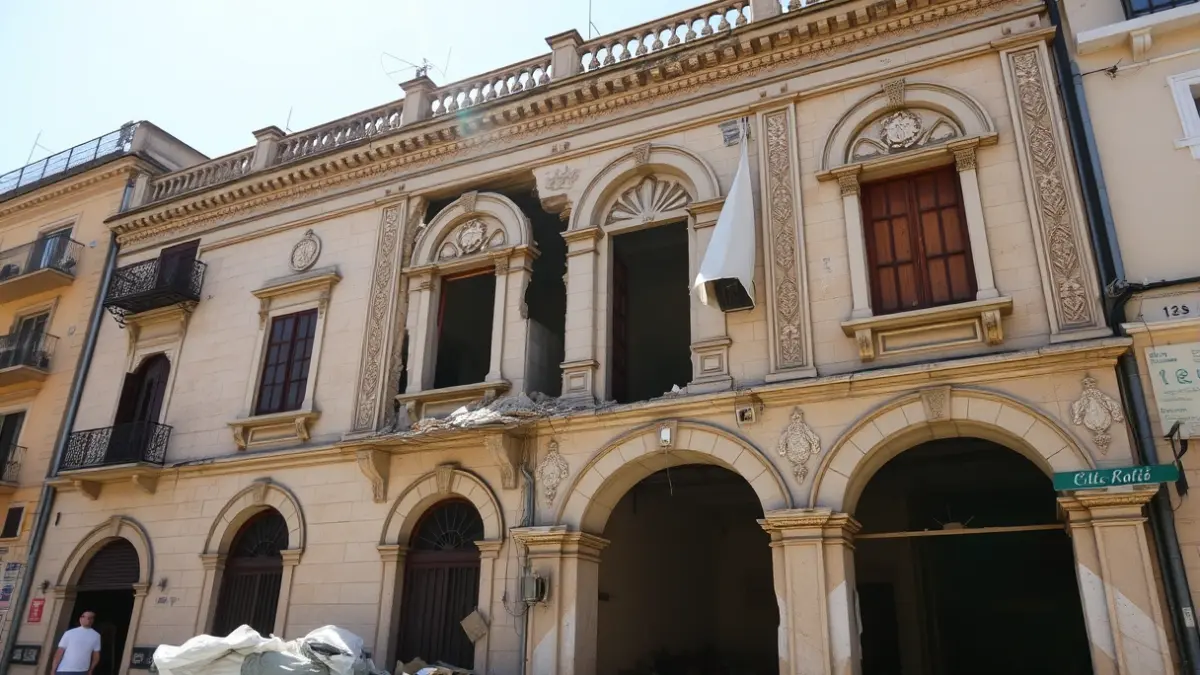
The former residence and San José Missionary School, a property dating back to 1904 located on Lope de Rueda Street 68 in Puerto de la Torre, has been torn down. This building, which survived the anti-clerical attacks of May 1931 and the Civil War, lacked architectural protection, facilitating its demolition to make way for a development of 13 townhouses.
The structure was the work of municipal architect Tomás Brioso, known for his work on Malaga Park, and featured neo-Arabic ornamentation. Despite its age and authorship, the Municipal Urban Planning Management did not grant it any protection, unlike five other properties and two chimneys registered in the district's PGOU catalog.
“"It was a magnificent example of architecture that deserved to have remained for future generations."
Initially known as Villa San José, and popularly as 'Villa Alegría' after its first owner, a local hotelier, the property was acquired in the 1920s by a priest to establish a parish. Subsequently, the Franciscan Sisters of the Sacred Hearts converted it into the San José Missionary School for boys and girls, as well as their residence.
Heritage experts have lamented the demolition. A Malaga architect and a professor of Art History at UMA have criticized the loss, suggesting that the City Council should offer tax incentives to owners of architecturally protected homes to prevent them from becoming a burden. This demolition adds to other controversial ones in Malaga, such as those of Villa Maya or the birthplace of Cánovas.


