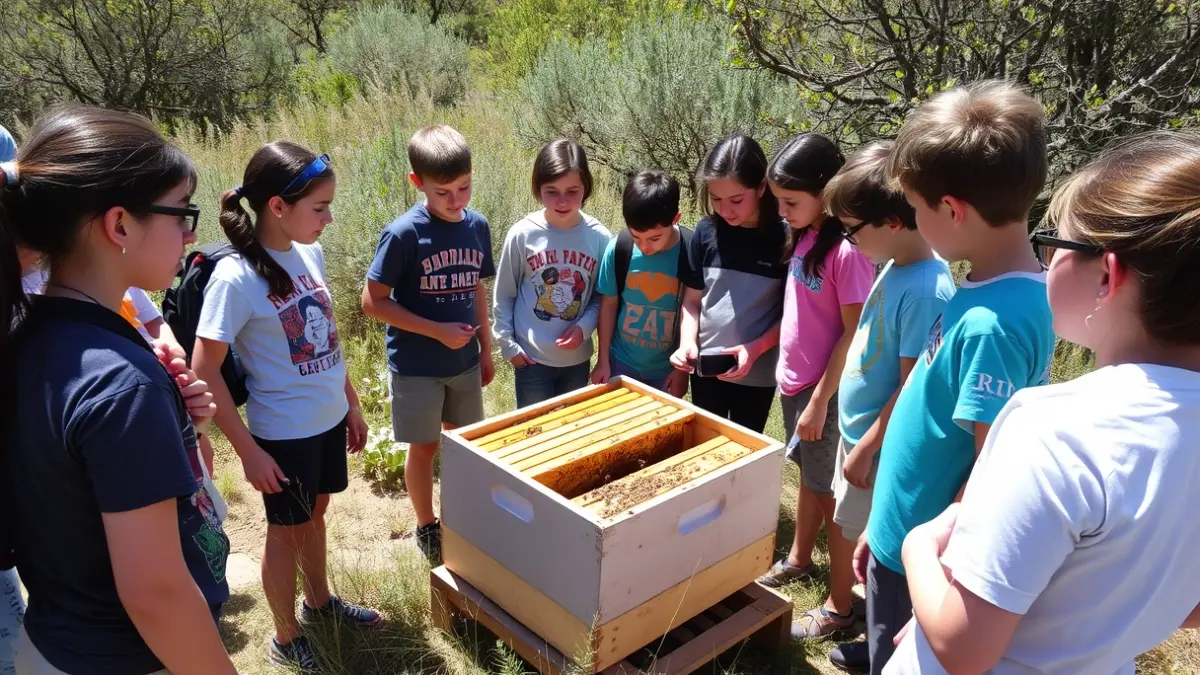
The activity, organized by the Andalusian Government's Ministry of Sustainability and Environment, brought together approximately 50 students aged 12 to 13. Participants, from IES Antonio Galán Acosta in Montoro and CEIP Maestro Juan Hidalgo in Cardeña, undertook an interpretive tour to learn about the ecological, geological, and landscape values of this natural area.
The day began at the Venta Nueva Visitor Center in Cardeña with two presentations. The first, given by a biologist and environmental education expert, covered the natural resources of the Natural Park. The second, delivered by the manager of a local honey company, highlighted the importance of beekeeping for agriculture and the environment, as well as the challenges posed by climate change to this activity.
After a traditional breakfast featuring local products, the practical part included an outdoor workshop where young people learned to make candles and other items from wax, thus discovering products derived from the beehive. The visit concluded with the release of birds of prey, such as an eagle owl and tawny owls, by a representative from the Center for the Recovery of Threatened Species (CREA) Los Villares, which delighted the students.
“"This type of initiative facilitates direct knowledge of protected natural areas and their ecological functioning."
Attendees gained an understanding of the environmental benefits of beekeeping and the role of bees as bioindicators, in addition to becoming aware of the threats these species face due to climate change. This initiative is part of the Environmental Awareness and Participation Program in the Natura 2000 Network in the province of Córdoba, which aims to promote biodiversity conservation and adaptation to climate change.