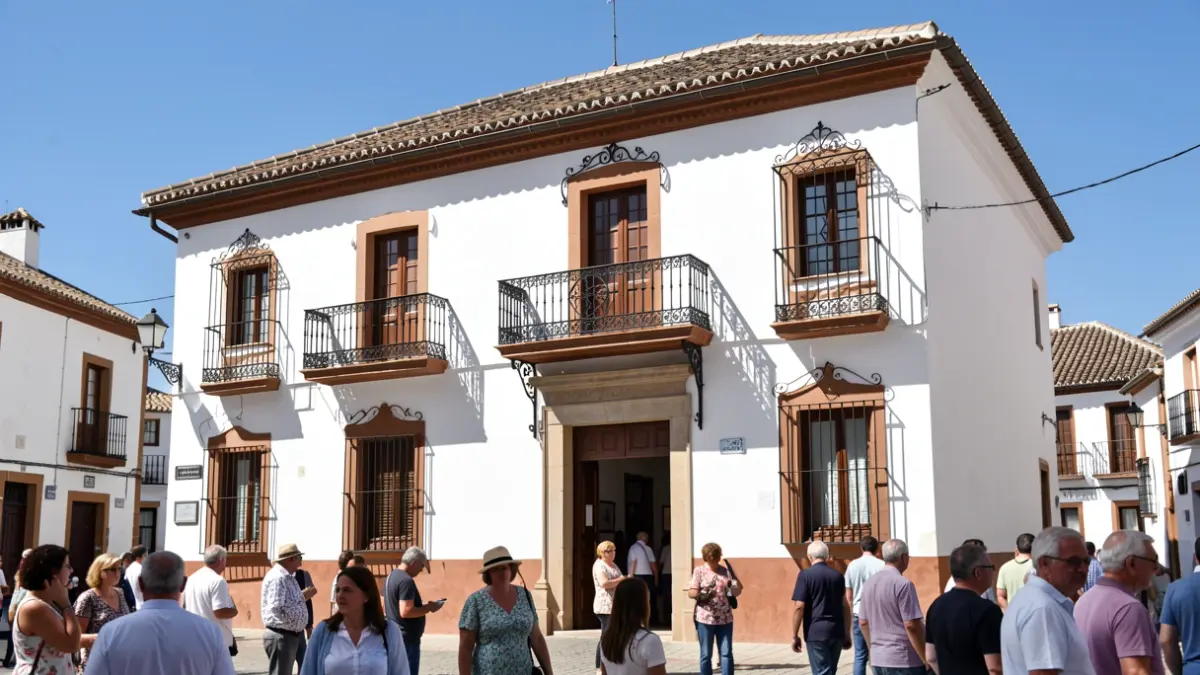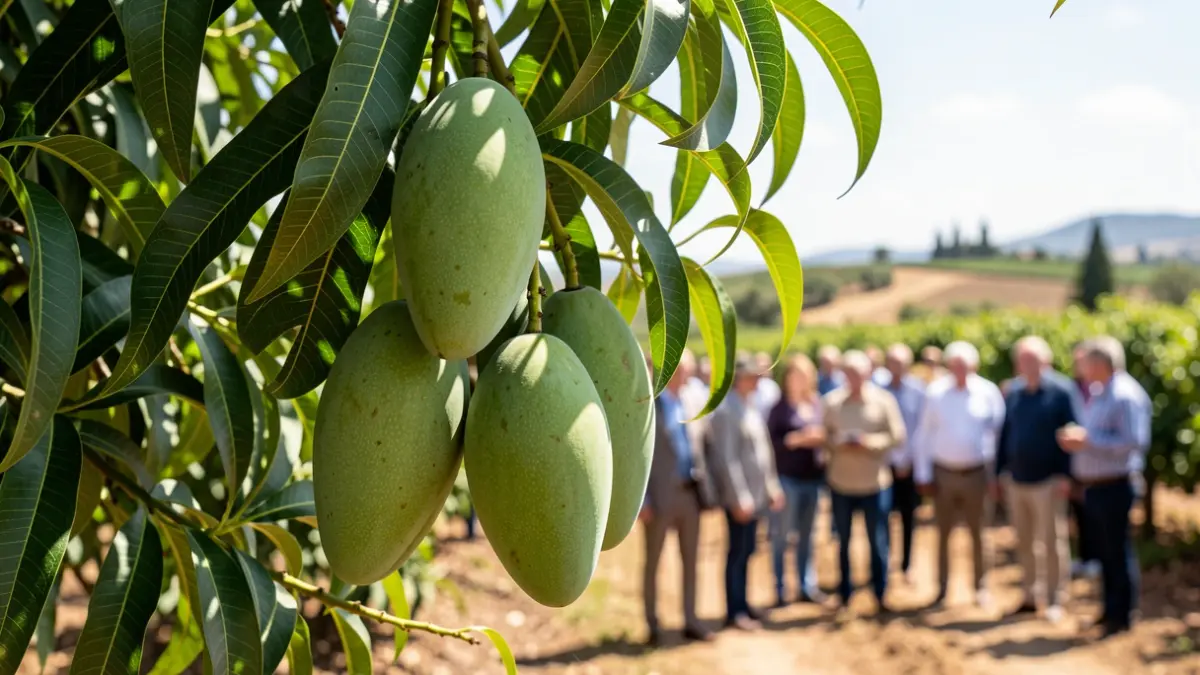
The Territorial Delegate for Agriculture, Fisheries, Water, and Rural Development, Laura Soto, visited the headquarters of TROPS in Vélez-Málaga, a leading company in the production and commercialization of subtropical products. Soto emphasized that the Axarquía region holds 40% of the avocado market share and 55% of the mango market share in Spain.
During the visit, accompanied by the mayor Jesús Lupiáñez, the delegate positively assessed the current mango campaign in Málaga province. Forecasts indicate a production of 40,000 tons, generating an estimated value of 60 million euros for local farmers. Although a 30% decrease is anticipated compared to the record 2025 campaign (which saw 60,000 tons), the figure remains significant.
Laura Soto highlighted the strength of the supranational Producer Organization of Fruits and Vegetables (OPFH) TROPS. Its complete value chain, from cultivation to distribution, allows it to compete in up to 22 European markets, including the United Kingdom, Germany, and the Netherlands.
The delegate described TROPS as an example of Malaga's productive sector, emphasizing its commitment to more profitable, competitive, sustainable, and innovative agriculture. This is evident in its Innovation Center, an experimental farm and R&D+i incubator in collaboration with the University of Málaga and the La Mayora Institute (CSIC), focused on new varieties, sensorization, and artificial intelligence for irrigation and resistant rootstocks.
In the last 10 years, the cultivated area for mango in Málaga has grown by 42%. The province boasts over 13,000 hectares of subtropical crops, with nearly 8,000 hectares dedicated to avocados (54% of Andalusia's total) and over 4,500 hectares to mangoes (90% of Andalusia's total).
Soto also expressed regret over the impact of adverse weather conditions on crops, particularly in the Axarquía region, which has suffered from drought and storms. She recalled the 43 million euro investment by the Government of Juanma Moreno in hydraulic works to alleviate the water deficit, including the pioneering use of regenerated water for irrigation in Andalusia.
Aid has been implemented for the recovery of agricultural potential, with 4.44 million euros allocated to 200 farms affected by storms in late 2025 and early 2026. Another 69 cases for flood and wind damage are under review, with a potential total of up to 7 million euros.
Furthermore, the Junta de Andalucía is allocating 10 million euros to repair 206 municipal rural roads in Málaga province through the Andalucía Actúa Plan. In the Axarquía region, 17 roads in 9 municipalities are being addressed with a budget of 317,000 euros.
The delegate highlighted the Andalusian government's investment commitment to support the recovery and further development of Andalusian farmers and companies.
Regarding regenerated water, new resources have been incorporated in the Axarquía following improvements in tertiary treatments at wastewater treatment plants in Algarrobo, Torrox, Rincón de la Victoria, Vélez-Málaga, and Peñón del Cuervo. The region now has nearly 22 hm³ of regenerated water for irrigation, thanks to a 43 million euro investment in works executed under the first two Drought Decrees.
The Junta de Andalucía plans to expand projects, such as the wastewater treatment plant in Nerja (estimated at 2 hm³), included in the Third Drought Decree and currently under study. The Fourth Drought Decree also emphasizes the use of regenerated water for irrigation, optimizing its use through conduits and regulation basins from the tertiary treatment of the Rincón de la Victoria plant to the Guaro irrigation area. This project, co-financed by FEADER, was completed in December 2025 with an investment of 13.7 million euros.