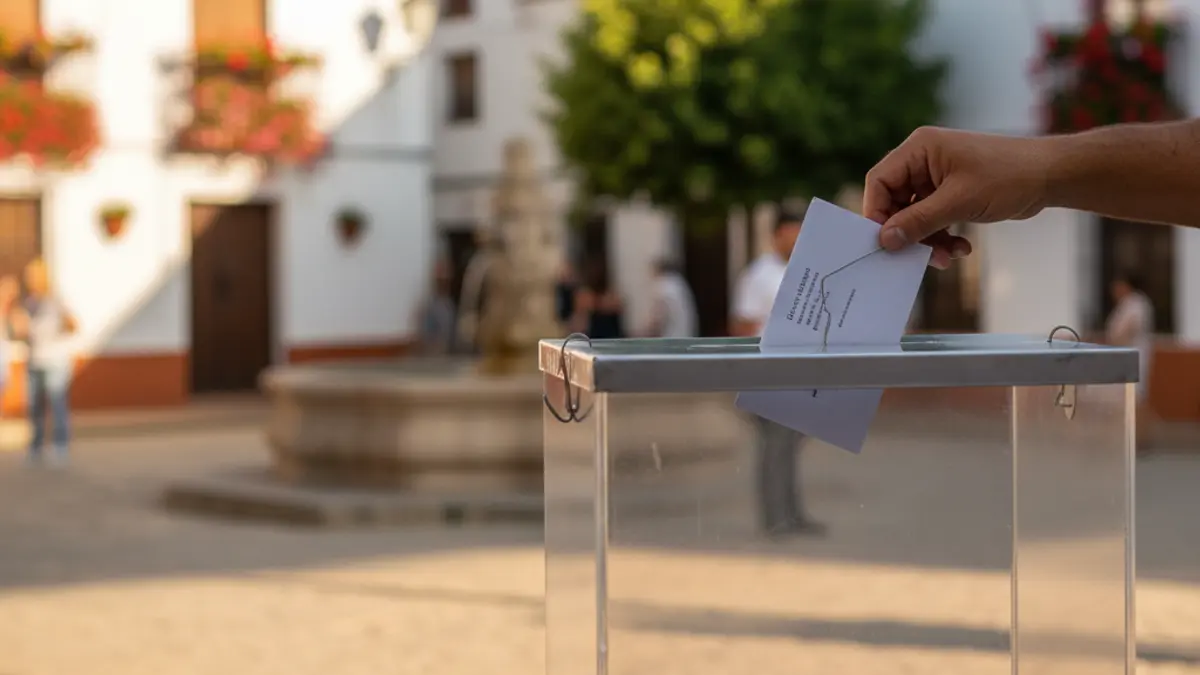
An analysis of the last four regional elections in ten of Andalusia's smallest towns, including localities in Almería, Huelva, Granada, and Málaga, reveals that the PSOE and PP often alternate in victory. Although municipal elections are frequently decided by familiarity and personal knowledge of candidates, voting in regional elections tends to follow more defined party patterns.
In municipalities like Salares, which has had a socialist town council since 2011, a shift in regional voting patterns is observed, especially after the PP took over the Andalusian government in 2019. This dynamic has also been evident in Cumbres de Enmedio (Huelva), where, despite decades of socialist municipal governance, regional election results have shown variations.
A notable case is Juviles (Granada), where the PP mayor has served for 23 years, often without opposition. However, historically, the PSOE has won regional elections in this town, except for the most recent ones. This phenomenon highlights the difference in voter behavior between municipal elections, where the individual is more valued, and regional elections, where the political party gains greater importance.
“"In municipal elections, people vote for individuals, not for the party."
Familiarity among neighbors and the geographical dispersion of voters are key factors in these small towns. Participation is usually higher in municipal elections, where daily life directly influences the vote. In contrast, in regional or general elections, participation stabilizes around 70%, and votes are more oriented towards political ideologies.
“"Municipal elections differ from others in that people don't vote so much for political ideals; rather, we are such a small town, we know each other so well, that people vote for individuals."