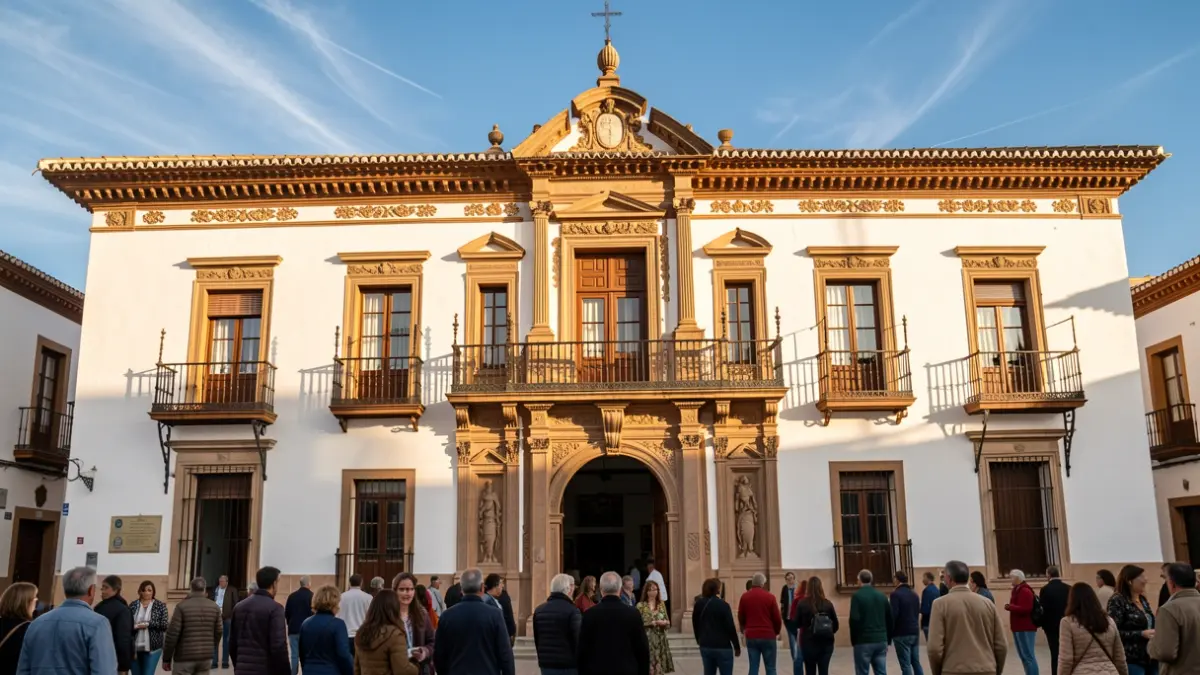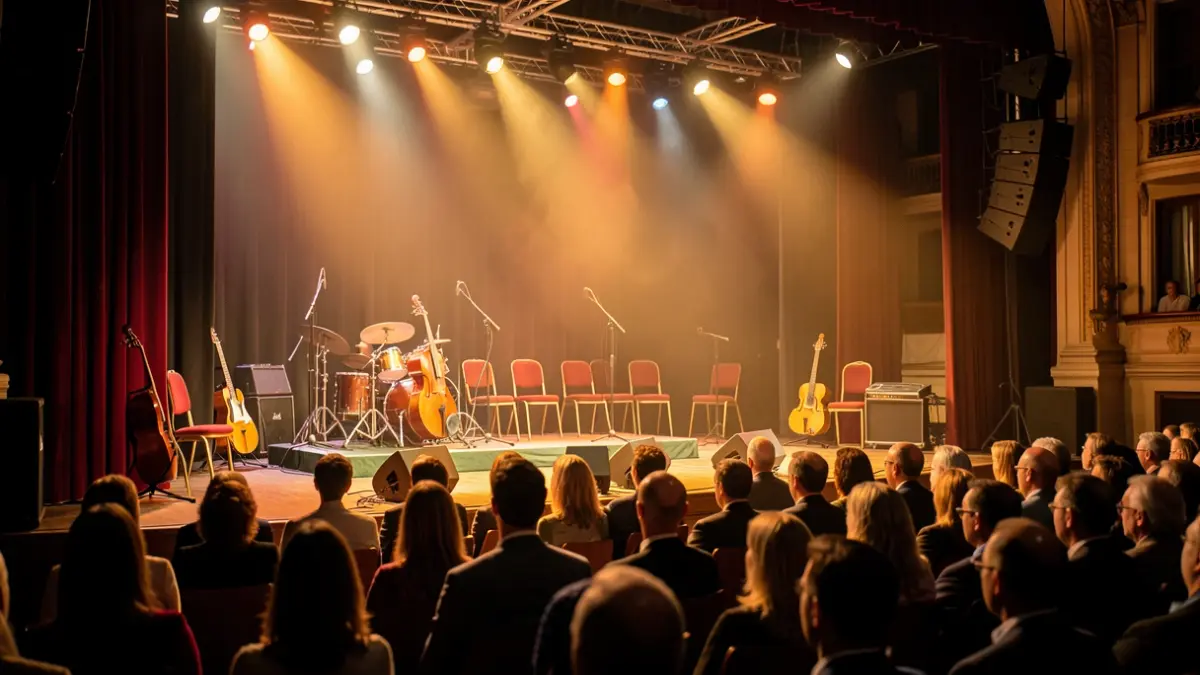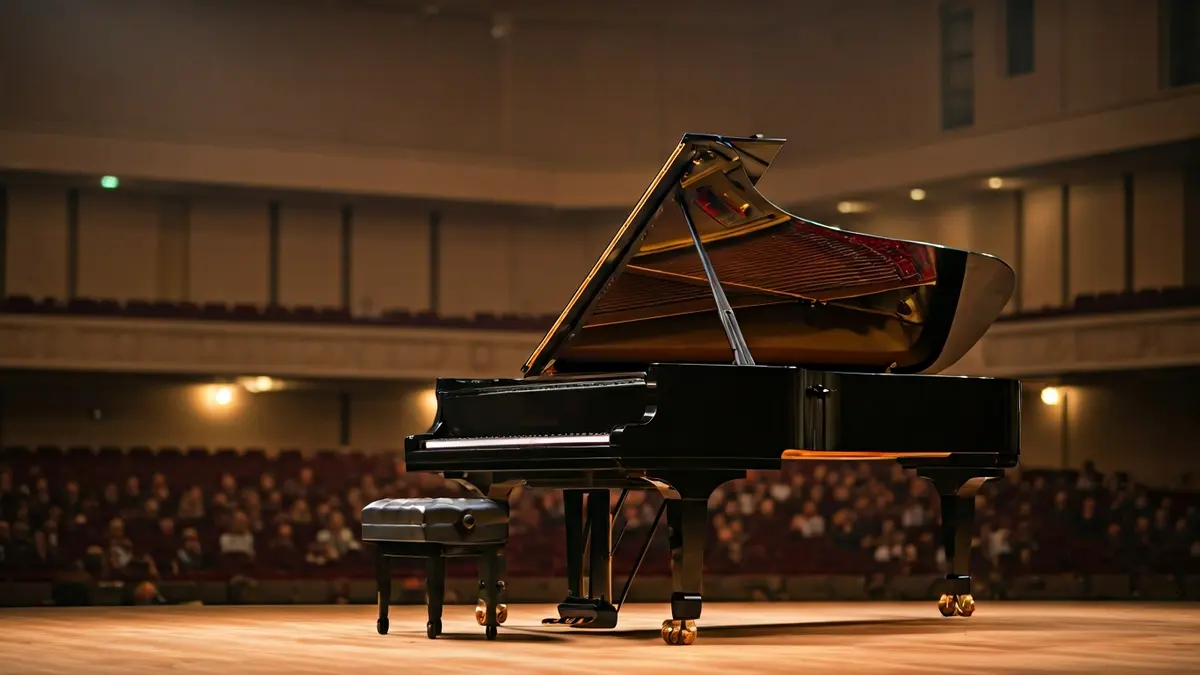
The Teatro Infanta Leonor in Jaén serves as the epicenter of a unique experience, where the International Piano Competition Premio Jaén is felt as intensely as it is heard. During performances, a reverent silence envelops the hall, while in the lobby, screens broadcast live, allowing the audience to follow every note emanating from within.
However, breaks transform the atmosphere. The lobby comes alive with conversations in multiple languages and fleeting reunions. It is a moment of liberation for the pianists, a necessary pause before returning to the demands of the stage.
Among the contestants is Laura Ballestrino, from Móstoles, making her debut in this edition. Her voice conveys a mix of enthusiasm and respect for the competition. For her, the Premio Jaén represents a long-held aspiration, a renowned competition whose fame precedes it.
“"Competing is always something special because it makes us pianists surpass ourselves."
Ballestrino emphasizes that the days leading up to the competition are not for frantic studying, but for trusting in the hard work put in over months. The key lies in performing pieces with which they feel comfortable and have worked on for years, turning that familiarity into a refuge against nerves. Despite the pressure, her philosophy is clear: to enjoy and give her best.
The perspective of Harrison Herman, an Australian pianist residing in Madrid, is different. This is not his first participation in Jaén; he returns five years later with a more pragmatic view. He describes the process as a journey of “a lot of work, a lot of effort, a lot of sweat, and many lost kilos,” with preparation extending between six and eight months.
“"I am making the most of the last few years I have left for competitions."
The choice of repertoire is a strategic decision, aiming to perform the pieces they master best, although he acknowledges that some pieces can be “more effective” in a competition setting. While Herman leans towards calculation, Ballestrino connects with the music emotionally, performing pieces she feels are her own. This duality between technique and emotion defines the experience of all participants.
Beyond the competition, the Premio Jaén is a space for coexistence and cultural exchange. Contestants from various parts of the world share a common journey: months of preparation, difficult decisions, pre-performance nerves, and that unique moment in front of the piano. Ultimately, the competition transcends mere rivalry, becoming a stage where each pianist showcases their technique and character, in an atmosphere where silence and bustle set the invisible rhythm of the event.