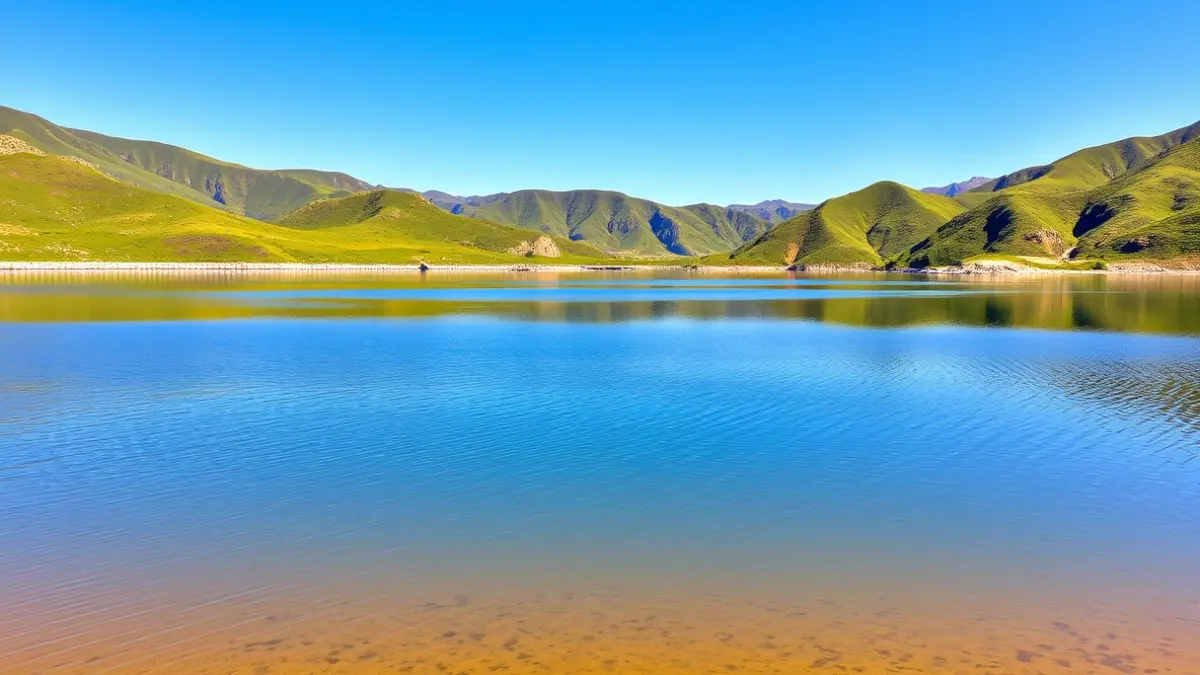
The hydrological situation in the province of Jaén has undergone a remarkable change, with reservoirs recording their highest filling levels in the last decade. As of May 7, the provincial average stood at an impressive 90.54% of its capacity, according to data from the Guadalquivir Hydrographic Confederation. This figure represents a slight improvement compared to April 25, when the stored volume was 88.52%.
This record breaks with the image of drought that has characterized the region in recent years. Just three years ago, the province's reservoirs showed an average of 26% in April, and in October 2023, the figure was even more critical, at 19% capacity. The current recovery is attributed to an exceptionally rainy winter and spring, which have led to historical water accumulations and, in some cases, preventive discharges.
The last time Jaén's reservoirs reached similar levels was in 2013. Some reservoirs, such as El Tranco and Aguascebas, are approaching their historical maximums, with 92% and 98% respectively. Others, like Guadalmena, even slightly exceed their 2013 records, reaching 95%. However, reservoirs such as Giribaile and Rumblar, while at high levels, show a more marked difference compared to that record year.
The evolution of reservoirs over the last decade has been one of constant fluctuations. After the peak in 2013 and a favorable 2014, the downward trend became evident from 2015, culminating in the severe drought of 2022-2023, where levels fell to historical lows. The current recovery, driven by a period of intense rainfall, restores to the province an image of water abundance not seen in years.