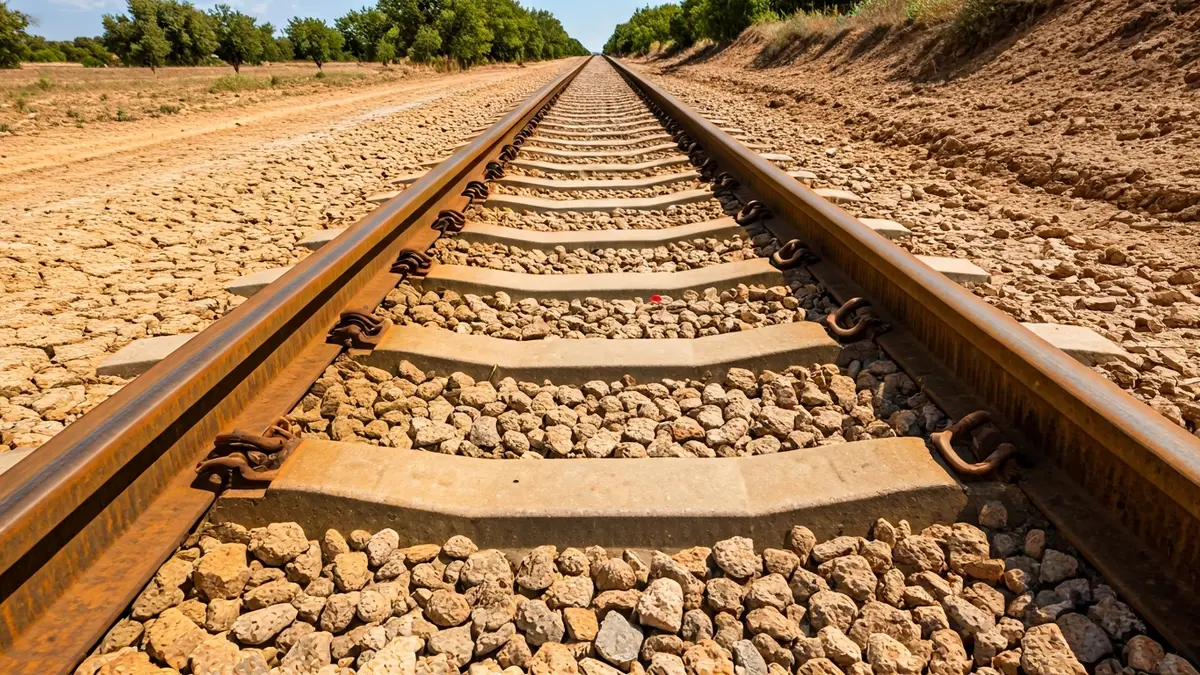
The railway situation in Jaén is critical. Not only does the province lack high-speed rail connections, but its conventional network is in such a deficient state that incidents are a daily occurrence for users traveling to or from the province. The citizen platform Dignitat a les Vies has created a map detailing these restrictions, some of which involve speed reductions exceeding 80% in certain sections.
The Railway Infrastructure Administrator (Adif), which has attempted to prevent the public dissemination of these limitations, estimates that the railway connection with Córdoba, currently replaced by bus due to the ongoing works on the Algeciras-Zaragoza Railway Highway, will not be restored before the end of 2027. This interruption directly affects the L-400 line.
The deficiencies are primarily attributed to the poor condition of the tracks and embankments, as well as issues with leveling and alignment. Over the past three years, nearly 26 kilometers of Jaén's conventional network have been affected. On the L-400 line, connecting Linares-Baeza or Jaén with Córdoba, restrictions have led to speed reductions of between 70% and 85%.
Specific examples of these limitations include a section between Espeluy and Villanueva de la Reina, detected in March 2025, where trains must travel at 30 km/h. Further along, between Villanueva de la Reina and Andújar, 100 meters are affected with a reduction to 60 km/h, and between Andújar and Arjonilla, 600 meters have speed limited to 30 km/h since October 2024.
Currently, the province has 16 active speed restrictions, excluding the closed sections. The 400 line towards Madrid, from Linares-Baeza Station, has two restrictions in Vadollano and Calancha-Vilches. The conventional 410 line to Granada records eleven restrictions, with speeds between 60 and 70 km/h.
This situation has led to an increase in delays and significant discontent among travelers. A recent example involved a train from Madrid to Jaén that accumulated a 48-minute delay, with an average speed of only 65 km/h over a 292-kilometer journey, a figure deemed insufficient by users.