The city of Jaén conceals beneath its surface the remnants of its former Main Square, a space that served as the epicenter of social and cultural life for centuries. This area, also referred to as Plaza de la Corredera, played a crucial role in the Middle Ages, particularly under the rule of Constable Iranzo, as recounted by local history experts.
During its heyday, the square was not only a meeting point but also the setting for highly impactful events, such as executions carried out by the Inquisition. Furthermore, it functioned as a bullring, demonstrating its versatility and centrality in the public life of the era.
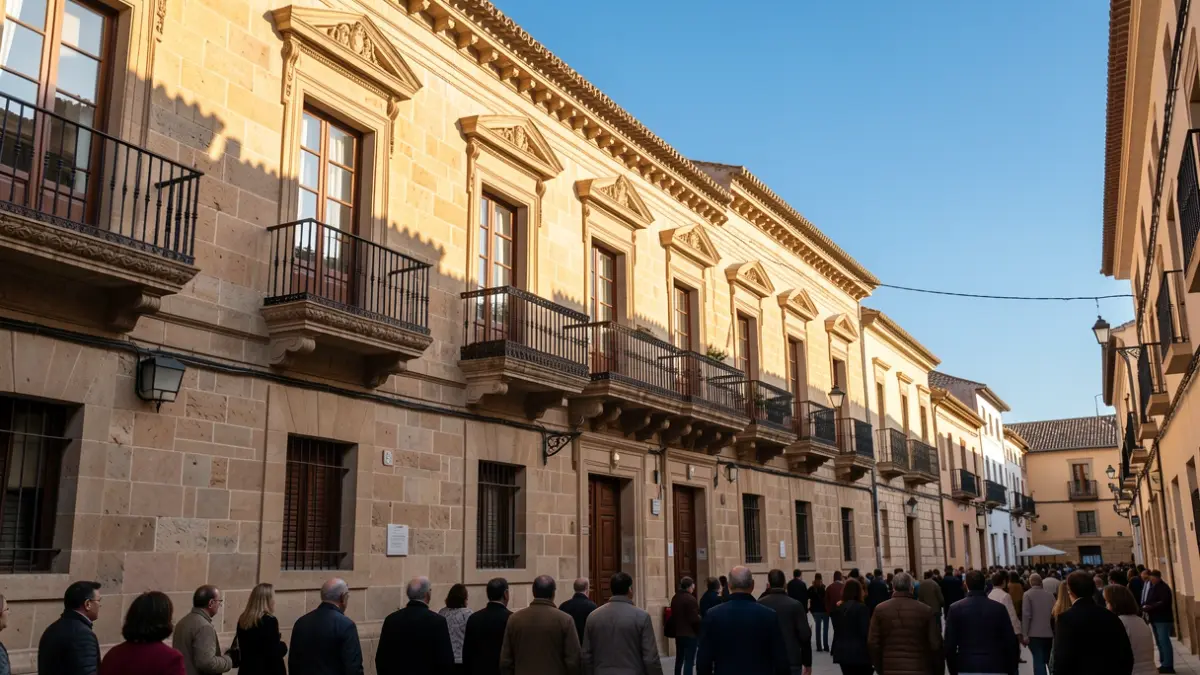
Currently, the extent of this historic square can be imaginatively traced between three key points in central Jaén: the Plaza de la Constitución (also known as Plaza de las Palmeras), the Plaza Deán Mazas (where the Palacio de los Vilches is located), and the Plaza del Pósito, which once housed the municipal granary.
The original configuration of the Main Square was significantly altered in the 20th century with the construction of the Hacienda building, leading to its disappearance as a unified space. Nevertheless, vestiges of its past can still be identified, such as the arcades integrated into modern buildings, including a senior residence and the headquarters of the Real Sociedad Económica Amigos del País. These often-overlooked elements are silent witnesses to Jaén's rich history.
Those who forget their past are condemned to repeat it.