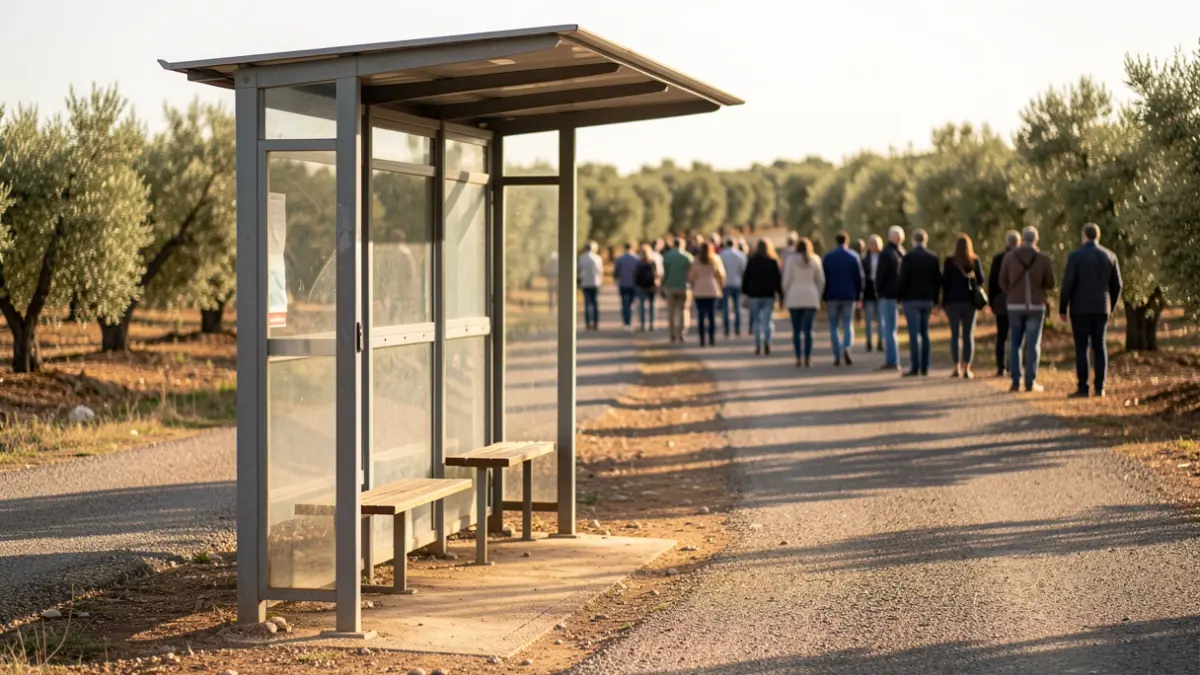
The research, published in the International Journal of Disaster Risk Reduction, analyzes the combination of extreme temperatures, social vulnerability, and the availability of protective spaces in Andalusia. Its conclusions are crucial for more effective urban planning in the face of climate change.
More than half of the Andalusian population lives in areas classified as high or very high priority for public intervention against the risk of extreme heat. The study emphasizes that the impacts of heat do not affect all citizens equally, with the elderly, low-income individuals, or those in isolation being the most vulnerable.
The highest values of the thermal risk index are concentrated in inland Andalusia, notably Jaén, Seville, and Córdoba, as well as some areas of Granada and Málaga. These zones experience extreme temperatures more frequently due to climatic and geographical factors, unlike coastal provinces such as Cádiz, Huelva, or Málaga itself, where maritime influence moderates the climate.
Furthermore, the report points to greater social vulnerability in many inland Andalusian territories, including the Jaén region. Rural areas and certain urban zones with an aging population and lower income levels show the highest vulnerability indices.
Regarding accessibility to climate shelters, the study evaluates a potential network of 10,458 points in Andalusia, including outdoor spaces (such as beaches and green areas) and indoor ones (religious buildings and libraries). However, inland provinces like Jaén, Córdoba, and Seville show very low to low accessibility levels, contrasting with coastal areas and large metropolitan areas that register medium to high accessibility.
This disparity implies that inland populations, often with higher thermal exposure, have fewer nearby spaces to seek refuge during extreme heat episodes. By combining social vulnerability and accessibility to these shelters, the study identifies Jaén, along with Granada and Seville, as priority areas for public intervention.
The researchers conclude that these findings reflect territorial inequalities in protection against extreme heat and emphasize the need to expand the network of climate shelters, especially in inland and rural areas. Andalusia is one of the European regions most exposed to global warming, with projections indicating a significant increase in extreme heat days and tropical nights in the coming decades.