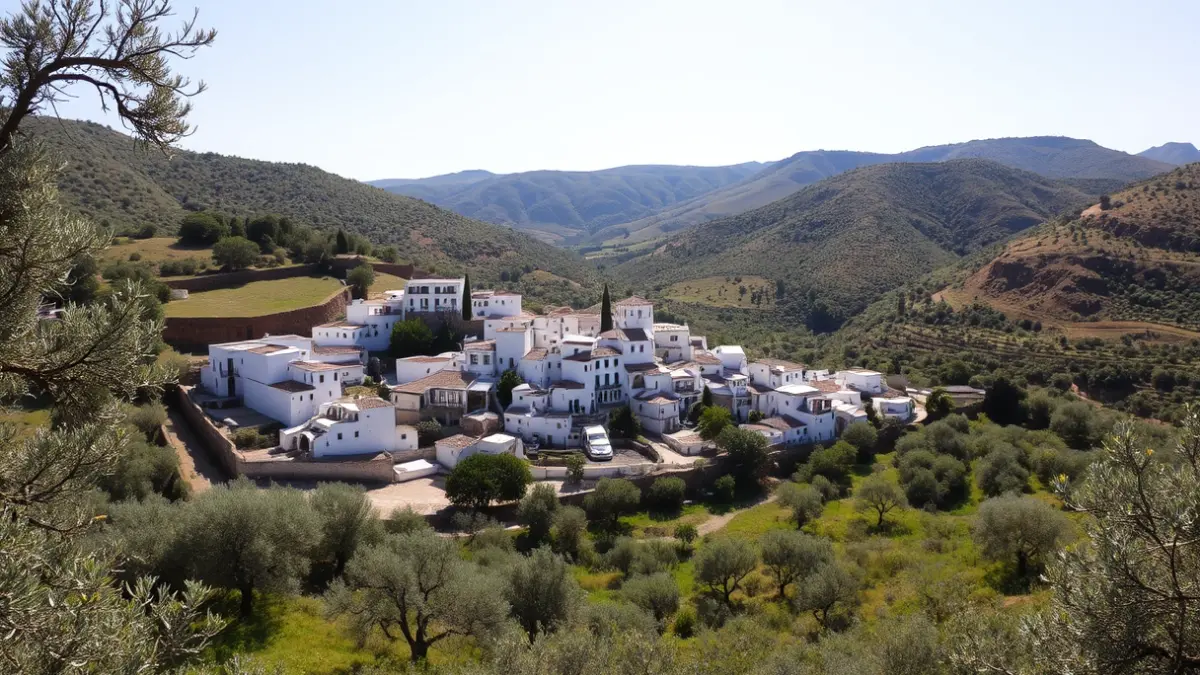
In the heart of the province of Huelva, nestled among cherry trees, chestnut trees, and holm oaks, lies Los Romeros, a village belonging to Jabugo that holds a rich history and unparalleled natural beauty. With just over two hundred inhabitants, this rural core hides fascinating stories about its origin and evolution.
Although its name evokes the well-known plant, the oral tradition of its residents suggests that the village was founded by a family of goatherds, surnamed Romero, who arrived from Cortegana and settled in what is now known as the Barrio de Los Naranjos. Over time, other families joined, building houses that not only grew in number but also connected with each other.
“"The fear of wolves, then common in the area, forced them to live almost in community."
This particular architectural arrangement was not accidental but responded to a collective instinct for protection against the presence of wolves in the area. The village, which became practically self-sufficient, underwent a significant change with the arrival of the railway, leading to the relocation of many of its industries to the nearby town of El Repilado.
Currently, the economy of Los Romeros remains closely linked to the land, with Iberian pig farming and the activity of meat industries as fundamental pillars. Family orchards, especially those located along the banks of the Caliente river, continue to produce high-quality food, contributing to a slow-paced lifestyle in harmony with nature.
The natural surroundings of the village are a true refuge. The Caliente river, which flows towards the Guadiana, offers an idyllic setting for hiking. A river route starts from the old washhouses and connects with El Repilado, passing through a riparian forest with poplars and rich biodiversity. This landscape, known as the “Flowery Valley of Los Romeros,” is dotted with centuries-old chestnut trees, holm oaks, and cork oaks, maintaining its character intact through the seasons.
At the center of social and spiritual life stands the Parroquia de la Santísima Trinidad, an 18th-century temple with a distinctive bell gable and a main altarpiece linked to the Sevillian school of Valdés Leal. Every year, this building becomes the epicenter of the patron saint festivities, celebrated on the Sunday after Pentecost. The procession of the Santísima Trinidad, carried on the shoulders of the residents, and the traditional “Pedía de la Peseta” are the culminating moments of these celebrations.