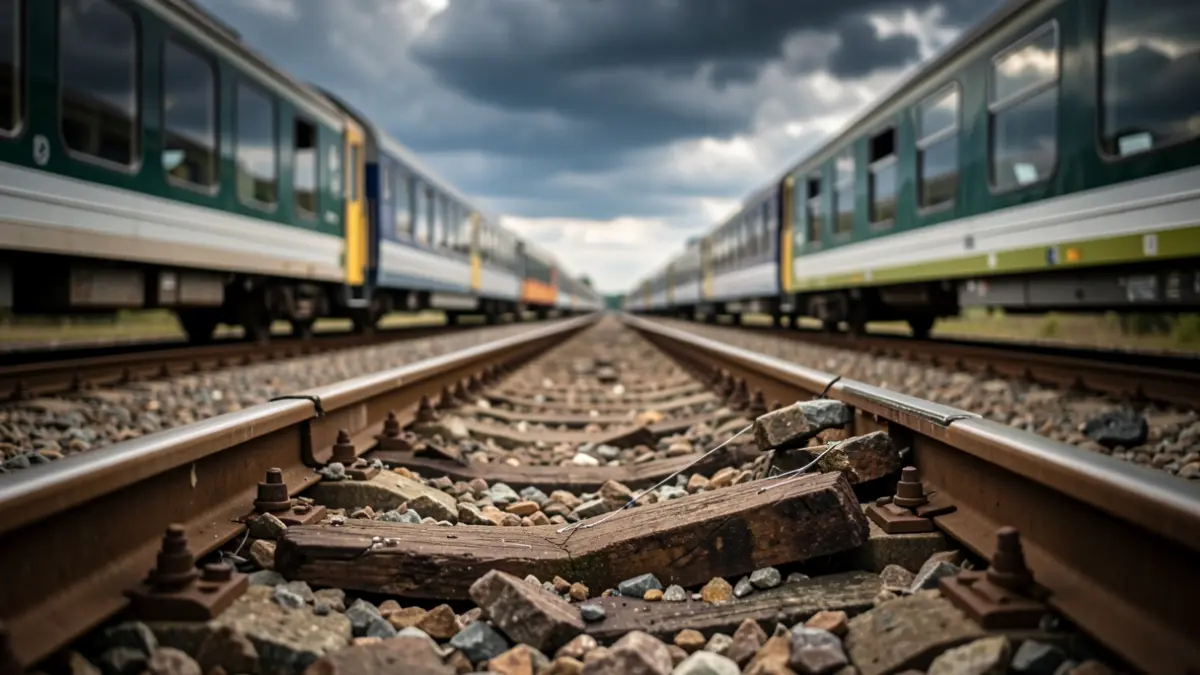
The head of the independent body responsible for investigating the tragedy, which claimed the lives of 46 people on January 18, is confident that the results can serve as evidence in the judicial process opened in the Montoro court. The rupture of one of the railway tracks is considered the origin of the collision between the two trains, according to the initial findings of the investigation.
CIAF technicians are working to establish the exact cause of the rupture and why the first train derailed towards the central part of the tracks. Barrón has highlighted that media pressure surrounding the accident is slowing down the investigative team's tasks, as they must exercise extreme precision in each step of the analysis, starting from the certainty that the origin lies in the rail fracture.
Among the preliminary conclusions already on the table, which will serve to reinforce safety protocols in rail transport, is the improvement of rail break detection systems. These devices would allow for precise knowledge of the exact moment a fracture occurs in the infrastructure, enabling an immediate reaction to risky situations.
Furthermore, the Commission's experts have proposed addressing the spacing between tracks as a preventive measure. This modification in the design of railway infrastructure could prevent a train from invading the path of a train on a parallel track in the event of a derailment, as happened in the tragic Adamuz incident.
The president of the CIAF has emphasized that the organization aims for its work to be as scientific as possible so that the final result contributes to shedding light on the accident's causes. However, he has stressed that the determination of responsibilities and final conclusions will ultimately depend on the Justice system, which is conducting its own parallel investigation. In any case, the results of this investigation are expected to be delayed until well into next year, as the three experts appointed by the judge have not yet begun analyzing documents or conducting tests with the material seized from the accident site.
In this regard, the Administrator of Railway Infrastructure (Adif) has proposed to the court the installation of four steel containers at its Maintenance Base in Hornachuelos to store the material collected, aiming to improve conditions of safety, integrity, and conservation. Adif was designated as the custodian of the seized material transferred to the Hornachuelos Base. The base is equipped with internal surveillance featuring three high-resolution IP cameras connected in real-time to the Protection and Security Center (CPS) in Seville, and the captured images will be recorded for up to 30 days.