AlmeríaCádizCórdobaGranadaHuelvaJaénMálagaSevillaAlpujarra AlmerienseLos VélezComarca Metropolitana de AlmeríaFilabres-TabernasLevante AlmeriensePoniente AlmerienseValle del AlmanzoraBahía de CádizCampiña de JerezCampo de GibraltarCosta NoroesteLa JandaSierra de CádizAlto GuadalquivirCampiña de BaenaCampiña Sur CordobesaLos PedrochesCórdoba (comarca)SubbéticaValle del GuadiatoValle Medio del GuadalquivirAlpujarra GranadinaComarca de AlhamaComarca de BazaComarca de GuadixComarca de HuéscarComarca de LojaCosta GranadinaLos MontesValle de LecrínVega de GranadaEl AndévaloEl Condado de HuelvaCosta OccidentalCuenca MineraComarca Metropolitana de HuelvaSierra de HuelvaÁrea Metropolitana de JaénCampiña de JaénEl Condado (Jaén)La LomaSierra de CazorlaSierra MáginaSierra MorenaSierra de SeguraSierra Sur de JaénLas VillasComarca de AntequeraLa AxarquíaGuadaltebaCosta del Sol OccidentalMálaga Costa del SolNorormaValle del GuadalhorceSerranía de RondaSierra de las NievesAljarafeBajo GuadalquivirCampiña de CarmonaCampiña de Morón y MarchenaComarca de ÉcijaComarca Metropolitana de SevillaSierra Norte de SevillaSierra Sur de SevillaVega del GuadalquivirAlmeríaCádizCórdobaGranadaHuelvaJaénMálagaSevillaAlpujarra AlmerienseLos VélezComarca Metropolitana de AlmeríaFilabres-TabernasLevante AlmeriensePoniente AlmerienseValle del AlmanzoraBahía de CádizCampiña de JerezCampo de GibraltarCosta NoroesteLa JandaSierra de CádizAlto GuadalquivirCampiña de BaenaCampiña Sur CordobesaLos PedrochesCórdoba (comarca)SubbéticaValle del GuadiatoValle Medio del GuadalquivirAlpujarra GranadinaComarca de AlhamaComarca de BazaComarca de GuadixComarca de HuéscarComarca de LojaCosta GranadinaLos MontesValle de LecrínVega de GranadaEl AndévaloEl Condado de HuelvaCosta OccidentalCuenca MineraComarca Metropolitana de HuelvaSierra de HuelvaÁrea Metropolitana de JaénCampiña de JaénEl Condado (Jaén)La LomaSierra de CazorlaSierra MáginaSierra MorenaSierra de SeguraSierra Sur de JaénLas VillasComarca de AntequeraLa AxarquíaGuadaltebaCosta del Sol OccidentalMálaga Costa del SolNorormaValle del GuadalhorceSerranía de RondaSierra de las NievesAljarafeBajo GuadalquivirCampiña de CarmonaCampiña de Morón y MarchenaComarca de ÉcijaComarca Metropolitana de SevillaSierra Norte de SevillaSierra Sur de SevillaVega del Guadalquivir

Archaeological excavation in Huelva to reveal its protohistoric past

The Plaza Arqueológica in Huelva begins a month-long excavation to study the city's protohistoric evolution, from the 4th century BC to the Phoenician temple.

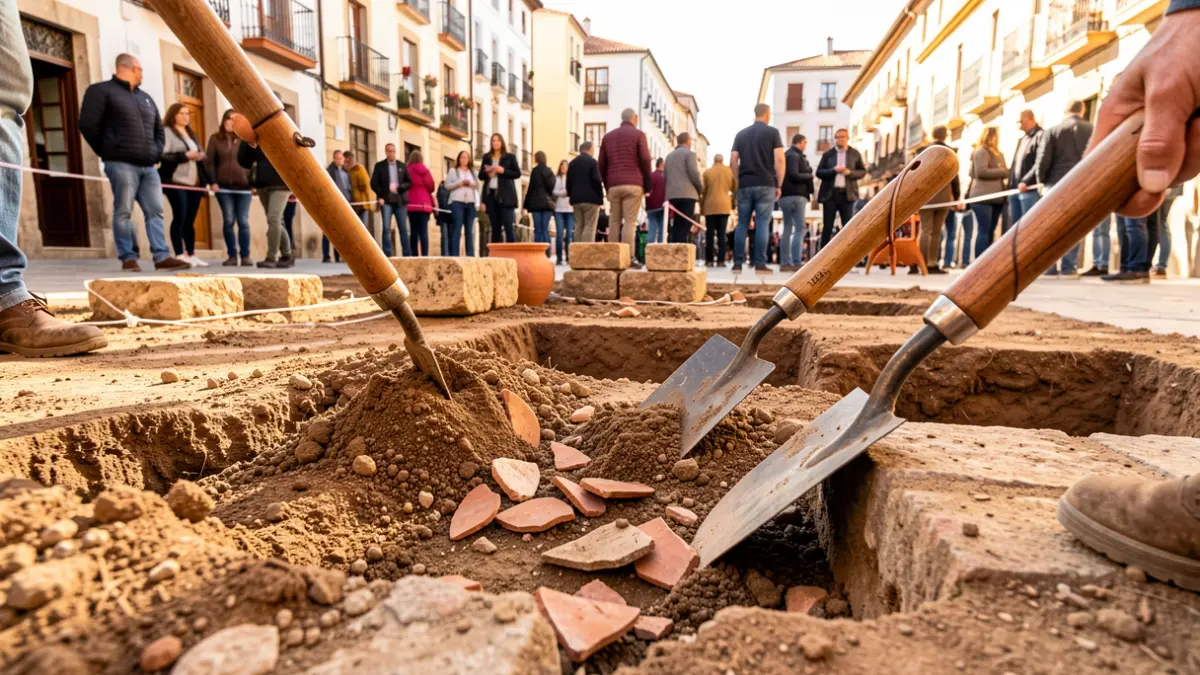
Archaeological excavation in Huelva's Plaza Arqueológica, showing pottery remains and ancient structures.
IA

Archaeological excavation in Huelva's Plaza Arqueológica, showing pottery remains and ancient structures.

The Plaza Arqueológica in Huelva has become the epicenter of an excavation aiming to complete the narrative of the city's protohistoric evolution, spanning from the 4th century BC to the Phoenician temple.

The archaeological excavation, set to last for one month, aims to unravel the complete stratigraphy of Huelva's protohistoric evolution. According to Olga Guerrero, an archaeologist with Ánfora Grupo, preliminary georadar studies indicate the presence of structural clusters that could correspond to housing blocks, with significant alterations in the upper levels.
These archaeological soundings have been precisely planned thanks to prior results, allowing experts to "proceed with certainty" to delineate the underlying structures. Guerrero noted that while structures are dispersed throughout the plaza, work has concentrated on areas of higher density. Geophysical prospecting, which included Puerto street and extended to La Concepción, has revealed archaeological structures across the entire area.
Previous interventions in the vicinity had already confirmed the existence of structures dating from the 4th century BC (Turdetan period) to the 9th-century Phoenician temple. The current intervention seeks to "view the urbanism of that Tartessian city and demonstrate that Huelva is the oldest city in the West," stated Guerrero.
Experts from the University of Ghent (Belgium), the Autonomous University of Madrid, the University of Seville, and the University of Huelva are participating in the excavation. There is an intention to valorize any discovered remains once their heritage significance and importance have been assessed.
Alfredo Mederos, a professor at the Autonomous University of Madrid, recalled the sector's importance, where a Phoenician sanctuary was found. Thanks to the collaboration of the Huelva City Council, the remains, which are expected to be significant, will be evaluated to allow citizens to learn about the city's past. This joint project, initiated in 2017, is considered complex due to its location.
Mederos highlighted that Huelva possesses the oldest Phoenician and Greek ceramics in Western Europe, emphasizing the city's "historical debt" to its past.
Roald Docter, a professor at the University of Ghent, with experience in excavations in Carthage and Torico (Greece), hopes to find similar vestiges from the 10th, 9th, and 13th centuries BC in Huelva. He expressed his "honor and pleasure" in working with specialists from other universities and Ánfora.
The mayor of Huelva, Pilar Miranda, described the start of the excavation as "a very important day," emphasizing the protection of heritage for future city building. She mentioned the acquisition of the Cabezo de San Pedro, featuring the oldest wall in the West, and the commitment to protect the hills and create an archaeological park at Cabezo de La Joya. She affirmed that it will be demonstrated that Huelva is the oldest city in the West and that it is Tartessos.