Ponce Bernal's work, titled Crónicas de otra Huelva (Chronicles of Another Huelva), describes a "whiff of unease" that, despite the passage of time, seems written for the contemporary reader. In its lines, a frantic dynamism and a culture of distraction are detailed, which, while in 1931 manifested through the gramophone and the Charleston, today finds its reflection in digital immediacy and the noise of social networks. This permanent sense of disquiet acts as a temporal bridge, suggesting that vital acceleration is not a new phenomenon, but a constant that erodes societal serenity.
“"One might say that the dynamism of current times and the carelessness of these years of cocktails, radio listeners, and Charlestons, have given rise to that offspring called unease."
The criticism of the political class of the era maintains an almost alarming relevance, describing leaders lacking solid foundations and subject to capricious changes in stance. This description of institutional instability resonates with the current crisis of representation, where pragmatism seems to have replaced firm ideology, generating in citizens that same "unease" that the author points out as a product of modern times. Politics, then and now, is perceived as shifting ground where short-term interests prevent the consolidation of a stable common project.
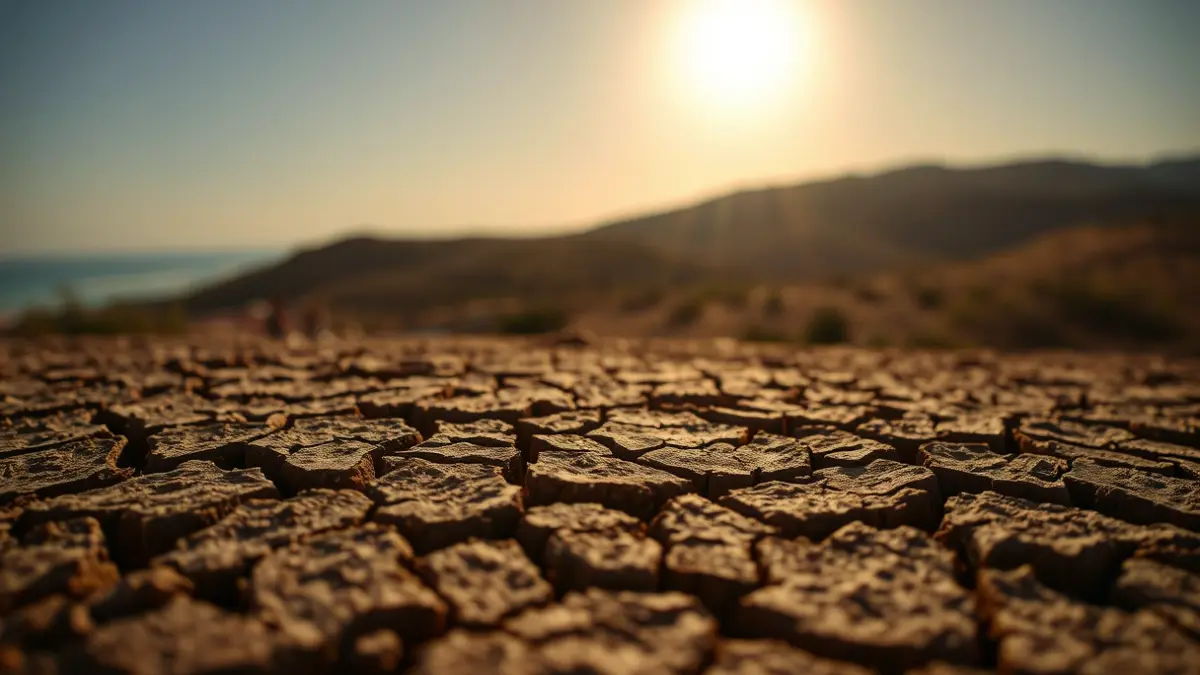
In the meteorological sphere, the article starkly portrays the anguish of drought, a concern that has intensified today under the shadow of climate change. The description of parched land, turned into a hard crust by the lack of water, is an image that continues to mark the reality of the fields in the Province of Huelva. The irregularity of rainfall, which the author describes as a "flirtation of time" with uncertainty, is today a scientific reality that threatens biodiversity and the sustainability of water resources in regions like Andalusia.
Especially notable is Ponce Bernal's social sensitivity when addressing the figure of the farmer, whom he describes as a "slave of time" who does not find fair remuneration for his effort in the markets. This point establishes a direct parallel with current agricultural crises, where producers continue to denounce the gap between production costs and selling prices. The struggle for the economic survival of the primary sector remains an open wound, demonstrating that, despite technological progress, the food base of society remains fragile.
Finally, the author concludes his reflection with a prayer for rest and generous rain, asking that unease be limited to human affairs and respect the providing nature. Today, this call for harmony with the environment takes on vital importance, as society faces the need to rediscover that lost balance. The article teaches us that, although fashions and technologies change, human beings continue to anchor their hope in the temperance of spirits and the generosity of a land that, now more than ever, cries out to be respected.