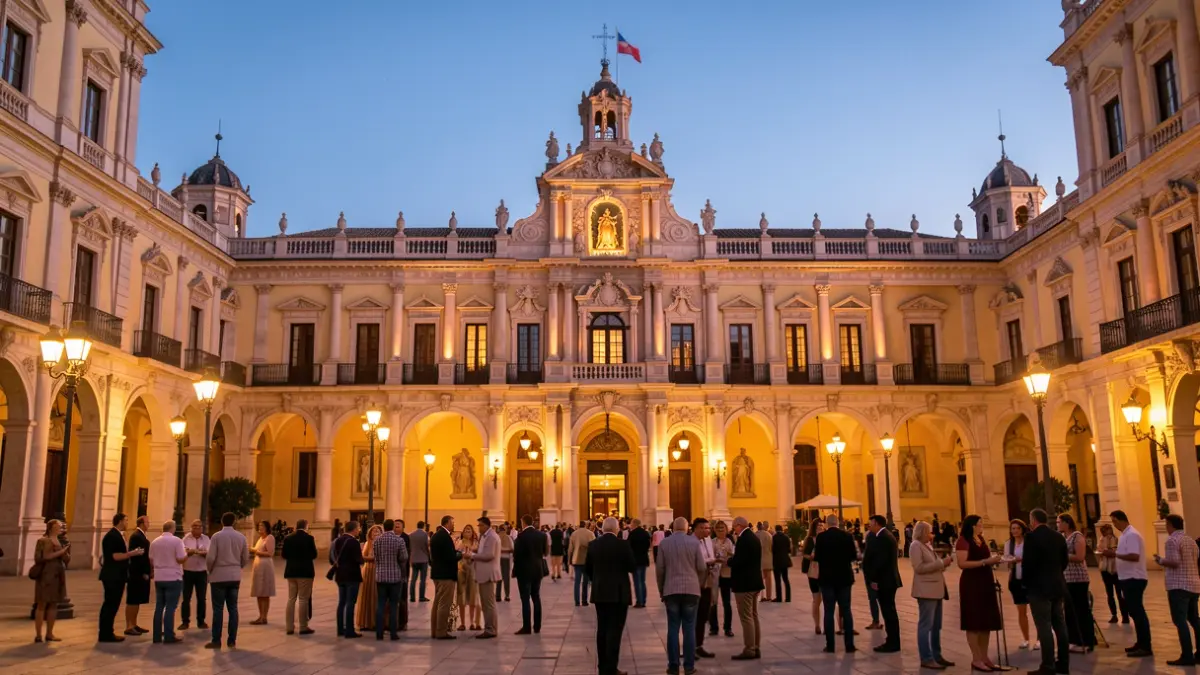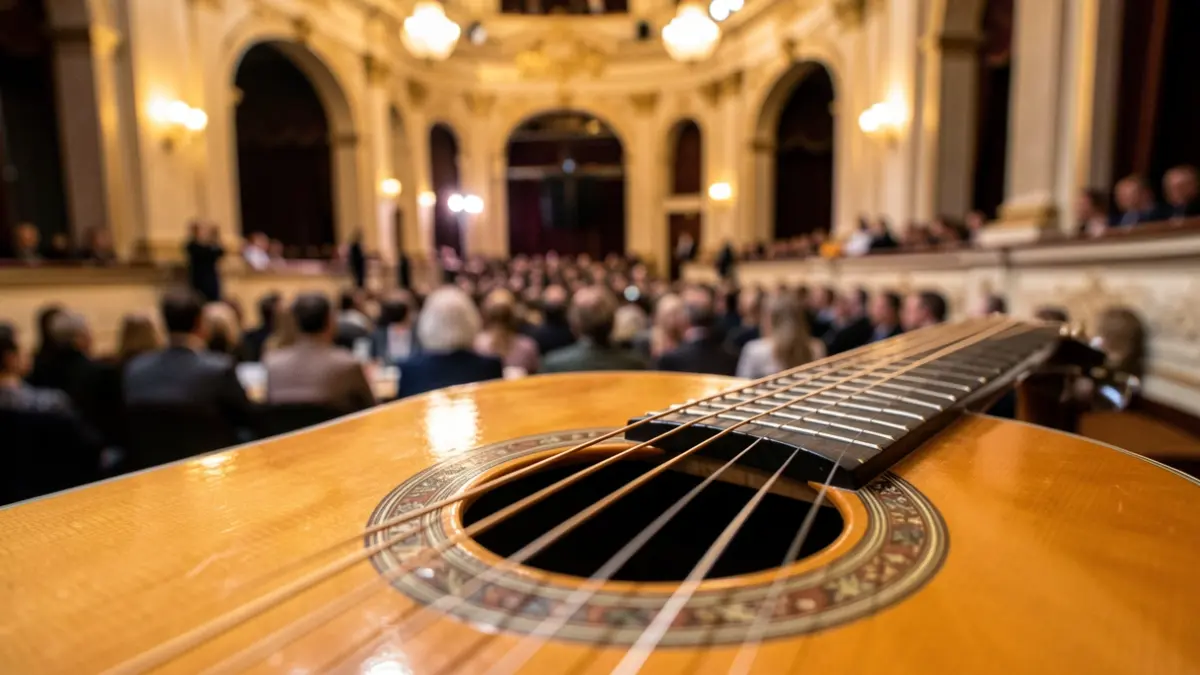
The European Guitar Foundation organized the competition's final, where the twelve finalist instruments were publicly performed by concert artists Paco Serrano and María Esther Guzmán. Of the twelve instruments, seven competed in the classical category and five in the flamenco category.
This edition saw participants from twelve different nationalities, including Germany, Spain, Mexico, England, Brazil, France, Turkey, China, Peru, Colombia, Argentina, and Italy.
The international jury, presided over by Vicente Coves, the Foundation's head, deliberated after the audition. It included concert artists and luthiers: José Marín Plazuelo, Yuris Zeltins, Manuel Cáceres, David Collett, Edmund Blöchinger, José González López, Qingchuan Li, and Javier Mengual.
The jury secretary, Alberto Cuéllar, announced the verdict, which considered up to twenty different parameters such as power, ease of play for the performer, tuning pegs, string tension, aesthetics, and, most importantly, the instrument's sound.
In the classical category, the prizes were awarded to Jako Biehler (Germany) for first prize, Emilio Díaz Valero (Granada, Spain) for second, and Paul Aguilera (England) for third.
In the flamenco category, Francisco Baccaglion (Italy) received the first prize, Nicolás Lamoureux (France) the second, and XialJian (China) and Leopoldo Barberis (Italy) shared the third prize.
The first prize winners noted that their guitars are inspired by models from Viuda de Santos Hernández, a workshop continuing the Madrid school of Ramírez, renowned for its collaborations with Andrés Segovia, influencing both aesthetics and sound details.