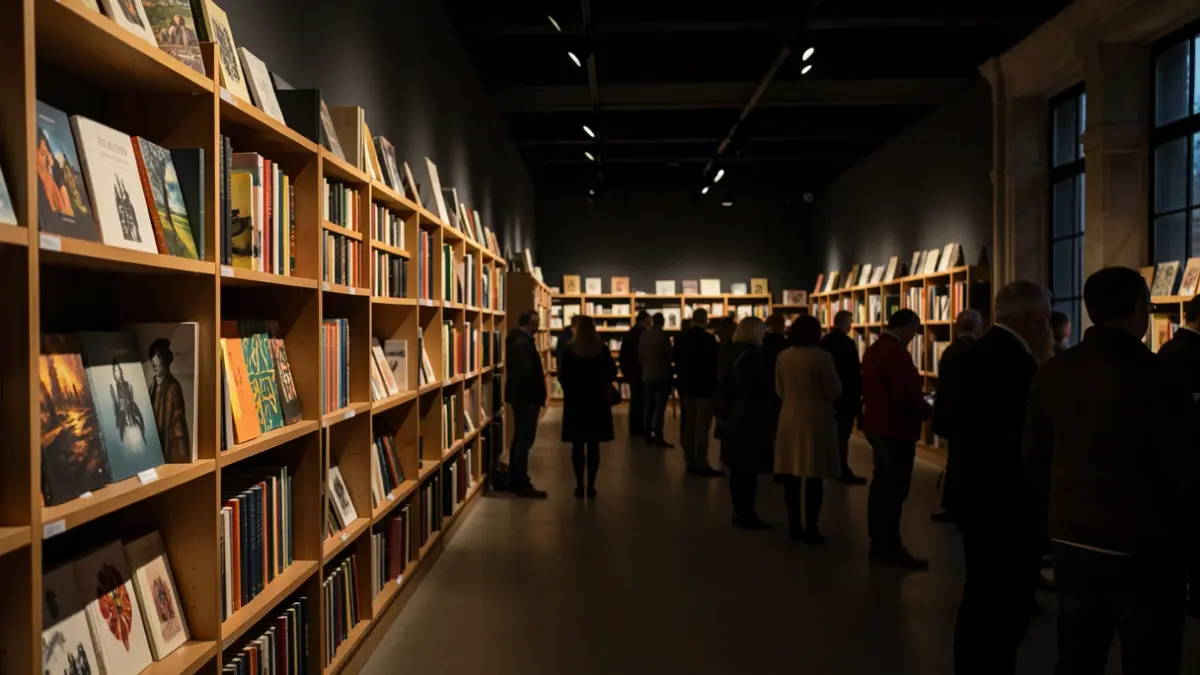
The cultural event, held from April 23 to May 3, saw a remarkable rise in public attendance compared to the previous year, surpassing the 350,000 visitors of the last edition. A distinctive aspect this year was the high participation of women, who accounted for over 60% of the participants, with 550 women compared to 350 men, according to organizers' data.
During its two-week run, the fair hosted 377 events in Carrera de la Virgen and Fuente de las Batallas. Of these, 39% (148) were led by women, while 19% (70) were led by men. The remaining 42% (159 events) involved both genders.
Female presence was also prominent in the signing sessions, where more than half of the 575 signatories (56%) were women. Similarly, the staff at the 97 stands, a record number, consisted of 60% women (108) versus 40% men (72).
“"The Granada Book Fair consolidates the event as one of the main cultural and commercial drivers of the Andalusian publishing sector."
Economically, book sales reached 450,000 euros. Although this figure is slightly lower than the previous year, organizers highlighted that the event is consolidating as a fundamental pillar for the publishing sector in Andalusia. This edition was also characterized by its commitment to contemporary creation, the presence of prominent literary figures, and support for school and family programs, such as the cycle that brought together over 1,200 schoolchildren in 60 activities.
Additionally, the program included Violet Readings, an initiative by the Granada City Council's Equality Department, which offered meetings and debates on feminism, democratic memory, and contemporary female creation. The fair extended its activities to other cultural venues in the city, such as Sala Zaida and Palacio de Condes de Gabia, and to several municipalities in the province, strengthening its connection with Granada's bid for European Capital of Culture 2031 under the motto “Así que pasen cinco años” (As Five Years Pass), in homage to the work of Federico García Lorca.