Previously, it was thought that lead metallurgy in the Iberian Peninsula began around 1000 BC with the arrival of the Phoenicians. However, new research has significantly pushed back this milestone.
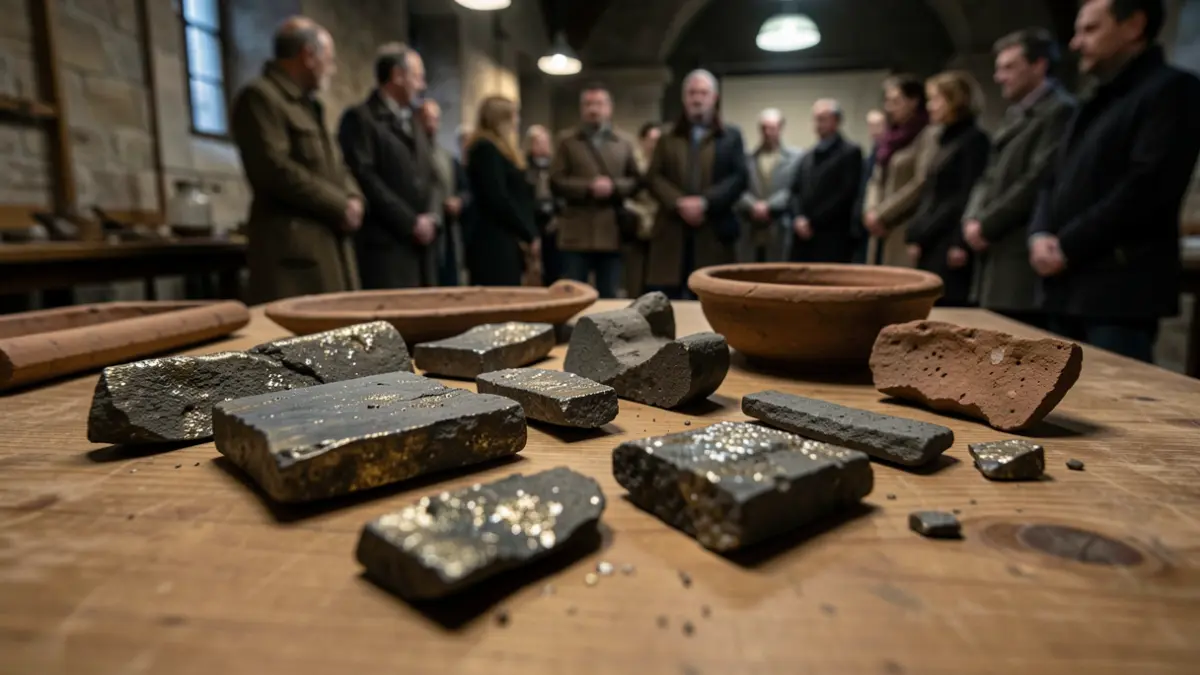
The oldest direct evidence of lead production in the peninsula comes from the Bronze Age site of Minferri, in Juneda (Lleida). Chemical, microstructural, and radiocarbon dating analyses of slags and reduction pottery found at the site place lead manufacturing between 1900-1700 BC.
These findings are linked to a lead necklace bead previously discovered in Tarragona, dated around 2800 BC. Isotopic analyses had already suggested the use of local minerals, but the lack of production residues in Catalonia prevented full confirmation.
The results from Minferri certify local lead production and place its origins in the peninsula at the beginning of the third millennium BC. Small lead objects, such as necklace beads, would have been made in the northeastern peninsula until approximately 1700 BC, a phenomenon previously unknown.
Researcher Julia Montes Landa from the University of Granada explains that this study demonstrates that lead production was developed by indigenous communities, not as a byproduct of silver extraction as previously thought with the Phoenicians.
The northeastern communities used polymetallic ores rich in both copper and lead, a technological process distinct from the Phoenician method. This technical knowledge was lost in the northeastern Iberian region around 1700 BC.
It is suggested that the technical knowledge may have been transmitted from Southern France, where lead metallurgy flourished. However, in the northeastern Iberian region, this knowledge was lost, possibly due to differing values placed on the metal, despite close cultural ties.