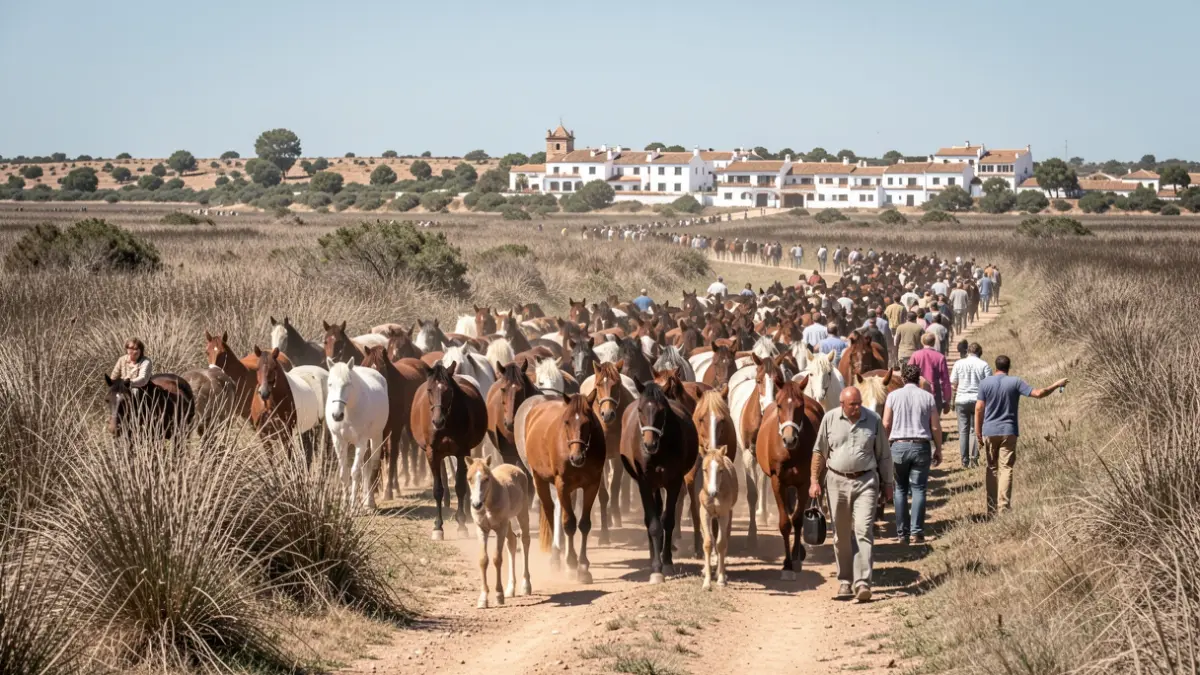
The latest publication by a local writer offers a unique perspective on Doñana, focusing not only on its natural richness but also on the intricate history of its people and the conflicts that have shaped this territory. The work, titled La novela de Doñana, delves into a universe where geology and society are surprisingly intertwined.
The author describes Doñana as an ecosystem in constant transformation, geologically alive and elusive. Over thousands of years, it has transitioned from sea to lake, and back to marshland, a dynamic that, according to the writer, has been key to its protection. This natural instability prevented the establishment of permanent settlements due to floods and the proliferation of mosquito-borne diseases.
“"That it remains alive is what has protected it. It is a place you cannot trust, and that is why there is no town. How can there be a town where you are flooded by a river and where mosquitoes infect you with forty diseases?"
Far from the idyllic image of a lost paradise, life in Doñana was extremely harsh for its former inhabitants, who lived in primitive conditions until just two decades ago. Modernity was the main factor that led to the abandonment of these lands, as subsistence in such a hostile environment became unsustainable.
The book also reveals curious episodes from Doñana's history, such as the introduction of camels, swans, and monkeys in the 19th century by an administrator of the time. This character, an adventurer with extravagant ideas, was also a pioneer in introducing rice and other exotic plants. Furthermore, the author highlights the deeply rooted tradition of smuggling in the area, dating back to the discovery of America, when ships used the coast to evade Seville's customs.
Finally, the writer reflects on the appeal Doñana holds for political power, especially in recent decades. Its strong ecological connotation makes it a symbol of purity and protection, an emblematic place for public figures seeking to associate themselves with environmental defense.