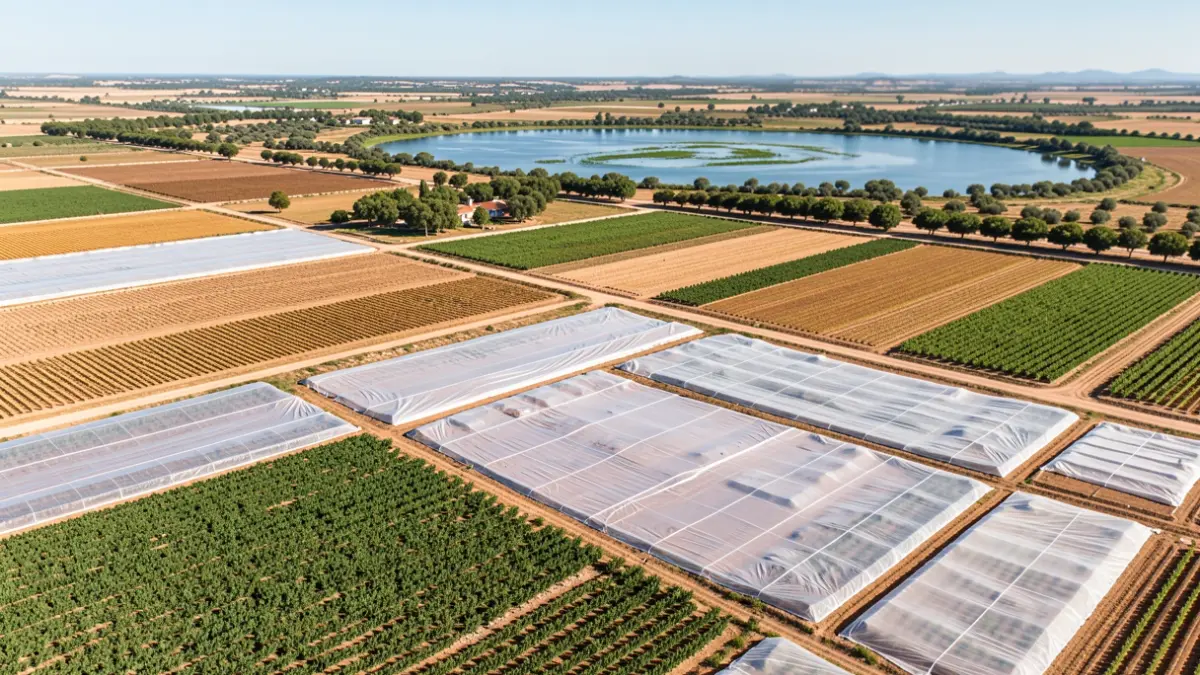
Plastic-covered crops in the Doñana area, primarily in Lucena del Puerto and Almonte, have reached a historic low of 245 irregular hectares. This figure represents a drastic reduction compared to previous years, when over 1,200 hectares were recorded in 2020, according to data from the Guadalquivir Hydrographic Confederation (CHG) remote sensing system.
The "Plan de la Fresa" (Strawberry Plan), signed in 2014, rendered numerous farms illegal that were irrigating with water from the park's aquifer. Pressure on this water resource, vital for the park, has been a priority in the "Acuerdo por Doñana" (Doñana Agreement). To address this situation, aid was implemented for farmers who voluntarily abandoned their crops and renaturalized the land, aiming to alleviate pressure on the aquifer.
CHG data, utilizing artificial intelligence for monitoring, shows that currently 93.14% of the 3,571 hectares of plastic-covered crops in the Corona Norte have legal irrigation rights. The illegal hectares represent only the remaining 6.86%. Comparatively, last year registered 427 illegal hectares, and in 2022, nearly 700.
Administrative pressure has intensified, resulting in over 1,300 fines for farmers totaling nearly 14 million euros in sanctions over recent campaigns. The action plan includes public land acquisition, incentives for dry farming, and the progressive closure of clandestine wells.
The "Plan de renaturalización de cultivos de Doñana" (Doñana Crop Renaturalization Plan) offers aid of up to 70,000 euros per hectare (100,000 in Huelva) to convert crops and ecologically restore the land, with an initial investment of 28.5 million euros. The goal is to completely eradicate out-of-order hectares by 2030. Furthermore, in the last six years, 1,197 illegal wells have been forcibly closed.