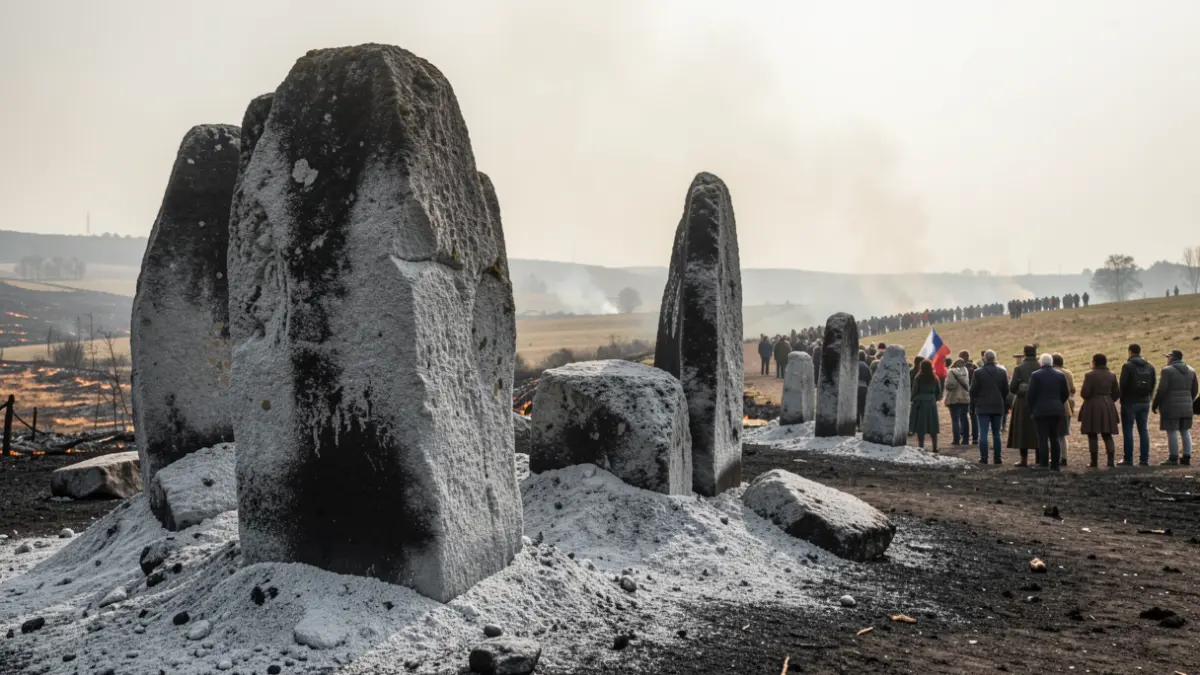
The Department of Culture has reported they are awaiting authorization from Emergency services for technicians to access the site and assess potential damage. The fire, which burned approximately 33,000 hectares, has reached significant megalithic complexes, including El Pozuelo, declared an Archaeological Zone of Cultural Interest (BIC) and one of the most important in the Iberian Peninsula.
The preservation of this heritage, part of the Huelva landscape for millennia, depends not only on the structures themselves. The immediate surroundings, burial mounds, and the relationship of the dolmens with the territory are also integral to their value. Although the rocky structures appear to have been spared due to a vegetation-free perimeter, it remains uncertain if the high temperatures caused damage. Fire can fracture stone, destabilize mounds, cause erosion, or damage structures through firebreak machinery.
“"We are awaiting authorization from the Emergency services for technicians to access the site and conduct an assessment there."
In addition to El Pozuelo, other dolmens in the fire-affected area include those at El Madroño, Los Gabrieles (in Valverde del Camino), and Mesas de las Huecas (in Niebla). In Berrocal, the dolmens of Puerto de los Huertos, Mascotejo, and El Casullo, part of the El Gallego-Hornueco complex (5,000 years old), also await evaluation. This same complex was affected by the 2004 fire, necessitating archaeological excavation, consolidation, and conservation efforts.
Following the 2004 fire, the Department of Culture of the Junta de Andalucía launched an action program (2005-2006) for the Valorization of the Berrocal Dolmens, integrating them into the Huelva Province Dolmen Route to aid in landscape recovery and social projection of this heritage.