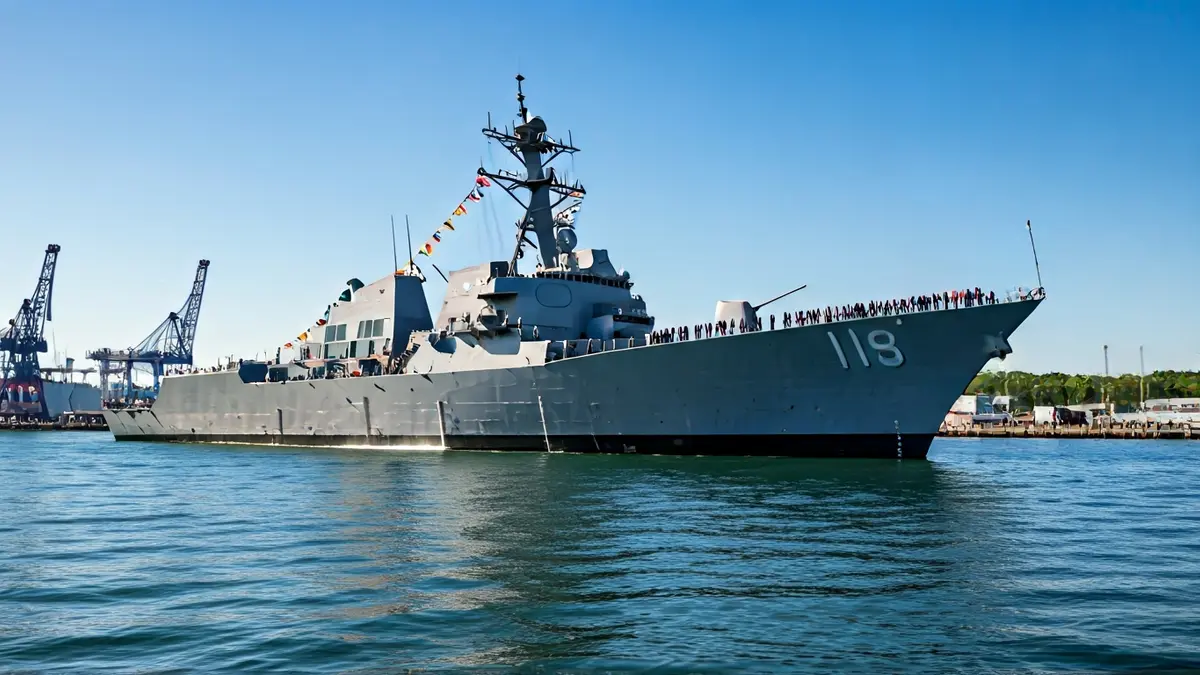
This vessel, the fourth of its kind built at HII's Ingalls Shipbuilding, represents a significant advancement in the modernization of the surface combat fleet. It incorporates the AN/SPY-6 (V)1 Flight III radar system and the Aegis Baseline 10 combat system, designed to neutralize complex threats well into the 21st century.
The Arleigh Burke Flight III class is distinguished by its AN/SPY-6 radar, which surpasses the SPY-1 in detection and tracking capabilities. This allows the ship to simultaneously engage aerial threats, ballistic missiles, and hypersonic targets in saturated environments. These destroyers are the backbone of the US Navy, with over 70 units in service, and are crucial for missile defense, especially in contexts such as the ongoing conflict in the Persian Gulf.
Following its launch, the USS George M. Neal, named in honor of a Korean War veteran, will begin a phase of outfitting, system activation, and preliminary testing before sea trials. Rota Naval Base, which already hosts five destroyers of this class as part of NATO's anti-missile shield, is awaiting the arrival of a sixth vessel, which was expected to be of the Flight III class.
Although the sixth destroyer was announced to arrive in Rota this year, there is still no definite date, amidst tensions between the United States and Spanish governments. The US Navy has consistently emphasized that Rota Naval Base provides exceptional logistical and operational support for various US commands and fleets, housing approximately 7,000 military personnel, family members, and civilian staff.