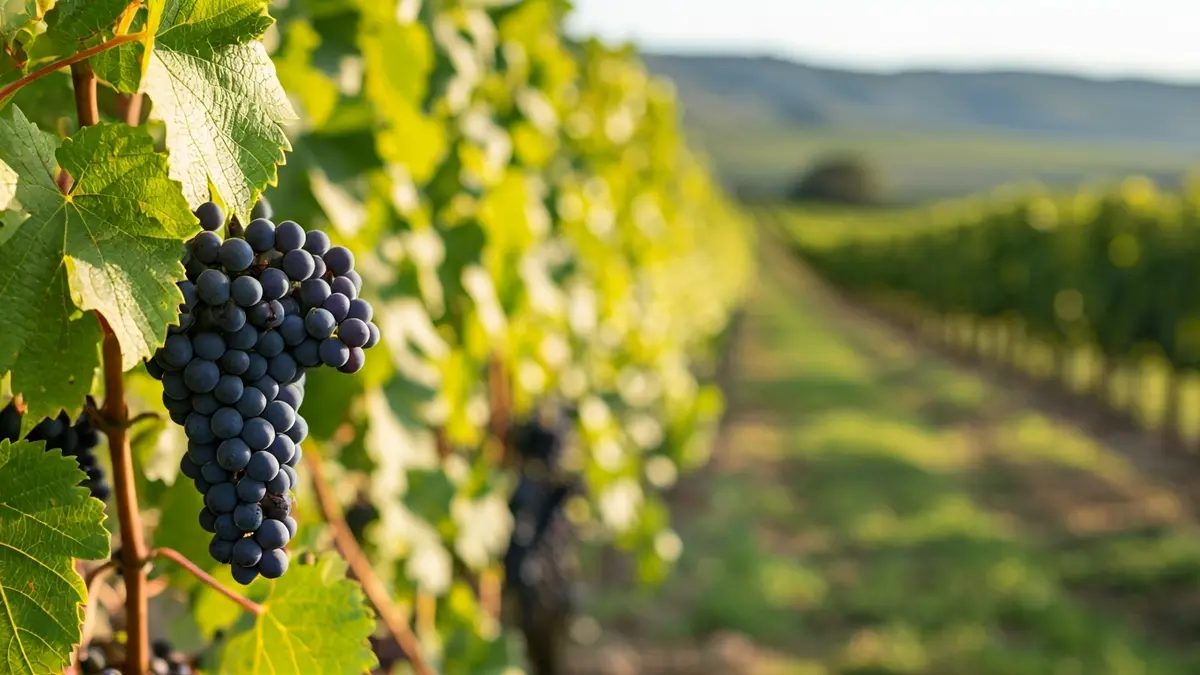
This variety, almost extinct in the past, has managed to endure through various eras, including the phylloxera plague in the 19th century, which decimated most Spanish vineyards. The tintilla, cultivated on the Rota coast, resisted thanks to the sandy characteristics of the terrain, as explained by José Carlos Ferris from Finca La Pintora.
Despite its genetic proximity to the graciano variety, tintilla exhibits significant agronomic and organoleptic differences. Ferris emphasizes that, although genetically similar, their behavior in the field and in the winery is "completely different," with distinct leaves, grapes, and yields. Tintilla is a smaller grape, with only one seed, and its ripening can be irregular, making it more expensive and tedious to produce.
“"If you talk to a winegrower, the difference in the field is enormous; and in the winery, they will tell you that the organoleptic difference is also significant."
The Ministry of Agriculture's decision to merge tintilla with graciano has raised concerns among producers and the Rota City Council. They fear that this measure will cause consumer confusion and allow graciano wines to be sold as tintilla, financially harming those who strive to maintain the authenticity of the Rota variety. Bodegas El Gato, operating since 1957, was one of the first to demand the reversal of this decision.
Ernesto Linares, from the Baco wine shop in Cádiz, highlights the popularity of tintilla among local consumers and visitors, who seek authentic wines with territorial roots. He believes that exclusion from the official register would be detrimental, especially at a time when the market increasingly values unique products with their own identity. Tintilla, traditionally a sweet wine, is now produced in various forms, including young red, aged red, rosé, and even vermouth.