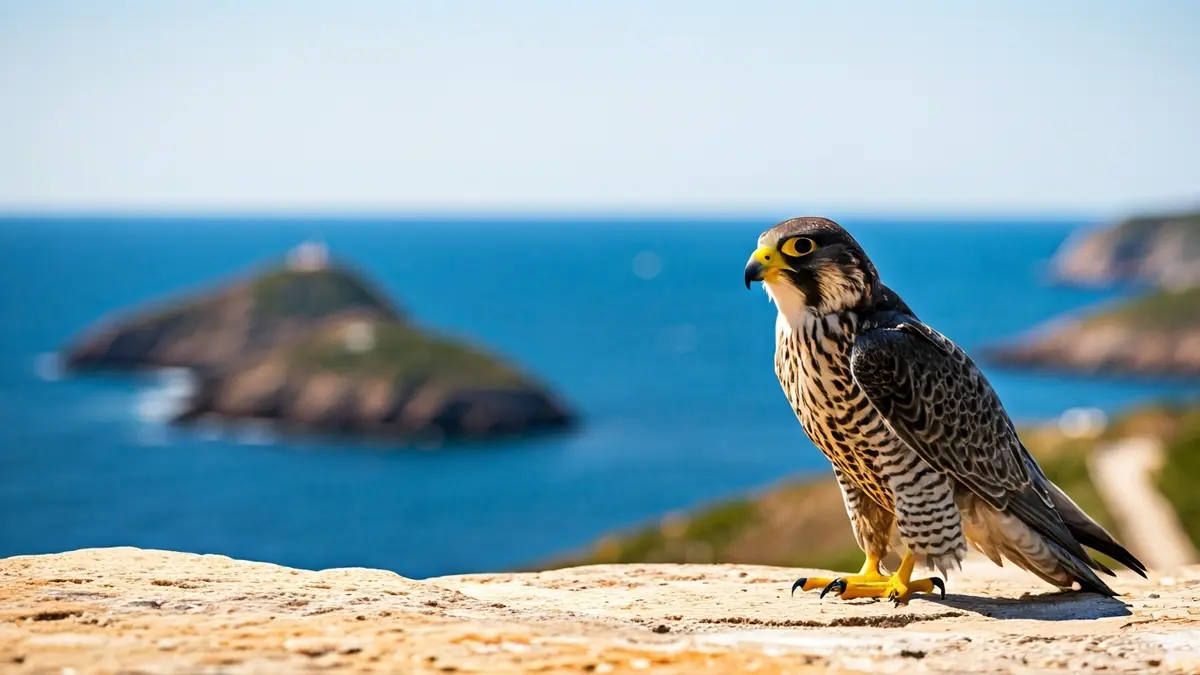
The Chipiona Lighthouse, an icon of the Cádiz coast and the tallest in Spain, has become a sanctuary for a pair of peregrine falcons. These raptors have established their nest at the top of the tower, in a specially installed box, and have already laid three eggs, offering an unbeatable view of the sea and the town.
This initiative is the result of a collaboration between the Port Authority of Seville, the Junta de Andalucía, and the Chipiona City Council. The efforts, driven by the Port Authority of Seville in conjunction with the Doñana Biological Station of the CSIC, began over a decade ago, around 2013. In 2024, a nesting box was installed to encourage the species' nesting in the lighthouse, which is crucial for navigation to the Port of Seville.
Monitoring by the Environment team has confirmed the presence of Iberian peregrine falcons (Falco peregrinus brookei), which use the lighthouse structure for resting, hunting pigeons and other birds, and now for breeding. The falcons' choice to hunt pigeons is beneficial, as these birds cause damage to building facades.
The installation of the nesting box near the lighthouse lantern has been a resounding success, with the falcon pair laying three eggs, a typical number for the species. This event has generated great excitement in Chipiona, attracting numerous tourists who come to observe and photograph the birds in their new home.
Currently, visits to the lighthouse are suspended, not due to the falcons' presence, but because of repairs to the railing. It is estimated that about 3,000 people visit the lighthouse annually, under strict restrictions to preserve the structure. The elevated location of the nesting box is ideal for the birds' safety and comfort, promoting their reproduction and breeding success in the area.
This pilot experience with the peregrine falcon is planned to be extended to the port environment in future collaborations with the CSIC, to control bird species that may affect the storage of agri-food goods. Additionally, it aims to raise public awareness through the medium-term installation of motorized cameras to monitor the nest and the activity of the birds breeding inside.
The peregrine falcon is a species well adapted to the Lower Guadalquivir, including marshlands, river cliffs, the coast, and urban areas like Cádiz or Seville. Researcher Miguel Ferrer, an expert in the avifauna of the Lower Guadalquivir and the Doñana Natural Area, proposed to the Port Authority of Seville to develop research to adapt port infrastructures for use by interesting fauna, combining port activity with the promotion of biodiversity. This project is not an isolated case, as the Port Authority has also supported the nesting of white storks near the Iron Bridge of Seville.