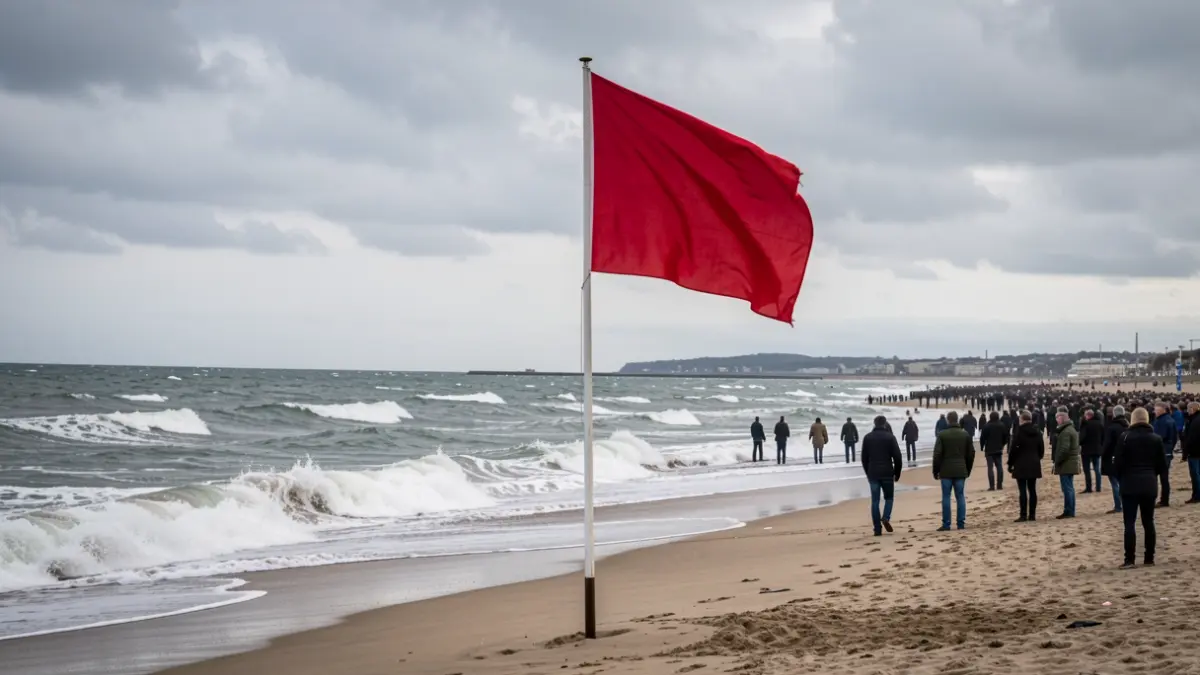
The regulations for beach use in Andalusia show notable heterogeneity regarding sanctions for disobeying the red flag. While in some municipalities like Torrox (Málaga) a minor infraction can cost up to 300 euros, in others like Almonte (Huelva) it is considered a very serious offense, potentially reaching 3,000 euros.
The red flag signaling indicates imminent danger, whether due to strong waves, currents, dangerous animals, or pollution. Despite the warning, if a swimmer decides to ignore it, the lifeguard is not obligated to perform the rescue, the coordination of which would fall to the 112 Emergency Service. The cost of a rescue operation could be passed on to the offender.
The disparity is accentuated on the coast of Granada, where ordinances such as those in Motril and Salobreña only indicate 'choppy sea, danger for swimming,' without an express prohibition. The Spanish Federation of Lifesaving and Rescue has criticized this lack of specificity. On the other hand, more detailed ordinances, like that of Níjar (Almería), exempt surfers and windsurfers from the prohibition of entering the water, though not from rescue costs.
Recent incidents illustrate these differences. In La Línea de la Concepción (Cádiz), a man rescued after disobeying the red flag could face a fine of up to 3,000 euros. In Fuengirola (Málaga), another swimmer was fined 1,500 euros for refusing to leave the water and verbally confronting lifeguards.
Nationally, the Coastal Law and older regulations exist, but enforcement falls to municipalities. The Regional Government of Andalusia had announced its intention to develop a unified regulation to prevent drownings, but it has not yet materialized, leaving the current situation of disparity.