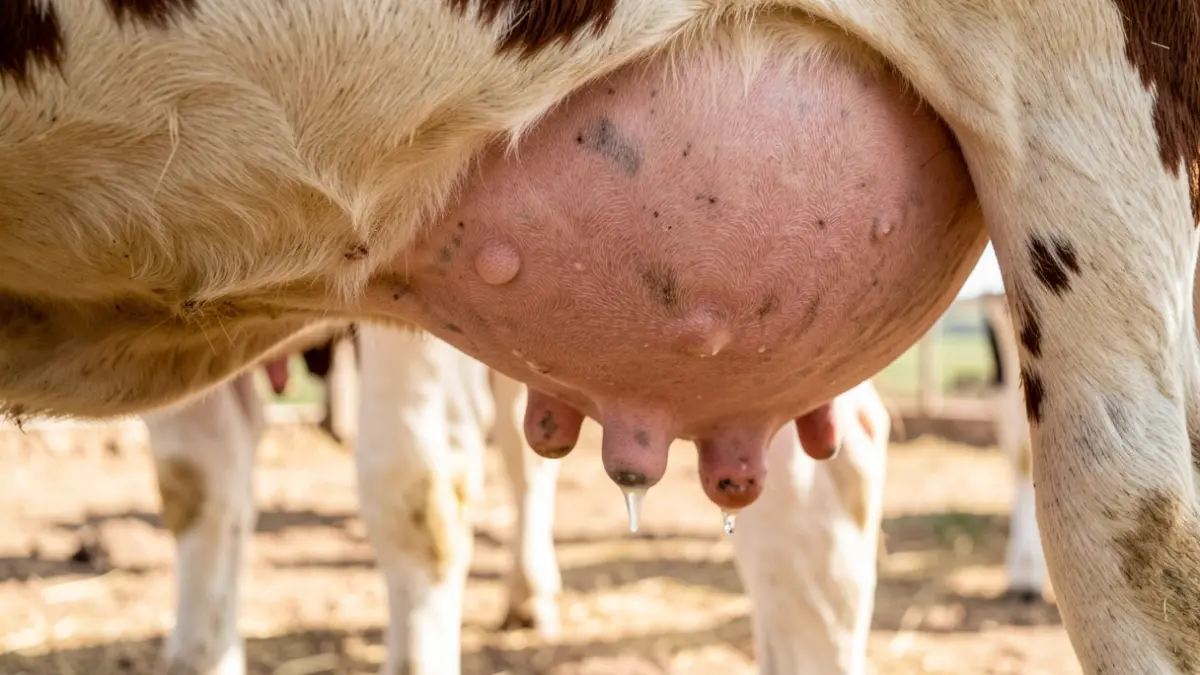
The Shamonda virus has now affected cattle farms in the province of Córdoba and will persist as long as culicoides, small insect vectors, remain active. In dairy cattle, the main effect is a drop in production that can reach up to 30% for several days.
Following confirmation of cases by the Ministry of Agriculture, Animal Health professors from the University of Córdoba (UCO), Antonio Arenas and Ignacio García Bocanegra, have explained that affected cows typically experience "a pause for a few days," with milk production reduced by 20% to 30%. The intensity and duration depend on the dose of the virus received by the animal.
Both professors noted that the decrease in milk production is the primary economic consequence, rather than animal deaths. The disease is transmitted by the bite of culicoides, and outbreaks have been recorded in European countries such as France and Germany. It has not yet been precisely determined how the virus arrived in Spain, with possibilities including the movement of infected animals or the insects themselves.
Contagion does not occur directly from one infected animal to a healthy one; rather, the insect bites an infected animal, acquires the virus, and then transmits it when biting another animal. Initial symptoms can include fever, respiratory or digestive problems, apathy, and listlessness. Reproductive issues such as abortions and fetal malformations have also been described, although not all animals develop the disease with the same intensity. In other countries, neurological signs have been detected in horses, but not yet in Spain.
Veterinarians have assured that the virus poses no risk to human health, as it is not a zoonosis. It shares a vector with diseases well-known to farmers, such as bluetongue and epizootic hemorrhagic disease, and is similar to the Schmallenberg virus.
There is no commercialized vaccine or specific treatment. The strategy focuses on controlling the insects and reducing contact with livestock. It is recommended to exercise extreme caution at dawn and dusk, when culicoides are most active. If possible, animals should be kept in disinsected sheds. Stabled cattle face lower risks than those in extensive farming operations.
The drop in temperatures in late autumn reduces culicoides activity, slowing transmission. Cases are expected to continue appearing, but animals that recover from the infection develop antibodies, protecting them from future contagion and leading to smaller outbreaks in subsequent years.