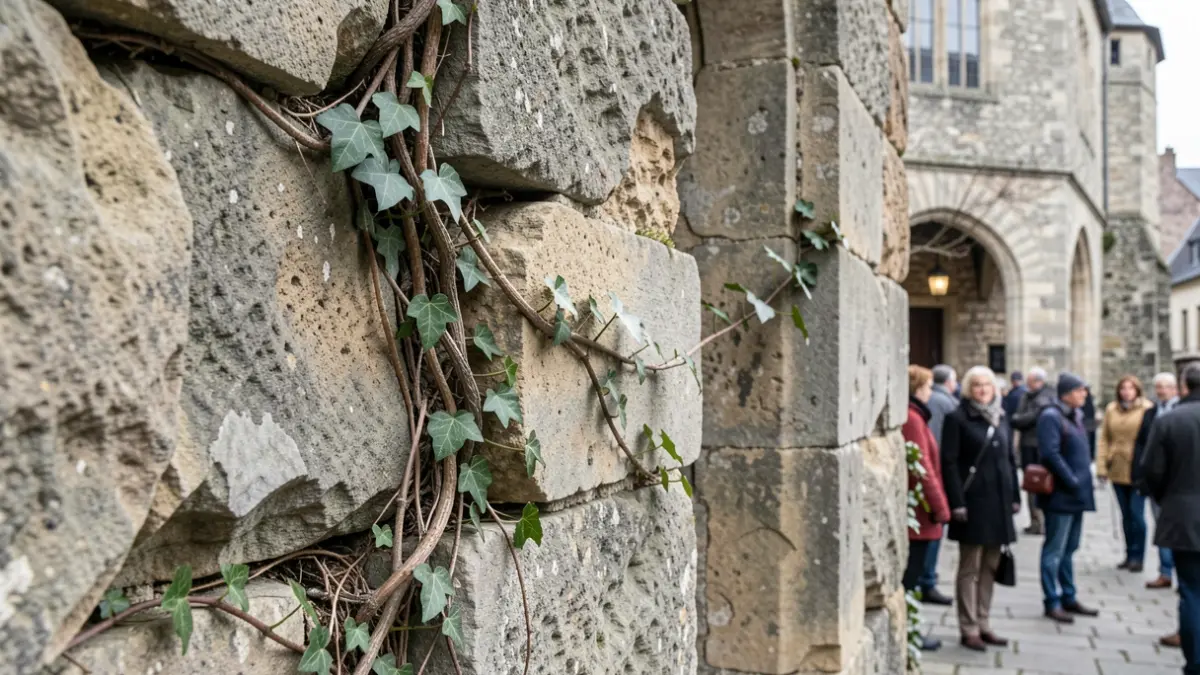
Cleaning and consolidation work on the Pelícano moat's parapet in Cádiz has revealed that the main cause of the deterioration and subsequent collapse of this historic structure has been "uncontrolled biological colonization by persistent climbing vegetation," primarily ivy.
According to a municipal report, ivy roots have penetrated the micro-fissures and mortar joints of the wall, acting as a physical wedge that generates internal stresses. These stresses break down the mortar, separate the stonework, and cause the parapet to shift outwards. Furthermore, acids secreted by the plant attack the binder in traditional lime mortars and the sandstone itself, causing disintegration.
The ivy problem is not limited to this section. It extends to other parts of the city's walled enclosure, including areas of the Puerta de Tierra wall and the San Carlos wall, where municipal control efforts are being overwhelmed. Ironically, chemical products that were once effective in eliminating the plant have been banned by the City Council itself.
The Cádiz City Council is awaiting authorization from the Provincial Delegation of Culture to proceed with the reconstruction of the affected section. The project includes the installation of a new reinforced concrete slab and the repositioning of the original sandstone blocks.
This structure, which had been temporarily protected for years, was manually dismantled last May after an "alarming and generalized deficiency in conservation" and the fall of some stones were confirmed. The area was closed off with safety barriers.